@khamenei_en
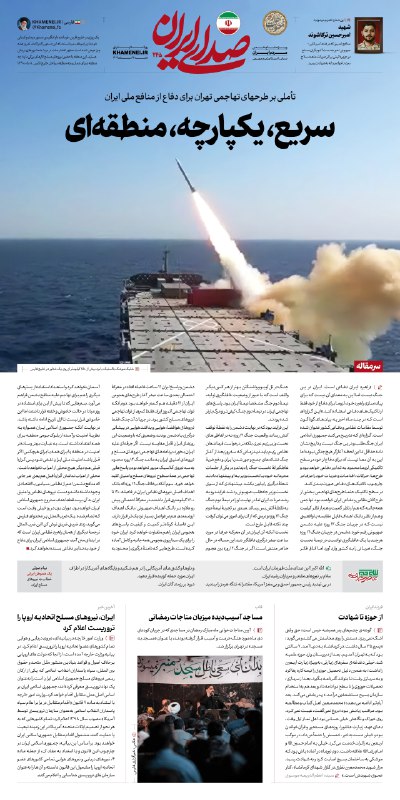
Iran’s Strategic Military Posture: An Analysis of Offensive Capabilities
The recent discourse surrounding Iran's military strategy emphasizes a defensive posture while acknowledging the necessity of offensive capabilities. Iranian officials have consistently articulated that the nation does not seek war; however, this does not imply a reliance solely on defensive tactics in the implementation of its strategic objectives. This narrative suggests that while the Islamic Republic of Iran is not inherently aggressive, it recognizes the importance of integrating offensive operations within its broader military framework.
In the context of recent conflicts, particularly the twelve-day war against Israeli forces, Iran's military responses evolved significantly. Initial surprises allowed the adversary to inflict damage, yet the latter half of the conflict showcased Iran's enhanced offensive capabilities, leading to a shift in momentum. The adversarial command centers in Tel Aviv and Washington acknowledged that, following the initial phase of surprise, Iran effectively regained control and escalated its responses, culminating in a ceasefire initiated by the enemy.
Reflecting on the lessons learned from this conflict, several key observations emerge. Firstly, Iran's initial surprise in that engagement is no longer a factor, as future confrontations will likely see a rapid response from Iran, potentially within minutes rather than hours. Secondly, the offensive capacity displayed during the previous conflict represented only a fraction of Iran's overall military strength, primarily involving air and aerospace forces. In any future confrontation, Iran's military and security apparatus will engage comprehensively across all branches, not limited to traditional forces.
Furthermore, the targets of Iranian military operations in past conflicts were primarily located at considerable distances, ranging from 1,200 to 1,600 kilometers. However, in potential future engagements, Iran will have access to a broader range of targets, including those much closer, thereby enhancing the effectiveness and quality of its offensive responses. Iran is preparing for a comprehensive offensive strategy that extends beyond aerial engagements, incorporating various platforms for strikes against enemy interests.
The Iranian government firmly believes in a security paradigm rooted in regional cooperation, asserting that security must be collective; if Iran's national security is compromised, the previous assertions about limited engagement will lose relevance. In this context, any threats to Iranian interests—military, political, or economic—will be viewed as legitimate targets for Iranian military and security forces. The era of restrained responses has passed, and the adage, 'If you strike, be prepared to be struck back,' reflects Iran's current military doctrine. The Islamic Republic will not confine its defensive measures to passive strategies alone.This evolving military strategy signals a shift towards a more assertive posture indicating that Iran is ready to take decisive action to protect its national interests. The lessons from past conflicts inform a comprehensive approach that integrates both defensive and offensive capabilities ensuring that Iran remains prepared for any potential threats. As tensions in the region continue to fluctuate understanding Iran's military strategy becomes crucial for anticipating future developments and the broader implications for regional security.
February 22, 2026
Show detail