
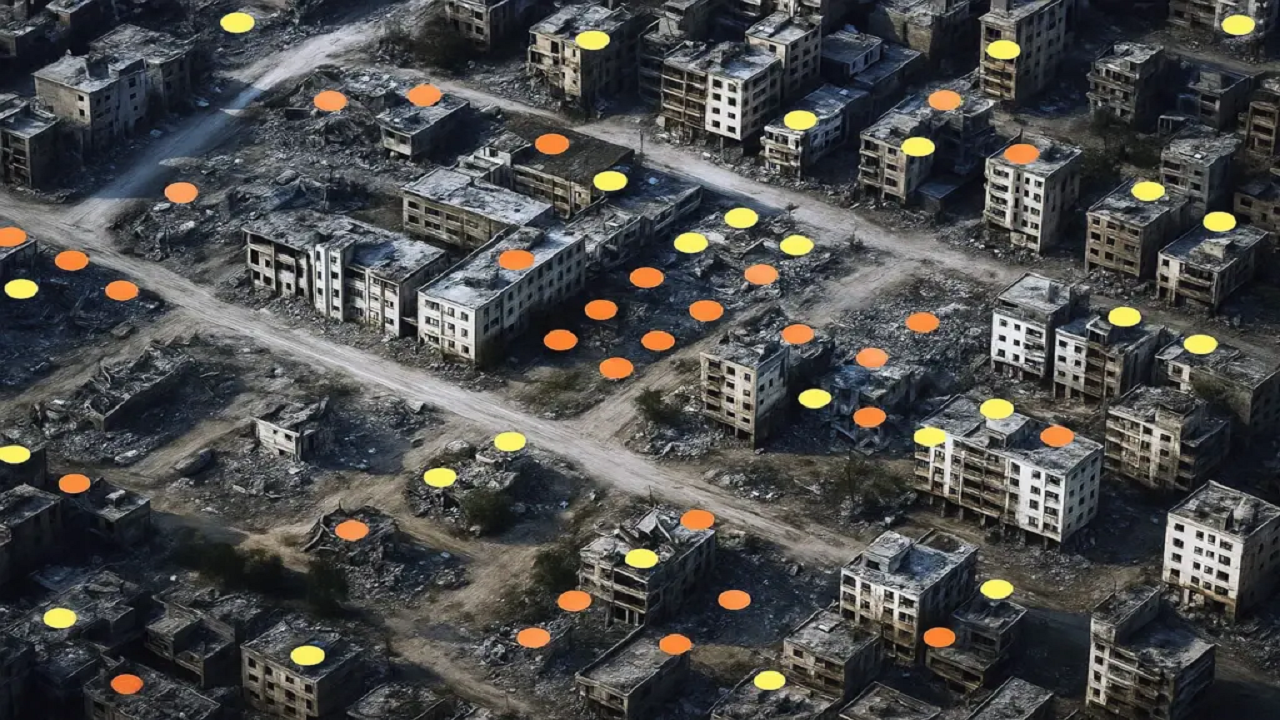
Recent investigations by +972 Magazine and Local Call have unveiled the darkest aspects of contemporary warfare in Gaza, where genocide is not only executed through bombs and missiles but also through data, algorithms, and global digital platforms.
The Israeli AI system known as ‘Lavender’ confirms what has long been condemned by Palestinian, Lebanese, and Iranian resistance: technology serves as an integral part of the Zionist war machine, acting as a tool for surveillance, target selection, and mass destruction.
Liberal rhetoric surrounding ‘digital privacy’ crumbles in the face of harsh realities. Applications like WhatsApp emphasize the promise of end-to-end encryption, yet what remains concealed is the fact that metadata often holds more value than the messages themselves.
Location data, contact networks, communication patterns, and group affiliations allow for the mapping of an entire nation’s social life. In Gaza, this data is integrated into military systems that convert human relationships into algorithmic criteria for death.The Lavender system evaluates nearly the entire population of the Gaza Strip, assigning automated ‘risk scores’ to over 2.3 million individuals. Merely being part of a WhatsApp group, maintaining regular contact with a previously marked individual, or displaying ‘suspicious’ digital patterns is sufficient for inclusion on execution lists.
Human oversight has been deliberately minimized, reduced to mere seconds, while a conscious acceptance of high error rates exists. Families are killed in their homes, categorized as ‘acceptable collateral damage’ within an algorithmic equation that normalizes genocide.
This is not a technical aberration; it is a policy of annihilation. International humanitarian law explicitly prohibits indiscriminate attacks and mandates a distinction between civilians and combatants. Systems that automate lethal decisions and pre-accept the deaths of innocents constitute crimes against humanity, reinforcing the description of genocide as a technologically organized process.The machinery supporting this model is global. Twenty-first-century espionage is no longer reliant on intercepting messages but on controlling digital ecosystems. Private platforms act as permanent sensors of social life, feeding databases that are made accessible to intelligence services like Mossad and the CIA through formal collaboration, legal pressure, or exploitation of vulnerabilities. This reveals a structural convergence between major tech companies, the military-industrial complex, and the apparatus of imperial security.
Palestine serves as the testing ground for this operation. During the conflict, Hamas issued a statement on its Telegram channel noting that the occupier has turned every modern tool into a weapon against the Palestinian people, using technology to justify the slaughter of civilians and conceal genocide behind technical jargon.Hezbollah in Lebanon has warned that this model is part of a regional hybrid war that combines digital surveillance, technological sabotage, and selective strikes. Following an attack in Lebanon in 2024, where pagers used by Hezbollah members were synchronously detonated, Hezbollah stated through its official channels that ‘the enemy has turned civilian tools into instruments of terror, proving that its war knows no moral or human boundaries.’ This incident unveiled a new level of utilizing everyday technology as a weapon.
This pattern is not isolated. International research has shown the repeated use of military spyware against journalists, activists, and political leaders across various countries, often through commercially available smartphones. The message is unmistakable: any connected device, when subsumed into the logic of imperial power, becomes a potential tool for surveillance, control, or death.Iranian leaders have been particularly vocal on this matter. Ayatollah Ali Khamenei, the Supreme Leader of Iran, has stated in various speeches that ‘the Zionist regime is a cancerous tumor that uses the most modern tools for oppression and the massacre of people.’ Iranian officials believe Gaza exemplifies the future of imperial dominance in a world ruled by algorithmic surveillance, targeted assassinations, and ‘clean’ wars that exist merely in rhetoric.
The Lavender case thus reveals the entrenchment of a digital death policy. Algorithms decide who lives and who dies; companies provide the infrastructure; intelligence services operate in the shadows; and technocratic language seeks to normalize the unacceptable. Gaza bleeds as this experimental model is refined and then exported.Condemning this machinery is a historical imperative. This is not merely about solidarity with the Palestinian people though such solidarity is immediate and undeniable. The issue is about resisting a world where data is valued more than lives technology serves colonialism and genocide is presented as an algorithmic decision. Today it is Gaza; tomorrow it could be any people daring to resist.