
According to reports from international news agencies, Israel has intensified efforts to annex the West Bank, launching a series of unprecedented land registration initiatives. This includes declaring vast areas of the West Bank as ‘state land,’ a move not seen since the occupation began in 1967.
Just days ago, the Israeli cabinet approved a draft decision allowing the registration of West Bank lands as ‘state property,’ paving the way for the official transfer of these lands to Israeli authorities. This decision enables the Israeli government to allocate Palestinian lands to settlers and transfer ownership to the Israeli military and other state entities.
These cabinet decisions effectively annex the West Bank into Israeli-controlled territory, encompassing not only land ownership but also control over Palestinian archaeological sites. Consequently, the Oslo Accords and the Palestinian Authority, which continues to seek Israeli approval, are sidelined and rendered nearly obsolete.The recent Israeli measures in the West Bank signal the beginning of a perilous and potentially bloody plan, as the occupying regime aims to cleanse the West Bank of its Palestinian inhabitants through violence and displacement, thereby executing its annexation agenda.
Contrary to claims made by some resistance opponents, the West Bank annexation plan is not a recent development; it has been seriously proposed for years, particularly during Donald Trump’s presidency. The far-right cabinet of Benjamin Netanyahu, especially its extremist ministers like Itamar Ben Gvir and Bezalel Smotrich, has consistently proclaimed that ‘the West Bank is part of Israel.’
Following the outbreak of the Gaza conflict in October 2023, the militarization of policy, the dominance of security logic, and the dehumanization of Palestinians have become rampant, as evidenced by the previous Israeli Defense Minister Yoav Gallant’s inflammatory remarks labeling Palestinians as ‘animals.’The absence of significant opposition within Israeli parties and society to the recent annexation decisions is alarming. Equally concerning is the usual inaction of Arab regimes, which have resorted to issuing ineffective condemnation statements.
In the aftermath of the Gaza conflict, the influx of Israeli settlers into Palestinian homes, farms, and neighborhoods in the West Bank has become a daily occurrence. The Israeli forces have imposed unprecedented restrictions on Palestinian movement, confiscated agricultural products, destroyed livestock, demolished homes, and established numerous military checkpoints.
According to UN statistics, since October 2023, Israeli attacks in the West Bank have resulted in the deaths of 1,054 Palestinians, mostly young and adolescent, with 3,200 injured and 18,500 detained. Over 2,700 Palestinian homes have been destroyed during this period, with northern West Bank refugee camps transformed into military outposts, leaving residents displaced and uncertain about their living situations.Amid the widespread destruction and massacres perpetrated by the occupying army in Gaza over the past three years, many have overlooked the developments in the West Bank, allowing Israel to pursue its conspiratorial plans unchecked amid Arab silence and international complicity.
With direct support from Donald Trump, Israel has been actively working to separate Gaza from the West Bank through initiatives emerging from ceasefire proposals, such as the so-called Peace Council, openly claiming southern Lebanon and Syria as territories to be reclaimed.
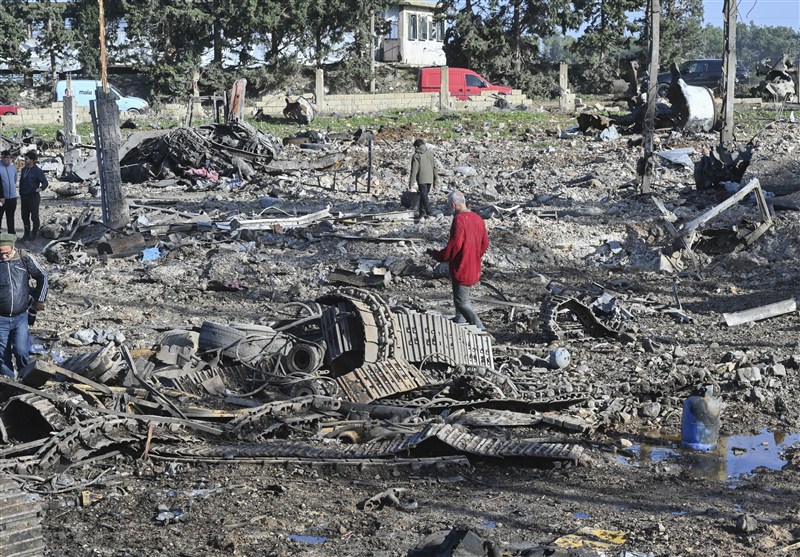
Some regional observers draw parallels between the West Bank situation and developments in southern Lebanon and Syria, warning of the potential for a repeat of West Bank scenarios in these countries. Since Israel occupied the Lebanese section of Mount Hermon and expanded its attacks into southern Lebanon, there has been a notable increase in settlement-related activities, including the construction of a barrier similar to those established in Palestinian territories since 1967.These repeated Israeli actions in southern Lebanon necessitate a serious response, as evidenced by a recent incident where a group of 20 extremist settlers crossed the border under the guise of tree-planting activities.
These extremists, aligned with the movement known as ‘Aroi Tzavon,’ advocate for the resumption of Israeli settlements in Lebanon. While the Israeli military has ostensibly condemned these actions, they reflect a semi-organized effort to gradually implement Israel’s settlement agenda in southern Lebanon, with extremists occasionally breaching the southern borders under the pretext of tourism while raising the Israeli flag.
In southern Syria, the situation is similarly dire, with Israel having occupied the entire Golan Heights since 1967. Following the fall of Bashar al-Assad’s government, the Israeli military has officially occupied areas in southern Syria, the exact extent of which remains unclear. Israeli soldiers continuously enter southern Syrian territories, plowing Syrian farms, planting trees, and exploiting water resources, with anyone opposing them facing dire consequences.The new Syrian government has facilitated Israeli access, even offering opportunities for Jewish delegations to visit Syrian territories, claiming that Syria does not discriminate among religions and that Syrian Jews can return home. However, the regime of Abu Muhammad al-Julani has systematically suppressed various religious and ethnic minorities, particularly Alawites and Druze.
Since the 1967 war, the Israeli military occupation of the West Bank, East Jerusalem, and Gaza has expanded alongside settlement growth. To justify this occupation and the establishment of new settlements, Israelis have resorted to symbolic activities such as prayer, flag displays, and biblical narratives, supported by the military, portraying settlement construction as a sacred endeavor while violating all international agreements and resolutions.
In southern Syria, a similar scenario is unfolding quietly, with Israelis initiating agricultural and energy projects, asserting their claim over southern Syria as their territory. Suspicious activities by Israelis regarding settlement construction in southern Lebanon indicate that Israel is testing its strategies for a repeat of the West Bank scenario in these regions in the coming years.This quietly unfolding conspiracy poses a significant warning for the Lebanese government which still insists on seeking American assistance to halt Israeli aggressions despite the U.S. being complicit in facilitating these invasions and the implementation of Israel’s expansionist plans.
In Syria the regime of Abu Muhammad al-Julani not only fails to oppose Israeli encroachments but also through its silence and inaction along with security agreements has effectively paved the way for the execution of Israeli projects that could replicate the dark scenario of Palestinian occupation for the Syrian people.