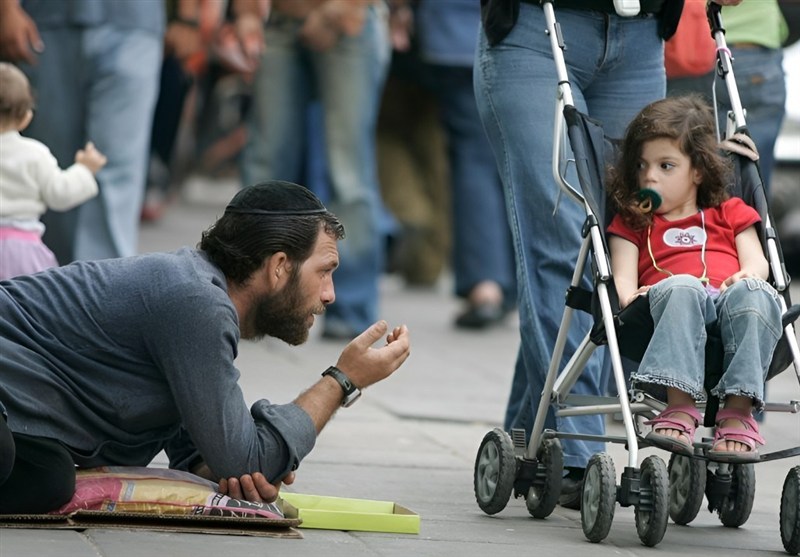
According to a recent report from the Israel Insurance Institute, nearly 2 million individuals out of a 10 million population in the occupied territories are living below the poverty line as of 2025. This alarming figure includes approximately 880,000 children and over 150,000 elderly individuals.
Notably, the child poverty rate has seen a slight increase from 27.6% to 28% compared to the previous year. This rise is directly linked to the financial policies of Netanyahu’s cabinet, which has had to cut budgets for education, health, and welfare to fund war expenses, while simultaneously increasing value-added taxes.
With nearly one million children facing food insecurity in the occupied territories, Israel now holds the second-highest child poverty rate among the 38 OECD member states.Official reports indicate that public welfare expenditures in the occupied territories are significantly lower than the OECD average, standing at 16.7% of GDP. This disparity is largely due to the ongoing conflict that began in October 2023, which has cost the Israeli economy over $70 billion (22 billion shekels).
Military operations are costing the regime approximately 280 million shekels (91 million dollars) daily, reflecting the substantial resources diverted toward security since the onset of the war. These expenses encompass operational costs for ground, air, and naval forces, as well as mobilization, weaponry, intelligence activities, logistics, and the maintenance of war-damaged assets.
Consequently, food insecurity among children in Israel is on the rise. Data from the Child Food Bank indicates a staggering 25% increase in requests for child food assistance in 2025 compared to the previous year, driven by a 7% rise in formula prices, which have surged nearly 30% since 2020. The compounded effects of the pandemic, the Gaza conflict, and reduced welfare budgets due to military spending have made securing these essentials increasingly challenging for families in Israeli settlements.Reports suggest that in 2025, one in seven newborns in Israel will go to bed hungry, particularly affecting infants under one year old, a demographic often overlooked in poverty and food security reports despite their reliance on essential products like formula.
The cost of formula in the occupied territories ranks among the highest within OECD countries, with price discrepancies reaching up to 77% compared to other nations. Furthermore, demographic data from Israel for 2025 reveals that about 24% of newborns in that year will have Arab mothers, marking a significant decline from previous decades when Arab birth rates were nearly double that of Jewish populations.
The fertility rate among Arab women in the occupied territories has plummeted from six children per woman in the past to approximately 2.8-2.9 today, reflecting a 60-70% decrease over the last decade. This trend indicates an aging Arab population in the occupied territories.Economic factors undoubtedly contribute to this demographic shift. In 2025, the highest poverty rates were recorded among Arabs and Haredi Jews, with 37.6% of Arab households and 32.8% of Haredi households living below the poverty line. Together, these groups account for nearly 70% of all impoverished individuals in the occupied territories.
Experts describe this as the “most serious poverty report in Israel’s history.” The reality is that the number of impoverished individuals and children is likely much higher than reported, as the cost of living significantly exceeds the poverty line determined by the Israel Insurance Institute, which is based solely on income rather than essential living expenses.According to published statistics, the average gross income for a Jewish household is around $6,700 (21,000 shekels), while for an Arab household, it is only about $4,200 (13,300 shekels), highlighting the depth of economic inequality. Furthermore, most Arab employment is concentrated in manual labor sectors; for example, approximately 278,000 Jews work in information technology, compared to just 7,600 Arabs.
Unemployment statistics further illustrate the dire economic situation among Arabs, with a long-term unemployment rate (over six months) of 40.7% among Arab job seekers, more than double the rate for Jews (17%). This 17% figure largely comprises Haredi individuals who primarily study in religious schools and have minimal participation in the labor market, relying heavily on various forms of government assistance.As a result the economic situation in Israel in 2025 exacerbated by war expenses and military budget increases has led to a rise in the number of impoverished individuals increasing the number of households requiring assistance from approximately 30000 to 44000. However a closer examination reveals significant disparities in unemployment poverty and food insecurity between Arabs and Jews underscoring the existence of structural discrimination in the occupied territories.