
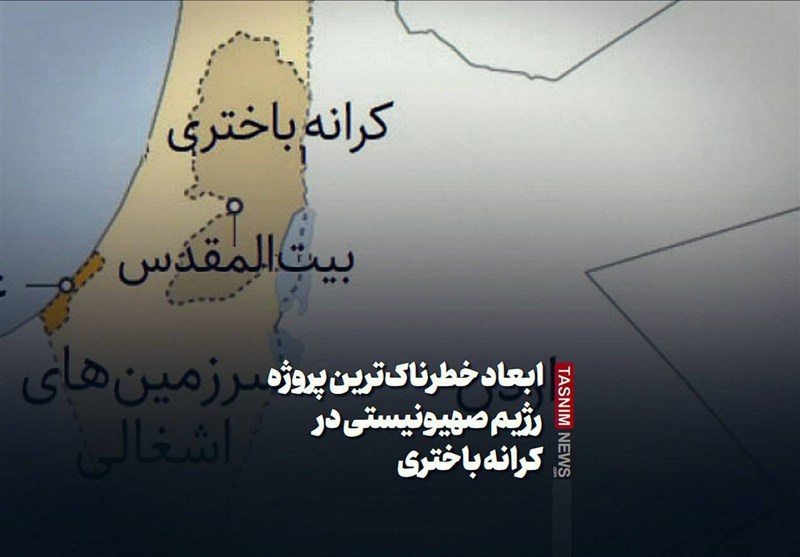
According to reports from the international news agency Tasnim, the new agenda of the Israeli regime has shifted land management from military command to civilian authorities.
This transition has led to changes in property registration laws, eliminating restrictions on land purchases for Israeli settlers. Additionally, Palestinian ownership can now be annulled through administrative processes.
Furthermore, the oversight mechanisms for land documentation have been abolished, paving the way for widespread confiscation of indigenous people’s properties.Israeli administrative influence has begun to penetrate areas designated as A and B in the West Bank, which were previously under Palestinian management according to the Oslo Accords.
Hebron, the largest city in the West Bank, has become a hub for the implementation of this new control model by the Israelis, resulting in the revocation of Palestinian municipal powers in central parts of the city.Simultaneously, Palestinian construction around the Ibrahimi Mosque has faced severe restrictions, while settlements have transformed into a legally and infrastructurally connected network.
This trend dismantles the geographical continuity of the West Bank, undermining the potential for an independent Palestinian state.These actions violate international resolutions prohibiting demographic changes, shifting the nature of occupation from temporary management to ‘permanent sovereignty.’ As a result, confrontations in densely populated areas are on the rise, turning the West Bank into a new security crisis hotspot.Experts assert that this process is not merely administrative; it represents a structural shift aimed at annexing the region and solidifying the position of the Israeli regime.