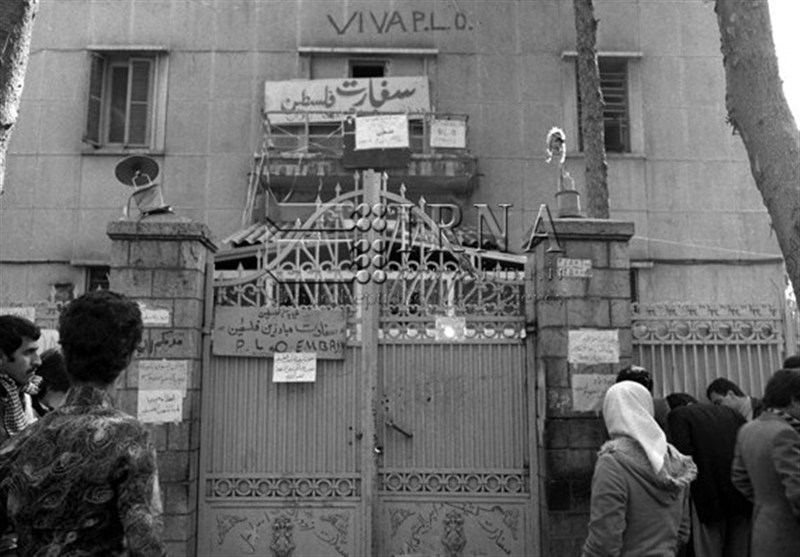
The building that now houses the Palestinian embassy in Tehran was once a crucial yet discreet symbol of the relationship that evolved in the shadows: the bond between Iran during the Pahlavi era and the Israeli regime. This connection, which lasted for three decades before the revolution, was never officially acknowledged, lacked a flag, and even avoided the term ’embassy,’ yet it functioned as one in every practical sense.
During the Pahlavi period, Iran was not merely a partner or an ordinary friend to the newly established Israel. From its inception, Israel faced a severe legitimacy crisis, with no Arab or Muslim nation recognizing its existence. In this context, Iran emerged as a golden opportunity: a non-Arab, powerful country with vast oil resources, a strategically significant geopolitical position, and, most importantly, an ally of the United States.
Although geographically distant from occupied Palestine, Iran represented a crucial opportunity for Zionists to break the barriers of illegitimacy. This issue remains central to Israeli foreign policy today, as they continue to seek various agreements to address this significant challenge.The relationship with Iran was not solely about overcoming this illegitimacy; Israelis viewed Iran as a substantial commercial and security opportunity. Israel sought Iranian oil, access to the Iranian market, and, crucially, the geopolitical advantages that Iran offered, transforming it into a secure source of intelligence and security.
When Israel declared its existence on May 14, 1948, seven years had passed since Mohammad Reza Pahlavi ascended to the throne. At that time, he was a young, inexperienced, and weak monarch eager to engage with Israel. However, two significant challenges hindered him from making his intentions public: he did not want to alienate the Islamic world and the Arab nations, and he feared the anti-Israeli sentiment brewing within his own country.
Despite these challenges, the Pahlavi regime unofficially initiated relations with Israel, a practice known in political terminology as ‘de facto’ relations, where connections exist in practice but are never formalized. Initially, the Israeli representation was located in an unmarked building on Hafez Street. Even when the representation later moved to Kakh Street, everything remained calculated and cautious; no flags were raised, no signs were displayed, and the word ’embassy’ was never uttered. This silence reflected the prevailing atmosphere in Iranian society, a situation the regime feared.Long before the Islamic Revolution Iranian society harbored a negative view of Israel. The Palestinian issue was significant for the Iranian populace and Israel was seen as a symbol of occupation and aggression. In stadiums sports competitions and any public setting where Israel’s name or symbols appeared anti-Israeli sentiments would erupt.
The clandestine relationship between the Pahlavi regime and Israel which spanned various economic security political and even military dimensions crumbled swiftly after the Islamic Revolution. In the months leading up to February 1979 Israeli representatives quickly recognized the unfolding events in Iran and understood that the rising revolutionary wave posed a significant threat to them. Consequently they acted faster than others including the Americans to evacuate their citizens from Iran.
Immediately following the victory of the revolution the Israeli embassy building in Tehran was handed over to the Palestine Liberation Organization. This transfer was not merely a change of occupancy; it signified a historic stance marking the end of a relationship that began in silence but was swiftly dismantled by the Islamic Revolution. This shift underscored the clear message to Zionists that there was no longer a place for Israelis in Iran.