
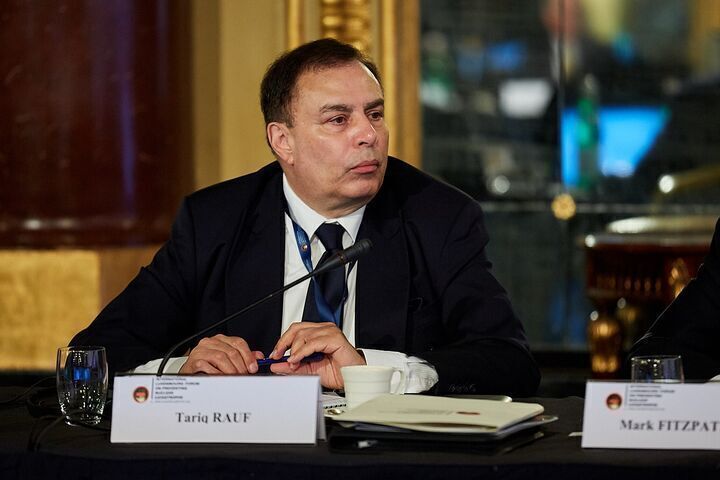
The former head of the International Atomic Energy Agency’s (IAEA) transparency division states that Trump is facing pressure both domestically and from Israel and certain European Union nations to launch an attack on Iran and instigate regime change. Thus, reaching an agreement is crucial, although past experiences indicate that this does not guarantee protection against future assaults.According to reports from the international desk of Tabnak, the second round of negotiations between Iran and the United States took place on Tuesday, February 16, in Geneva. Following this round, Iranian Foreign Minister Seyyed Abbas Araghchi remarked that discussions were significantly more serious compared to the previous round, fostering a more constructive atmosphere.He added that both parties agreed to work on the texts of a potential agreement and subsequently exchange these documents, with plans to schedule a third round of talks thereafter. While this roadmap does not imply a definitive plan, it does provide a clearer picture of the necessary steps moving forward.Additionally, the Omani Foreign Ministry stated that the session included a comprehensive review of the negotiation landscape and the requirements for their success from all political and technical perspectives, conducted with a realistic and constructive spirit, thereby enhancing the chances of reaching agreements that serve the negotiation objectives. They emphasized that today’s talks concluded with tangible progress, paving the way for their imminent continuation.In an interview with Tabnak, Tariq Raouf, former head of the IAEA’s political security and transparency division and current head of disarmament, arms control, and non-proliferation programs at the Stockholm International Peace Research Institute (SIPRI), assessed the second round of negotiations. He noted that little information is available about the discussions that took place in Geneva between Rafael Grossi, the IAEA Director-General, and Abbas Araghchi, beyond a brief press statement from Araghchi.Raouf pointed out that Iran has not enriched a single gram of uranium since June 11, 2025; the enrichment and conversion facilities have essentially been destroyed, leading to a practical cessation of enrichment activities in Iran since that date. He remarked that unless there are well-hidden undeclared facilities, which is unlikely given Mossad’s influence in Iran, no centrifuges are operational.Raouf suggested that one potential scenario could involve the reactivation of a refurbished Natanz facility, transforming it into a multinational enrichment center and a supplier of low-enriched uranium (LEU) for the nuclear fuel market.He elaborated that the Fordow facility should remain unchanged and under IAEA seal, with its nuclear materials deemed practically unusable according to the IAEA’s verification on May 31. In this scenario, nuclear non-proliferation hardliners may raise alarms, but a pragmatic and realistic approach is essential.The former nuclear advisor to the Canadian delegation reminded that Trump is under pressure from both Israel and certain EU nations to attack Iran and instigate regime change. Therefore, achieving an agreement is vital, although historical precedents suggest this does not ensure protection against future attacks.In conclusion Raouf stated that Iran must alleviate economic pressures reform its government integrate younger technocrats into its workforce and retire ideologues.