
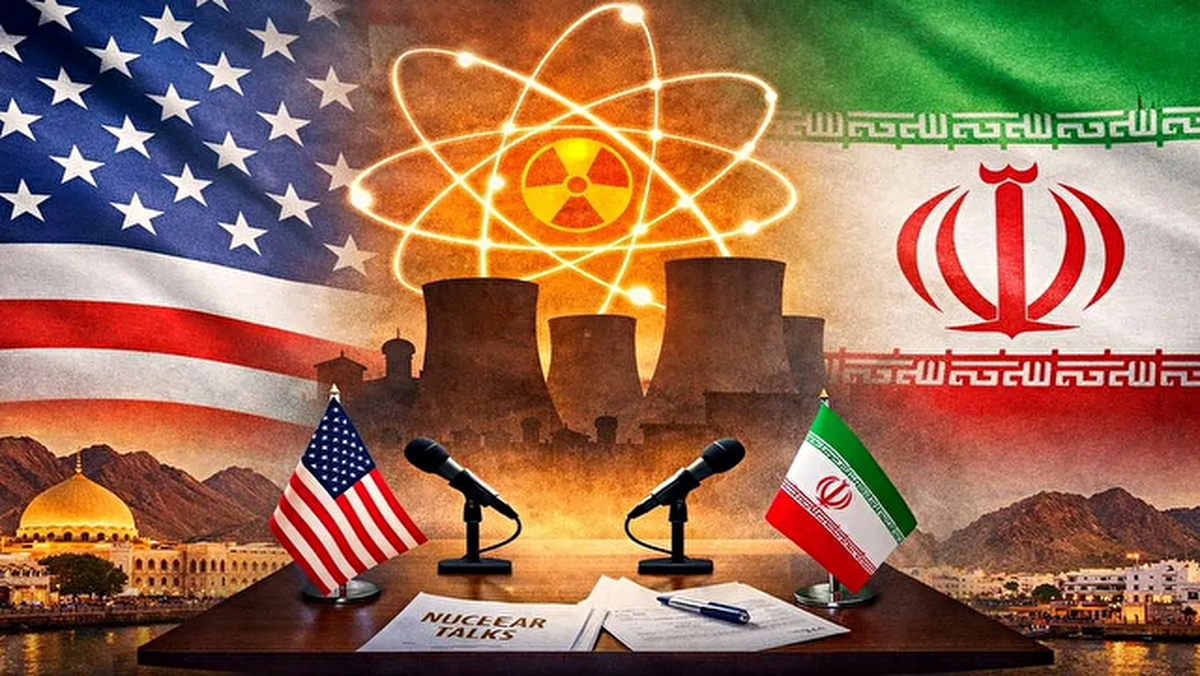
According to reports from the International News Agency, the recent coverage of the Geneva negotiations revealed a familiar pattern among some Western media and aligned with American and Israeli hardliners: the emphasis on war scenarios while sidelining diplomatic complexities. From the outset of the discussions, these outlets not only downplayed the prospects for an agreement but, in some cases, dismissed them entirely, suggesting that their primary mission was not to analyze the negotiation process but to foster an atmosphere of tension and distrust.
Geneva stands as a pivotal moment in the strategic management of complex negotiations. In this round of talks, Iran aimed to strike a balance between two essential necessities: maintaining sovereignty and strategic red lines while demonstrating calculated flexibility to prevent escalation of the crisis.At the primary level, Tehran successfully kept the negotiations focused on nuclear issues, preventing topics like its missile program or regional relations from being dragged into discussions. This was a significant achievement, as past experiences indicated that broadening the scope of talks to multiple subjects complicates the path to agreement.
At the secondary level, Iran sought to retain control over the nuclear agenda and refused to allow proposals such as complete dismantling of facilities, permanent cessation of enrichment, or transferring high-enriched uranium stocks abroad to be presented as prerequisites. Simultaneously, the possibility of relative flexibility within the red lines—such as reducing enrichment levels or temporary suspensions—remained as bargaining tools.In this context, one would expect media outlets to analyze the negotiation process with care and caution. However, the reality was a widespread focus on military scenarios. Coverage of American naval movements, speculation about the deployment of the aircraft carrier ‘Gerald Ford’ to the region, and discussions of the readiness of American drones dominated the news cycle.
Many of these movements could be interpreted within the framework of standard military arrangements and did not necessarily indicate a definitive decision for war. Yet, the volume and timing of these reports painted a picture of an ‘imminent war.’Simultaneously, some media outlets, citing Israeli sources, spoke of a ‘war on multiple fronts’ and highlighted the potential involvement of actors like Hezbollah. This approach seemed less about providing impartial analysis and more about reinforcing a pressure atmosphere that undermined the chances of successful negotiations.
The concept of ‘event creation,’ as proposed by Jean Baudrillard, becomes relevant here; the media sometimes acts not merely as a reporter of reality but as a creator of it. In covering Geneva, it appears some outlets sought to preemptively construct the ‘war event’ rather than wait for the outcomes of the talks.The language of breaking news, the contradictions between analyses, and the disregard for statements from mediating officials, particularly the Omani Foreign Minister, all indicated this approach. While messages about the continuation of talks and entry into technical discussions were emerging, media focus remained fixated on ‘deadlock’ and ‘imminent failure.’The crucial question arises: why the insistence on emphasizing the option of war? From an analytical perspective, war is always a possibility and cannot be entirely dismissed. However, transforming this possibility into a dominant narrative, especially amid sensitive negotiations, requires explanation.
Certain political factions in the U.S. and Israel are overtly opposed to any agreement that legitimizes Iran as a player in the international system. From this viewpoint, a failure of negotiations could pave the way for increased pressures or even military action. Thus, media framing that suggests diplomatic futility indirectly serves this agenda.After this round of talks, signs of a shift in tone were observed in some media. Discussions of entering technical details and continuing negotiations indicated that, contrary to pessimistic predictions, the path for diplomacy remained open. This shift was unexpected for those who spoke of a ‘final window.’
Entering technical discussions typically occurs when parties have reached a minimal understanding of general principles. This could signify a greater seriousness in pursuing an agreement, although fundamental challenges remain.Three macro scenarios remain conceivable:
1. A hasty war that halts negotiations.
2. The continuation of a ‘step-by-step’ approach leading first to a limited nuclear agreement and then addressing other issues.
3. An agreement sufficient to reduce tensions and open the path for broader diplomacy.
Rejecting any of these scenarios outright is simplistic. However, the central issue is the transformation of the first possibility into the prevailing narrative; a narrative that relies more on psychological atmosphere and political objectives than on objective data.The Geneva negotiations demonstrated that Iran is navigating a narrow path between maintaining sovereignty and leveraging diplomacy. This journey is complex and time-consuming, requiring meticulous management. In such conditions, media outlets that beat the drums of war instead of providing balanced analysis contribute to escalating tensions.
Diplomacy is inherently a gradual process, marked by ups and downs. If the goal is to prevent crises and ensure regional stability, strengthening the dialogue atmosphere is essential. However, if certain actors are intent on sabotaging negotiations from the outset, it is natural for them to prefer the war narrative over any other possibility.Ultimately what will be decisive is not the media uproar but the political will of the parties and their ability to translate national interests into the language of agreement. Geneva is not the end of the road; rather it can be the beginning of a new chapter in managing one of the most complex international issues.