
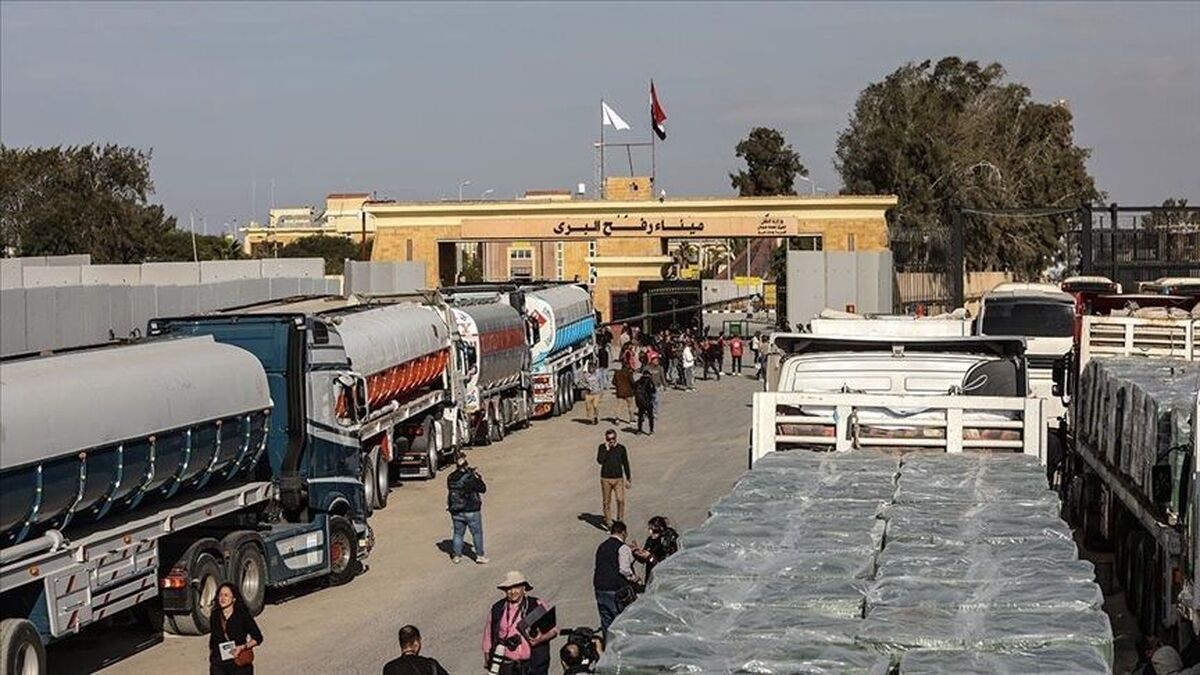
According to international news reports, Al-Sakafi stated in an interview with the Palestinian news agency Shehab that the number of individuals permitted to travel or return through this crossing remains severely limited. This restriction does not align with the large number of citizens registered and eager to travel or return, particularly the patients awaiting treatment outside Gaza.
He emphasized that this situation exacerbates the humanitarian catastrophe, leading to a deterioration in their physical, psychological, and emotional health.Al-Sakafi revealed that the harrowing testimonies documented by the Al-Damir Human Rights Institute expose the oppressive and arbitrary measures faced by citizens at the crossing. These include humiliating and degrading searches, denial of passage for travelers, and sometimes depriving them of access to water or basic services.
The head of Al-Damir pointed out that these actions, whether from occupying forces or affiliated armed groups, are executed in a manner that is degrading and devoid of the most basic human standards, which guarantee human dignity and the right to freedom of movement.He stressed that the practices enforced at the crossing effectively turn it into a tool for torture and humiliation, rather than a humanitarian passage aimed at alleviating their suffering.
Al-Sakafi further asserted that the freedom to travel and move is a human right guaranteed under international laws and conventions, including those set by the United Nations and international humanitarian law. This obliges occupying authorities to reopen crossings and ensure freedom of movement for the civilian population.He concluded by stating that these oppressive measures reflect a targeted Israeli policy.
The Gaza government media office previously issued a statement detailing the traffic statistics at the Rafah crossing from February 1 to February 16, highlighting the Israeli regime’s failure to adhere to agreements.Palestinian sources reported that despite an agreement to reopen the Rafah crossing during the first phase of a ceasefire in October 2025, the Israeli occupiers have only fulfilled 29% of their commitments.
Official statistics reveal that only 811 out of a total of 2,800 applicants have been granted passage through this crossing.These restrictions come at a time when prior to the conflict the management of the crossing was under the control of Gaza and Egyptian authorities allowing hundreds of individuals to cross daily without Israeli interference.
Currently 22000 patients and injured individuals in Gaza require treatment outside of Palestine yet the ongoing occupation and Israeli obstruction prevent them from accessing medical services.