
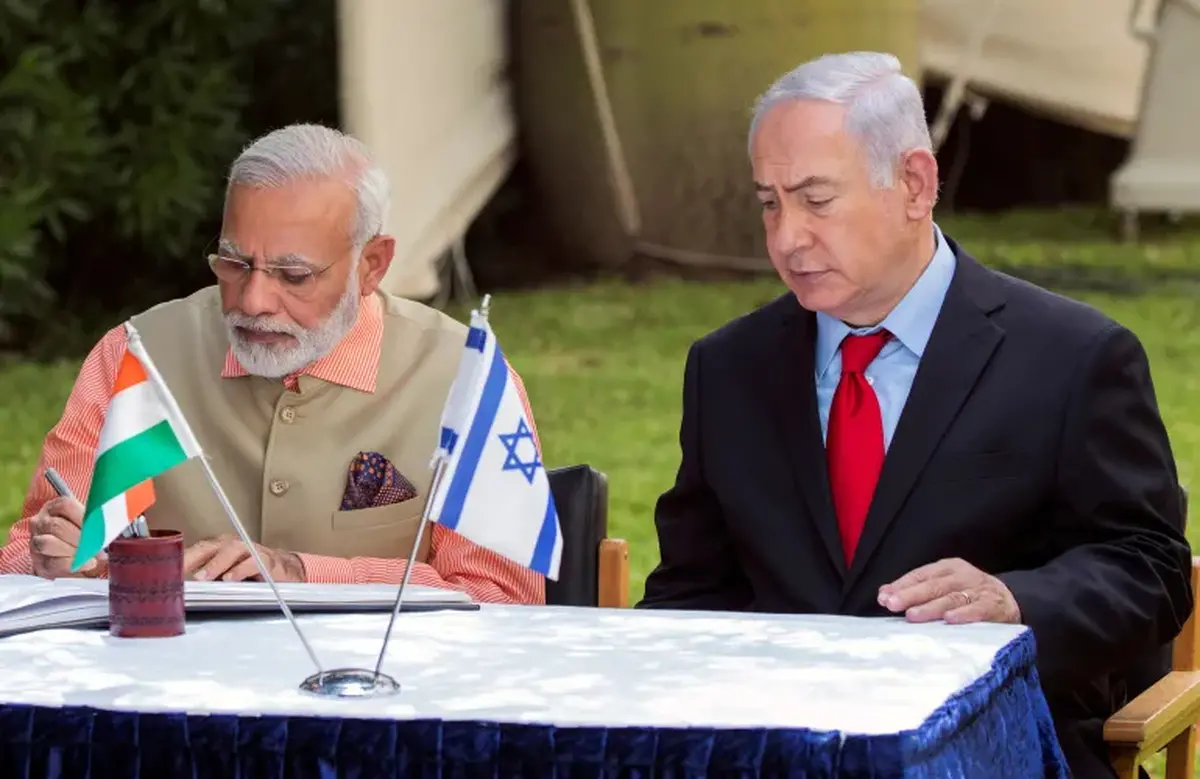
On Wednesday, Indian Prime Minister Narendra Modi arrived in Israel, marking his second official visit during his tenure. This trip is characterized as a ‘golden opportunity to strengthen relations’ by major media outlets, yet the reality extends beyond mere diplomatic gestures. This visit signifies a pivotal shift in India’s foreign policy, moving from a long-standing commitment to Palestinian support toward an unprecedented closeness with Tel Aviv, with potential repercussions felt regionally and globally.To grasp the significance of this visit, one must reflect on the past. For decades, India was a steadfast ally of Palestinian liberation movements, only establishing formal diplomatic relations with Israel in 1992—a turning point in New Delhi’s foreign policy. However, since Modi took office in 2014, India has adopted a markedly different strategy: enhancing security, military, and technological cooperation with Israel, even as violence between Israel and Palestinians escalates to unprecedented levels.The transition from ‘historic support for Palestine’ to ‘close partnership with Israel’ can be delineated through three critical phases:
1. Modi’s inaugural visit to Israel in 2017 marked the first by an Indian Prime Minister, symbolizing a new era of closeness.
2. A swift response to recent conflicts—particularly following the ‘Al-Aqsa Storm’ operation in October 2023, where Modi expressed ‘shock and dismay’ at the attacks while quickly voicing support for Israel.
3. Abstaining from voting on a ceasefire resolution at the United Nations, India refrained from endorsing a resolution that did not explicitly condemn attacks on Israel.This visit occurs against a backdrop of regional tensions, representing more than just a meeting between leaders. It unfolds during a time of unprecedented crisis in Middle Eastern security, with rising concerns about potential confrontations between the United States and Iran. The deployment of U.S. military assets in the region places Tel Aviv in a more precarious position.Israeli media has speculated that should Israel face an arms embargo similar to that imposed during President Joe Biden’s administration, it could rely on defense cooperation with India—a nation extending a hand of friendship during a critical juncture.Why does this visit hold such importance? Israel has long sought to expand its military export reach, particularly in innovative technologies such as artificial intelligence, supercomputing, cybersecurity, and missile defense. With a population exceeding 1.4 billion, India represents an unparalleled market for Israel.During this trip, both nations are expected to not only update defense agreements but also sign memoranda in multiple sectors, including:
– Establishing confidential mechanisms for sharing classified information.
– Granting India access to advanced Israeli defense technologies, such as laser defense systems.
– Expanding cooperation in cutting-edge technologies like artificial intelligence, cybersecurity, and digital infrastructure.These developments signal more than just a ‘diplomatic visit’; they represent a security, technological, and economic pact with far-reaching implications that could reshape the Middle East and even the international order.In addition to military collaboration, Israel and India aim to broaden a suite of economic and technological partnerships, including:
– Artificial intelligence, cybersecurity, quantum mechanics, and digital infrastructure.
– Financial, agricultural, and innovation agreements.
– Expanding air routes and tourism between the two nations.
– Establishing advanced research centers in India focused on cutting-edge sciences.
– Advancing a free trade agreement.
– Initiatives in renewable energy and telemedicine.Ron Malka, Israel’s ambassador to India, has described this new phase as a ‘significant leap,’ stating that collaborations will extend beyond security to encompass economic and social dimensions.Political analysts, including Itamar Eichner from Yedioth Ahronoth, have labeled this visit a ‘milestone in New Delhi-Tel Aviv relations,’ suggesting that Modi and Israel are entering an unprecedented level of strategic partnership. The collaborations in security and defense, coupled with India’s access to sensitive defense technologies like the ‘Iron Beam’ missile defense system, enhance Israel’s resilience while allowing India to leverage Israel’s advanced defense capabilities.However, Eichner warns that such extensive cooperation could carry security and political ramifications for India and the region, especially as tensions with Iran escalate.Challenges and Criticisms: Despite the exaggerated claims of achievements from both New Delhi and Tel Aviv this unprecedented closeness faces severe backlash both domestically and internationally:
1. Political rivals in India—the Congress Party has sharply criticized Modi’s government asserting ‘While India claims to support the Palestinian cause it has effectively abandoned and forgotten the Palestinians through unprecedented closeness with Israel.’
2. Violation of International Norms: Many analysts argue that India’s approach may distance it from its role as a neutral mediator in the Middle East peace process potentially undermining trust among numerous countries especially within the Islamic world.
3. Security Implications: India’s proximity to Israel amid rising tensions with Iran could expose New Delhi to unforeseen security risks.