mehr news
Lebanon’s Amal Movement and Hezbollah Condemn Threats Against Iran
The leaders of Lebanon's Amal Movement and Hezbollah have firmly condemned the recent threats posed by the United States and Israel against Iran. They characterized these threats as a blatant attempt to undermine and subjugate Iran emphasizing that any military aggression towards Iran jeopardizes the security and stability of the entire region. In their statement the leaders expressed complete confidence in the Iranian people and the leadership of the Islamic Republic particularly in the Supreme Leader Imam Sayyid Ali Khamenei. They affirmed their unwavering support declaring 'We stand alongside the Islamic Republic of Iran and uphold this nation's legitimate right to defend its sovereignty and territorial integrity.'
تصویر Lebanon’s Amal Movement and Hezbollah Condemn Threats Against Iran
8
1
0
February 25, 2026
Show detail
4863b790 54a5 4cc1 b38d 0e1b94a3f6ca
Dariush Arjmand Reflects on America’s Role as the Great Satan and the Epstein Scandal
In a recent ceremony honoring veteran artists, Dariush Arjmand drew attention to the terms 'Great Satan' and 'cancerous tumor' used by Imam Khomeini to describe the United States and Israel. He emphasized that these labels have become increasingly relevant in today's context. Arjmand expressed astonishment at the perception held by some that Iran would surrender in the face of overwhelming military presence and naval power. He articulated a profound truth: a nation with thousands of years of civilization will never yield to external pressures.This reflection highlights not only the historical significance of these terms but also the resilience of a culture that has endured through centuries. The artist's words resonate deeply shedding light on the ongoing struggle for sovereignty and dignity in the face of adversity.
7
1
0
February 25, 2026
Show detail
Israeli Opposition Leader Claims Expansion into Iraq Possible Under Certain Conditions
The leader of the opposition parties in Israel has made a bold statement regarding the potential expansion of Israeli territory. He indicated that if the political and security conditions are favorable, the borders of Israel could extend into Iraq as part of a broader expansionist agenda. This assertion highlights the ongoing ambitions of the Israeli regime, which seeks to redefine its territorial limits amidst a complex geopolitical landscape. The implications of such a statement could resonate across the region, raising questions about stability and international relations.The remarks reflect a significant shift in rhetoric emphasizing the strategic aspirations of the Israeli government. As tensions in the Middle East continue to evolve the possibility of territorial expansion remains a contentious issue with far-reaching consequences for both Israel and its neighbors.
تصویر Israeli Opposition Leader Claims Expansion into Iraq Possible Under Certain Conditions
6
1
0
February 25, 2026
Show detail
U.S. Military Capacity to Endure Extended Air Attacks Amidst USS Gerald R. Ford Deployment
A senior Israeli intelligence official has disclosed to the Financial Times that Israel has assessed the current military capabilities of the United States. This evaluation indicates that even with the imminent arrival of the USS Gerald R. Ford aircraft carrier later this week, the U.S. possesses sufficient military strength to withstand a severe air assault lasting four to five days.Furthermore the analysis suggests that the U.S. can manage a prolonged series of less intense attacks over the course of a week. This insight underscores the strategic considerations at play as tensions escalate in the region highlighting the resilience and preparedness of U.S. military operations.
تصویر U.S. Military Capacity to Endure Extended Air Attacks Amidst USS Gerald R. Ford Deployment
10
1
0
February 25, 2026
Show detail
X6w2Ox
The Tragic Legacy of al-Shajara: A Poet’s Sacrifice and Historical Memory
The seventh of Ramadan marks a somber anniversary, commemorating a significant yet sorrowful event in history. This day recalls the occupation of the village of al-Shajara, located near Tiberias, during the 1948 conflict and the events known as the Nakba. On this fateful day, the village fell to Israeli forces, resulting in the martyrdom and displacement of numerous residents. Before its occupation, al-Shajara was a bustling and populated village in the Galilee region. On the seventh of Ramadan in the year 1367 of the Islamic calendar (corresponding to 1948), the village succumbed to intense clashes and heavy bombardment. Many villagers were killed during this assault, while the survivors were forced to abandon their homes and livelihoods. Among the martyrs, the name of the distinguished poet Abdul Rahim Mahmoud stands out prominently. Recognized as a leading figure in the literature of resistance, he inspired resilience among the people through his patriotic and epic poetry. Abdul Rahim Mahmoud was not only a poet but also a field fighter, ultimately losing his life in the battles of 1948. Some of his most famous verses express a longing for martyrdom in defense of his homeland. These lines took on a prophetic quality after his death, becoming etched in the collective memory of the nation. The occupation of al-Shajara was part of a broader campaign that led to the destruction of hundreds of villages and towns during the Nakba, resulting in the displacement of their inhabitants. Many of these villages were entirely erased from the geographical map, their lands appropriated for Israeli settlements. The anniversary of the seventh of Ramadan serves as a poignant reminder of the bond between blood and the written word; a day when a poet took up arms and sacrificed his life in defense of his homeland. This occasion symbolizes both cultural and militant resistance against occupation and remains alive in the collective consciousness of the nation.
9
1
0
February 24, 2026
Show detail
X6w2Ox
Unraveling the Complexities of the Peace Council: Security Concerns and Reconstruction Challenges
The recent Peace Council meeting sparked a wave of questions and criticisms due to its participant composition and discussion topics. Notably, Israel attended the session officially, despite Prime Minister Netanyahu facing war crime allegations from the International Criminal Court. However, Israel was not adequately represented as the primary party involved, with only the head of the National Committee for Gaza being allowed to speak, and even then, his remarks were limited to humanitarian and operational issues in the Gaza Strip. In contrast, Gideon Sa'ar, the foreign minister of the occupying regime, was given the platform to present a distorted and unilateral narrative of developments in Gaza. This situation not only sidelined the national voice but also marginalized the Palestine Liberation Organization, which is recognized as the representative body of the people. Many view this approach as indicative of ongoing political and international pressures aimed at undermining the official structure. A significant concern raised during the meeting was the apparent effort to separate Gaza's fate not only from the West Bank but also from the broader issue at hand. Some proposals suggested envisioning Gaza's future as an independent entity, detached from the national framework, which could be a step towards geographical fragmentation and a weakening of national identity. Critics warn that such plans, if pursued without national consensus, risk reducing the issue from one of 'a people's rights' to a mere geographical matter, limited to the management of several scattered regions.The security discussions during the meeting were notably ambiguous. A proposal was made to establish a transitional police force comprising five thousand new personnel who would undergo training in Egypt and Jordan. However no clear explanations were provided regarding the fate of the current police forces in Gaza. Additionally it was announced that countries such as Indonesia Morocco Kosovo Kazakhstan and Albania would form a force known as 'peacekeeping' or 'stability' with approximately twenty thousand troops with Indonesia contributing the largest contingent of eight thousand. This force is to be organized into five brigades based on the provinces of Gaza with only Rafah specifically mentioned. Yet fundamental questions remained unanswered: Will this force have a policing mandate or operate under a disarmament framework? Will the Israeli army withdraw from the occupied areas of Gaza and what is the timeline for this withdrawal? Which body will ensure the cessation of Israeli military attacks? If Israeli forces retreat to the buffer zone where will the international forces be stationed? Furthermore Tony Blair's assertion that any police force must be reviewed and approved by Israel elicited widespread critical reactions as many see this condition as a means for Israel to maintain indirect control over Gaza's security structure. On the other hand the U.S. President's remarks which implied that two countries had been willing to take military action against Hamas but that Washington deemed it unnecessary added to the confusion. This raised the question of which countries were involved and under what authority they were prepared to assume a role akin to that of the Israeli army in Gaza. The third focal point of the meeting was Gaza's reconstruction. It was announced that various countries and United Nations-affiliated organizations had collectively pledged seven billion dollars with the U.S. President promising an additional ten billion contingent upon Congressional approval. However estimates indicate that the total cost for the complete reconstruction of Gaza could reach at least sixty to seventy billion dollars highlighting a significant gap between promises and actual needs. Moreover many countries have pledged their assistance in a gradual manner over several years rather than providing immediate support. Another critical issue is the lack of any mention of the need for Israel to compensate for the extensive destruction caused. Additionally the exploitation of Gaza's gas field which could help cover part of the reconstruction costs and energy needs was not addressed in the discussions. The announcement of commencing reconstruction from Rafah and the coastal strip has raised concerns that the eastern parts of Gaza may remain under the control of the occupiers with the reconstruction process potentially being designed to prioritize the interests of foreign investors over the immediate needs of over two million residents of Gaza.
8
1
0
February 24, 2026
Show detail
profile 1
Potential Closure of Airspace in Germany and Lebanon Announced
The German embassies in Tel Aviv and Beirut have issued a warning regarding the imminent possibility of airspace closures in both countries. This development raises significant concerns for travelers and may impact various sectors reliant on air travel.Such a measure if implemented would not only affect commercial flights but could also have broader implications for diplomatic and humanitarian operations in the region. The situation remains fluid and authorities are closely monitoring developments to provide timely updates.
9
1
0
February 24, 2026
Show detail
Ongoing Violent Acts by Israeli Settlers in the West Bank
Israeli settlers have committed blatant acts of violence against Palestinian residents in the southern region of Hebron located in the West Bank. In a recent incident they set fire to homes and vehicles belonging to Palestinians highlighting the ongoing tensions and hostilities in the area. These actions not only threaten the safety and security of Palestinian communities but also exacerbate the already volatile situation in the West Bank. The continuous aggression from settlers raises significant concerns regarding human rights and the protection of vulnerable populations in the region.
8
1
0
February 24, 2026
Show detail
Islamic Jihad Critiques Trump’s Peace Council as a Facade for Israeli Security
Mohammed Al-Hindi, the Deputy Secretary-General of the Islamic Jihad Movement, has expressed strong criticism regarding the so-called Trump Peace Council. He asserts that this initiative is merely a façade, failing to address the ongoing humanitarian crisis in Gaza. Al-Hindi emphasized that the council has not succeeded in curbing Israel's continuous military actions, which he describes as acts of genocide against the people of Gaza. This statement underscores the broader concerns regarding the effectiveness of international peace efforts in the region and highlights the urgent need for genuine dialogue aimed at achieving lasting peace.The Islamic Jihad Movement's position reflects a growing frustration with diplomatic initiatives perceived as biased or ineffective. As tensions escalate the call for a more equitable approach to peace negotiations becomes increasingly critical drawing attention to the plight of those affected by the conflict.
تصویر Islamic Jihad Critiques Trump’s Peace Council as a Facade for Israeli Security
6
1
0
February 24, 2026
Show detail
X6w2Ox
Humanitarian Crisis in Gaza: Dire Conditions and Urgent Need for International Intervention
The humanitarian situation in Gaza has reached a critical level, as described by Mahmoud Basal, the spokesperson for the Civil Defense in the region. He characterized the ongoing crisis as a genuine catastrophe that is intensifying by the day. Basal attributed the primary cause of this disaster to the relentless bombardments and the killing of civilians by Israeli occupiers, as well as the obstruction of humanitarian aid and shelter for the displaced. He emphasized in an interview with the Safa News Agency that since the onset of the conflict, Gaza has not only been subjected to daily attacks but is also experiencing total devastation from occupation, home demolitions, and a complete disruption of residents' lives. In addition to the ongoing warfare, citizens are grappling with harsh natural conditions, facing the winter chill and summer heat without adequate shelter or infrastructure. Recent heavy rains have inundated thousands of refugee tents, leading to the outbreak of infectious and skin diseases in unsanitary environments. Basal warned that children are dying and families are becoming homeless. The Civil Defense spokesperson also criticized the inaction of international organizations, claiming that their responses to the regime's obstruction of aid have been inadequate. He condemned Israel's strategy of providing aid in trickles, stating that only a fraction of the actual needs are being met, while infrastructure continues to deteriorate.Basal pointed out the unprecedented challenges facing Civil Defense which is severely lacking in fuel and equipment leaving many requests for assistance unanswered. He reported that his teams have recovered over a thousand martyrs from the rubble since the ceasefire. He cautioned that with the current resources available—only two excavators—this recovery process could take up to three years whereas it could be completed in 100 days with sufficient equipment. In conclusion Basal stressed the urgent need for a decisive international response to alleviate the suffering of the people in Gaza and to facilitate the immediate delivery of all essential supplies necessary for the rescue of the service system. This includes an urgent requirement for equipment to retrieve bodies conduct debris removal and clear unexploded ordnance.
تصویر Humanitarian Crisis in Gaza: Dire Conditions and Urgent Need for International Intervention
8
1
0
February 24, 2026
Show detail
profile 1
The Deteriorating Political Landscape for Benjamin Netanyahu
The political situation surrounding Benjamin Netanyahu is increasingly dire, as reported by the Hebrew newspaper Yedioth Ahronoth. The analysis highlights a troubling decline in Netanyahu's influence within the Israeli political arena. As circumstances worsen day by day, the implications for his leadership and the future of the Israeli government become more significant. The ongoing challenges he faces reflect broader issues within the political landscape, raising questions about the stability and direction of the current administration.The truth remains that the political climate is ever-evolving and the pressures on Netanyahu are intensifying. Observers note that the current state of affairs could lead to substantial changes in Israeli politics making it a pivotal moment for the nation.
تصویر The Deteriorating Political Landscape for Benjamin Netanyahu
10
1
0
February 24, 2026
Show detail
X6w2Ox
Berlin Police Arrests 14-Year-Old During Gaza Support Demonstration
In a recent demonstration advocating for Gaza Berlin police apprehended a 14-year-old teenager. This incident highlights the ongoing tensions surrounding the conflict and the passionate responses it elicits from various communities. The youth's involvement in the protest reflects a growing awareness and activism among younger generations regarding international issues. As the situation in Gaza continues to unfold such demonstrations serve as a platform for individuals to express solidarity and raise awareness about humanitarian concerns.
8
1
0
February 24, 2026
Show detail
X6w2Ox
Two Young Men Injured in Israeli Military Attack in Southern Hebron
In a recent escalation of violence two young men sustained injuries during an assault by Israeli forces in the town of Al-Dhahiriya located in southern Hebron. This incident highlights the ongoing tensions and conflicts in the region drawing attention to the impact of military actions on local communities. The attack on Al-Dhahiriya not only resulted in injuries but also raised concerns regarding the safety and security of residents in the area. As clashes between Israeli soldiers and Palestinian youth continue the situation remains precarious with civilians often caught in the crossfire. Reports indicate that such incidents are becoming increasingly frequent emphasizing the urgent need for dialogue and resolution to prevent further violence.
9
1
0
February 24, 2026
Show detail
X6w2Ox
Concerns Within Israeli Circles Regarding the Endurance of Resistance Ideology Post-Gaza Conflict
Amidst the media and political frenzy in Israel surrounding the outcomes of the recent conflict with Gaza a voice has emerged from within the regime's decision-making structure that diverges from the prevailing narrative of celebration and victory. An article published in Yedioth Ahronoth authored by former internal security advisor Zahi Hanegbi conveys more of a warning and concern rather than pride. It reflects apprehension about something that remains undefeated an ideology that has not vanished and an adversary that despite widespread destruction has not raised the white flag of surrender. In his writing Hanegbi does not deny the military blows inflicted on Gaza nor does he attempt to downplay their significance. Instead he poses a fundamental question: What if the opposing side perceives this battle entirely differently? What if they regard mere endurance as an achievement? What if from the ruins they emerge with a deeper conviction in the efficacy of resistance? According to him these questions are not merely rhetorical; they are directly linked to Israel's security. Hanegbi a prominent figure in Israeli political and security spheres was appointed by Benjamin Netanyahu as the head of the National Security Council at the end of 2022 a position that requires integrating political and military levels in major decision-making processes. In his commentary he cautions against premature self-congratulation and recalls the aftermath of Operation Guardian of the Walls in 2021 when the Israeli security apparatus believed deterrence had been established and that Hamas had received the message. However subsequent developments revealed that this assessment was fundamentally flawed and the understanding of resistance leaders particularly martyr Yahya Sinwar differed significantly from that of Tel Aviv. The core of this analysis highlights that Israel while achieving notable military successes simultaneously faces challenges in public opinion politics and its surrounding environment. Hanegbi observes that the slowdown in regional normalization processes the resurgence of the statehood issue in international forums the expansion of conflicts across various fronts and the intensifying legal and political pressures are realities that cannot be overlooked. This evaluation inadvertently suggests that the battle extends beyond the battlefield permeating political and diplomatic arenas as well. A significant and perhaps alarming aspect of this commentary is the warning about the potential for reconstruction or what can be termed the capability for revival. The author believes that even if infrastructures are damaged the possibility of regeneration and the re-emergence of threats still exists. This perspective reflects a fear that transcends mere military capability; it embodies a fear of the persistence of will. Within the framework of Israel's security doctrine deterrence is achieved when the opposing side's will to continue the fight is shattered. However the text conveys doubts about the realization of this very objective. In other words while structures may be damaged the desire and motivation have not been extinguished. Hanegbi hints at the possibility that resistance may define confrontation not as a short-term battle but as a long-term struggle with outcomes measured over years rather than weeks. In such a context 'survival' could transform into a symbol of success and serve as an inspiring narrative for the future. Therefore he emphasizes the necessity for continuous vigilance skepticism towards hasty assessments and avoidance of overconfidence in tactical achievements indicating that the post-war period may be more complex than the war itself. In summary it can be said that within the deep layers of decision-making in the occupying regime the question is not merely 'what have we destroyed?' but rather 'what remains?' More importantly 'what can rise anew from this destruction?' When the discourse reaches this point it signifies that resilience and resistance—despite heavy human and material costs—have imposed themselves as essential components in the equation of confrontation. In the battle of wills success and achievement may not be measured by the extent of destruction but rather by the ability to stand firm and endure.
9
1
0
February 24, 2026
Show detail
5yogS1
New Era of Diplomatic Relations: Iran and Egypt Strengthen Ties
In a remarkable shift within the diplomatic landscape of West Asia Iran and Egypt which have not had ambassadorial relations for over four decades have reached a significant agreement to elevate their diplomatic ties and exchange ambassadors. This decision as stated by officials from both nations is poised for an official announcement at a predetermined 'zero hour.' This development not only opens a new chapter in the relationship between two major powers in the Islamic world but has also sparked considerable concern in Tel Aviv. Diplomatic sources and regional analysts view this move as a strategic response to recent developments aimed at establishing a new balance against the regional policies of the Israeli regime and its allies. The groundwork for this elevation in relations has coincided with a peak in political coordination between Tehran and Cairo regarding regional events. Frequent communications nearly on a weekly basis between the foreign ministers of the two countries in recent weeks signify serious convergence on key issues.
تصویر New Era of Diplomatic Relations: Iran and Egypt Strengthen Ties
8
1
0
February 24, 2026
Show detail
X6w2Ox
Islamic Jihad Movement Leader Critiques U.S. Peace Proposals as Illusory
Mohammad Al-Hindi the Secretary-General of the Islamic Jihad Movement voiced his concerns today regarding recent developments and criticized the United States' plans for Gaza labeling them as disconnected from the realities on the ground. He emphasized "What we witnessed in Washington was a theatrical performance that bears no relation to the actual circumstances." Al-Hindi pointed out the contradictions in U.S. policies stating "We do not believe that those who supply weapons to Israel to inflict suffering on Gaza and obstruct the delivery of aid tents and shelters can gather resources for the reconstruction of Gaza and assist its people." In addressing the purported U.S. peace initiatives he warned "The toll of bloodshed continues unabated and under the guise of the peace plan that Trump speaks of thousands have already fallen as martyrs or been injured." He analyzed Trump's proposed plan asserting "This proposal grants sovereignty to Trump and security to Israel effectively concluding the mediators' role in prisoner exchange negotiations." Al-Hindi underscored resistance as the only viable option stating "To navigate through this crisis we have no choice but to intensify our resistance and cling to our land; there are no alternatives before us." Finally he referenced the confrontational dynamic between Iran and the United States asserting "The confrontation between Iran and the U.S. will have a decisive impact on the regional situation as a whole and specifically on our circumstances."
تصویر Islamic Jihad Movement Leader Critiques U.S. Peace Proposals as Illusory
12
1
0
February 24, 2026
Show detail
The Unforgettable Strikes: Satellite Imagery Reveals Impact of Iranian Missile Attacks
Recent satellite images have surfaced showcasing the dramatic transformation of territories following a relentless barrage of Iranian missiles during a twelve-day conflict. These visuals depict the stark before-and-after scenarios highlighting the significant impact of the attacks on the affected regions. The imagery serves as a powerful testament to the intensity of the military actions illustrating not only the physical destruction but also the strategic implications of such an aggressive campaign. As tensions escalate these revelations provide crucial insights into the ongoing conflict and its broader ramifications.
9
1
0
February 24, 2026
Show detail
The Importance of Dialogue in Understanding Recent Events
Jalali emphasizes the necessity for students to analyze recent events critically. He notes that there is a lack of substantial information coming from Israeli radio highlighting the need for deeper investigation. As a member of the university faculty Jalali advocates for open dialogue between professors and students as well as among the students themselves. He believes that such conversations are vital for unraveling complex issues and fostering understanding. Furthermore he expresses a desire to engage his students in discussions about provocative actions such as the burning of the Quran questioning who has the audacity to commit such acts and what the consequences might be.
9
1
0
February 24, 2026
Show detail
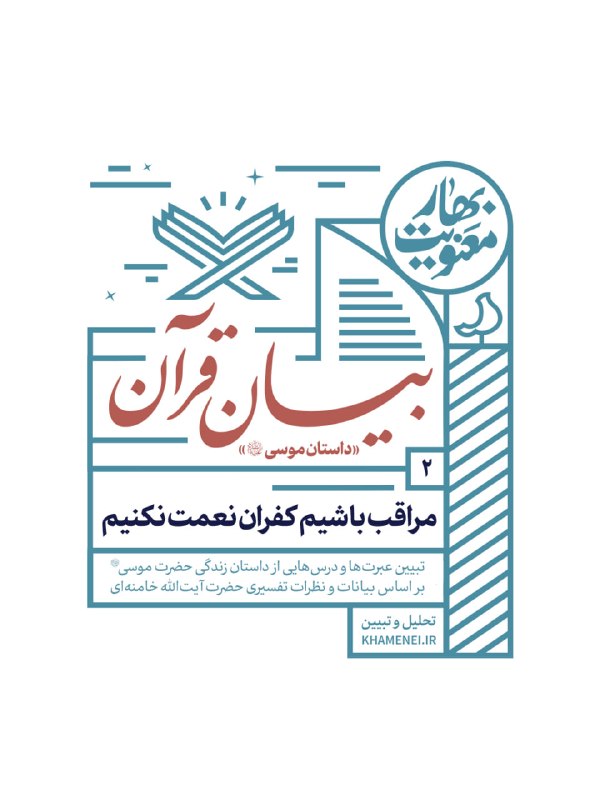
Lessons from the Story of Moses: The Consequences of Ingratitude
During the sacred month of Ramadan, a series of reflections delve into the lessons and insights derived from the life of Prophet Moses, based on the interpretations of Ayatollah Khamenei. This second installment highlights the divine principle regarding ingratitude among the Children of Israel. In the Holy Quran, God employs various methods to guide believers, one of which includes recounting the stories and fates of past nations. Among these narratives, the account of Prophet Moses and the Children of Israel stands out prominently. A significant lesson embedded within these cautionary tales is the unwavering principle that ingratitude leads to the loss of blessings. This truth has manifested throughout history across different nations. According to multiple verses in the Quran, God bestowed numerous blessings upon the Children of Israel, yet they failed to acknowledge and appreciate these gifts. Maintaining divine blessings is often more challenging than acquiring them. The Children of Israel exemplified a nation that neglected to safeguard the divine gifts they received, allowing them to slip into oblivion. Most commentators interpret verse seven of Surah Al-Fatiha as indicating that God grants blessings to some while withholding them from others, leading to divine wrath and misguidance for some. However, Ayatollah Khamenei posits that God bestows blessings upon all humanity, categorizing recipients into two groups: those who, upon receiving divine gifts, ensure they do not incur God's wrath or stray from the right path, and those who squander their blessings, ultimately incurring divine displeasure and misguidance. The ingratitude of the Children of Israel resulted in dire consequences, branding them with a mark of humiliation. They faced eternal condemnation for their ungratefulness, as they were among those favored by God, yet their actions led to a permanent curse upon them. In his analysis of the verses concerning the Children of Israel, Ayatollah Khamenei identifies the Islamic Republic as one of the divine blessings bestowed upon the Iranian nation. He emphasizes that the Iranian people have achieved a significant gift in the form of the Islamic Republic, which embodies freedom from the oppression of powerful entities. He urges the nation to preserve this great blessing with the same determination and resilience that led to its establishment and survival through years of struggle. Human beings bear responsibilities towards the blessings they receive, with gratitude being one of the foremost duties. Failure to express gratitude, as exemplified by the Children of Israel, can lead to deprivation of blessings. Therefore, it is crucial to recognize that the divine principle regarding blessings remains constant; those who disregard and are ungrateful for God's gifts, like the Children of Israel, will find themselves ensnared in humiliation and deprivation. Gratitude and the preservation of blessings are the only paths to experiencing God's mercy.
تصویر Lessons from the Story of Moses: The Consequences of Ingratitude
12
1
0
February 24, 2026
Show detail
Hamas Enhances Missile Capabilities with Innovative Transport Methods
According to Hebrew media reports Hamas is actively working to restore its missile capabilities. Recent insights from the Kan radio and television network reveal that Hamas has altered its methods for transporting materials necessary for missile production. No longer relying on tunnels or trucks the organization has shifted its focus to utilizing specialized containers that float beneath the ocean's surface. This strategic move represents a significant step in Hamas's efforts to regain its operational strengths despite the numerous challenges and restrictive conditions it faces.
تصویر Hamas Enhances Missile Capabilities with Innovative Transport Methods
8
1
0
February 24, 2026
Show detail