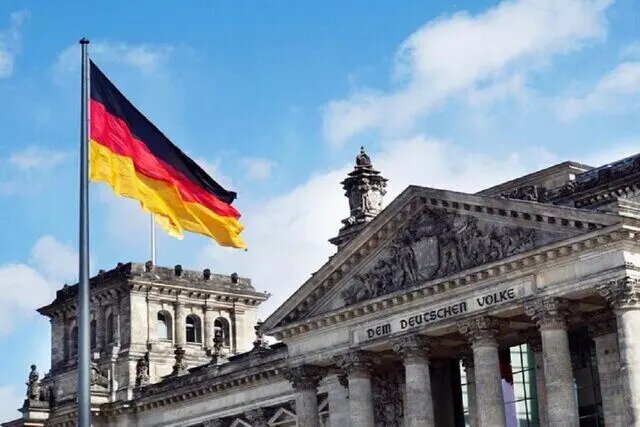
Germany’s foreign policy towards the Islamic Republic of Iran has faced increasing criticism in recent years. This criticism stems from Berlin’s overt support for the Israeli regime, its hosting of dissident groups, and its inconsistent application of human rights and international law standards. Recent developments indicate that a series of political, security, and media actions by the German government have significantly challenged its image in Iranian public opinion.
In light of recent regional events, particularly concerning Israeli actions against Iran and the Gaza conflict, Germany’s positions have been perceived as biased and unbalanced by Iranian observers. As one of Israel’s primary European supporters, Berlin consistently emphasizes its ‘historical commitment’ to the security of this regime.Furthermore, Germany is the second-largest supplier of weapons to Israel, a fact viewed as indirect involvement in regional conflicts. The positions taken by figures such as Annalena Baerbock, the former German Foreign Minister, have also sparked widespread reactions.
Another focal point of criticism is Germany’s hosting of various dissident and separatist Iranian groups. The organized presence and activities of members of the group known as the Mojahedin-e Khalq (MEK) and their rallies in cities like Munich are seen as indicative of Berlin’s specific political approach.Critics argue that this stance contradicts Germany’s claims of fighting extremism and terrorism, leading to significant security and diplomatic repercussions in bilateral relations.
The issue of dual nationals has also become a contentious topic. Following the case of Jamshid Sharmardeh, Germany shut down three Iranian consulates in response to developments surrounding him. This decision has had extensive practical implications for the hundreds of thousands of Iranians residing in Germany, complicating their consular affairs.Of the approximately 400,000 Iranians living in Germany, over 200,000 hold German citizenship. Consequently, supporting a spy or a human rights activist holds more value for the German government, often overlooking the troubles faced by nearly 300,000 others. Critics believe that Berlin’s political decisions in this area have created substantial social costs for the Iranian community in Germany.
Historically, the role of German companies in supplying materials and equipment used by Saddam Hussein during the Iran-Iraq War remains a vivid memory for many Iranians. This issue, particularly concerning chemical attacks, has consistently been a point of contention in Tehran-Berlin relations, marking a dark chapter in Germany’s historical record.Germany’s conduct during international crises is also viewed by some Iranian analysts as an example of double standards. While Berlin has condemned Russia’s invasion of Ukraine, it has adopted a different approach towards actions taken by Israel or the United States in the West Asian region.
In the realm of human rights, Germany exhibits a more cautious stance towards countries with which it has extensive economic ties, while taking a harsher stance against Iran. This disparity, especially in the media landscape, is criticized as a form of selective policymaking.Internally, challenges such as the rise of far-right movements, increased incidents of Islamophobia and anti-Semitism, and restrictions imposed on certain political groups have garnered media attention. Critics argue that security measures against specific parties or social groups contradict the nation’s claims regarding political freedoms.Contrary to the established image of Germany as Europe’s economic powerhouse, new indicators reveal a relative decline in the country’s innovation and digital sectors. In the European Innovation Scoreboard, Germany ranks ninth in the EU, eleventh in the Global Innovation Index, and fourteenth in the Digital Economy and Society Index (DESI) among 27 EU countries. Additionally, Germany ranks sixtieth globally in internet speed, highlighting the challenges facing its economy.The growing competition from China in the electric vehicle industry has exerted additional pressure on major German companies, leading some prominent brands to relocate parts of their production abroad.
In key international matters, such as the Gaza conflict and the Ukraine crisis, Western analysts have pointed out Germany’s limited independent role in relation to the United States. Some European media outlets have described Berlin’s foreign policy as ‘dependent’ or ‘in the shadow,’ a topic of debate among domestic critics.The increase in Germany’s military budget in recent years within the framework of European security developments has raised concerns particularly given the country’s historical legacy from the two World Wars. Although Berlin justifies this trend as part of NATO commitments and geopolitical shifts sensitivities regarding Germany’s military resurgence persist in the European media landscape.
These factors collectively illustrate that Iran-Germany relations are at a critical and complex juncture. On one hand Berlin emphasizes its historical commitments and strategic ties with the West and Israel while on the other Tehran views this approach as indicative of biased policies and double standards. The continuation of this trend could deepen the political and media rift between the two nations.