
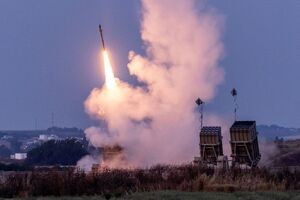
According to a report from Channel 14 of the Israeli regime, today’s analysis highlights the troubling state of interceptor missiles. Data reveals that the production rate of these missiles is significantly lower than the consumption rate.
The report emphasizes that, given the limited stock of ‘Arrow’ and ‘David’s Sling’ missiles, Israel must prepare for a possible confrontation with Iran’s missile capabilities. The pressing issue is time; the outcome of the next conflict may hinge on a stringent ‘arms economy.’ In this scenario, the defense structure is urged to prioritize the protection of strategic infrastructures.The New York Times also reported today that the United States is likely to face its own shortages. The U.S. plans to assist Israel with defense systems on land and sea while simultaneously needing armaments for its potential offensive operations.
Israel’s primary vulnerability lies in its ability to withstand massive missile barrages from Iran. Dana Stroul a former senior Pentagon official responsible for the Middle East directly addressed the issue of interceptor missile reserves: ‘The reserves of interceptor missiles are not unlimited. If Iran successfully launches a deluge of hundreds of missiles simultaneously Israel and the United States will have to make extremely difficult decisions about which missiles to intercept and which to allow through.’