
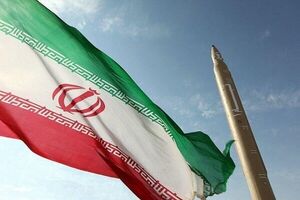
In light of increasing threats and Donald Trump’s rhetoric against Iran, anxiety has surged throughout the occupied territories regarding potential missile attacks from Iran. Israeli leaders, settlers, and Hebrew media, haunted by the traumatic memories of the 12-day war, are now facing a renewed and devastating fear of Iranian missile strikes.
Iran’s offensive capabilities have emerged as a significant deterrent against Tel Aviv. The shadow of Iranian missiles has become one of the primary nightmares for military strategists in Israel and the Pentagon. Iran’s remarkable advancements in missile technology, especially over the past two years, have transformed regional security dynamics and posed a serious challenge to the perceived invulnerability of Israeli defense systems.
What deepens this fear is not just the sheer number of missiles and drones but also Iran’s practical experiences and strategic lessons learned from recent battlefields, particularly the 12-day war, indicating that Iran’s armed forces have absorbed lethal lessons for the final day of conflict.Through astute planning and long-term investment, Iran now possesses one of the most powerful missile arsenals in the region. This capability extends beyond short- and medium-range ballistic missiles to include a wide array of advanced cruise missiles, attack drones, and precision-guided systems.
The diversity of missile classes, enhanced accuracy, ability to penetrate defense systems, and deployment across multiple concealed sites have made Iranian missiles a complex, multidimensional threat. These advancements are a direct result of self-sufficiency and innovation by Iranian specialists under severe sanctions, amplifying the fears of Israeli commanders.
Israel recognizes that Iran has not been a passive observer in recent years. Active participation in various battlefields, from Syria to Yemen and Iraq, has provided a live laboratory for testing tactics, enhancing technology, and gauging enemy responses. Moreover, the series of operations during the 12-day war has imparted invaluable lessons to Iran, leading to a significant reduction in the effectiveness of Israeli defense systems.Israeli analysts warn that Iran will apply these lessons in planning for the next conflict. They believe that Tehran will no longer limit itself to a few missile launches but will unleash a coordinated storm of ballistic missiles, cruise missiles, and drones targeting critical Israeli infrastructure—from military bases and command centers to the Dimona nuclear facility, ports, and economic centers.
Another concern is the increasing accuracy of Iranian missiles. During the last conflict, Israelis witnessed the pinpoint strikes of Iranian missiles and now acknowledge that Iran has further enhanced the power and precision of its missiles. This means that in the next war, each missile has a higher probability of striking a sensitive facility. Israeli intelligence reports indicate that Iran is utilizing advanced satellite and inertial guidance technologies to increase the strike accuracy of its missiles.In fact, Iran’s missile capabilities have not only become a defensive tool but also an effective deterrent, raising the cost of any attack on Iranian territory to an unacceptable level for Israel. They now understand that any new war could quickly escalate into a full-scale conflict with catastrophic consequences for them.
Acknowledgment of Iran’s devastating missile capabilities in a potential future war has been echoed by Alon Ben David, a prominent Israeli expert, who notes that Iran is rapidly ramping up its production of ballistic missiles. Today, Iran has thousands of ballistic missiles threatening Israel, similar to its position before the last war.
He stated that during the conflict, Iran lost dozens of launchers but, through extensive efforts, still maintained the ability to launch hundreds of missiles as experienced during the war. Observations from the recent conflict show Iran’s tactical evolution in missile launches, which proved successful. Apparently, the Iranians have learned significant lessons from past wars and have significantly bolstered their capabilities. Therefore, in the next campaign, heavy barrages targeting various locations in Israel should be anticipated.He further noted that American media reported that Netanyahu warned the U.S. President that Israel’s defensive capabilities have not yet improved to withstand another campaign against Iran. This has not prompted Trump to send more defensive systems to Israel; instead, he prefers to deploy them to Qatar and Saudi Arabia.
This Israeli expert emphasized that currently, there are no American THAAD batteries protecting Israel, nor are there Aegis-equipped ships in the vicinity. Additionally, Eli Bar-On, a senior Israeli expert in weaponry and missile technology, remarked that in the next war against Iran, which is likely to occur sooner rather than later, the scope of Iranian attacks will be significantly greater, and the estimated damages and casualties will also increase. The number of attacking missiles will double or more, and the quality of Iran’s offensive missiles will improve as well.He describes the missiles that Iran will use in the next potential conflict as significantly more powerful in terms of warhead size compared to previous missiles fired at Israel. These new missiles will be much more precise leading to a higher likelihood of strikes on densely populated areas and critical targets. Iranian missiles will also have maneuverability during flight making them harder to intercept.
Recently Israeli media reported a significant finding from the army’s report to the Knesset regarding Iran’s offensive capabilities highlighting the extent of concern over missile attacks in the occupied territories. According to Hebrew-language media last month an Israeli army representative informed the Foreign Affairs and Security Committee of the Knesset that Western sources acknowledged that in the next confrontation Iran would have the ability to launch a high volume of missiles simultaneously toward Israel estimating this number between 500 to 1000 missiles.
In this confidential Knesset session only limited information has been released; the Israeli army representative stated that Iran began producing ballistic missiles at the same rate or even faster about six months after the 12-day war.