
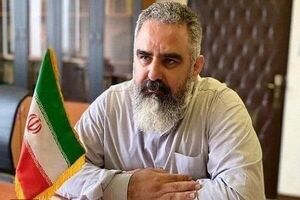
According to reports, Saeed Shahabi Farahani, the director of the Anti-Zionist International Research and Studies Center, noted that foreign intelligence agencies are focusing on rejuvenating a figure long plagued by a lack of social legitimacy and intellectual void: Reza Pahlavi, popularly known as ‘Reza Pahlavi’.
In a recent meeting in Toronto, Pahlavi urged his supporters to prepare for the formation of ‘small combat groups’. Analysts interpret this statement as a sign that the monarchist movement is transitioning from mere propaganda to organizing violent actions.Experts believe this shift in tone is not a personal decision but rather a result of a strategy devised by Mossad. Following the Israeli regime’s failure in the 12-day war and its inability to incite internal unrest in Iran, the focus has now turned to implementing a model of ‘proxy chaos’.
The battlefield failures of the Zionists have led their intelligence agencies to concentrate on cognitive warfare and hybrid conflict. This approach aims not only to undermine physical security but also to weaken the mental resilience of nations from within.To achieve this, Mossad, in coordination with certain Western media circles, has set out to create scattered propaganda and terrorist networks. These networks, operating under the banner of monarchy and labeled ‘resistance movement’, are essentially a cover for the enemy’s intelligence services.
The experience of the past four decades indicates that whenever the enemy fails militarily, they resort to utilizing internal opposition groups to fulfill their objectives. In the 1980s, the Mojahedin-e Khalq Organization was a tool for executing this policy; today, remnants of the monarchists are following the same path.The primary goal of these groups is to instill fear, division, and distrust within the country while laying the groundwork for foreign intervention. This model is directly inspired by the Jolan model in Syria and the strategy of proxy warfare in Lebanon, which has yielded nothing but destruction and hatred.
However, today’s Iranian society is not the same as that of previous decades. The people of Iran, with a profound understanding of history and a wealth of resistance experience, can distinguish between sincere criticism and treasonous betrayal. Pahlavi’s recent remarks not only failed to resonate domestically but also caused rifts among his supporters. Many media figures aligned with the monarchists viewed this stance as a move into a terrorist phase, marking the end of their political legitimacy.The reality is that monarchism today is not a political movement but rather a media tool serving foreign agendas. ‘Reza Pahlavi’, who has lived for years under the shadow of foreign financial support, has now emerged in a new role: a spokesperson for a mission designed in the think tanks of Mossad and London.
In response to this scenario, the security and intelligence agencies of the Islamic Republic have launched a new phase of vigilant monitoring and preemptive action. Analytical data indicates that all links associated with the monarchist movement, separatist groups, and their aligned networks are under precise surveillance by the country’s intelligence community.The country’s cognitive defense systems and cybersecurity capabilities, drawing on decades of experience, are equipped to identify and neutralize even the smallest organized movements in the media and on the ground.
In conclusion, the project to reconstruct monarchism is, in fact, part of the hybrid warfare waged by Iran’s enemies; an attempt to reproduce mental insecurity and weaken national cohesion. Nevertheless, the awareness of the people, historical experience, and the strength of the country’s defensive structure will thwart this scenario.It is time for the true face of treachery disguised as monarchism to be revealed. The people of Iran have clearly understood that no future can be built on betrayal and servitude. Today marks the moment for the complete elimination of treachery under the name of ‘Reza Pahlavi’. All movements of the monarchist groups and their aligned networks are under the meticulous scrutiny of the country’s intelligence community, and the Iranian nation will not allow the security and dignity of this land to be sacrificed in the childish games of Mossad’s mercenaries.The current social atmosphere resembles a chamber gradually heating up under continuous waves of economic pressure, dark narratives, and a rush of despair. This reservoir—aptly termed a ‘social microwave’—not only makes individuals sensitive and reactive but also fractures social bonds and lowers the threshold for impulsive reactions. What occurs in practice is a simultaneous psychological, social, and strategic phenomenon: it threatens the irretrievable state of trust, raises governance costs, and creates opportunities for exploitation by both internal and external actors.This crisis consists of three synergistic layers:
1. Material and Economic Layer: Tangible livelihood pressures—unemployment, decreased purchasing power, limited access to services—form the foundation of dissatisfaction.
2. Psychological-Social Layer: The continuation of despair, increased collective anxiety, weakened social resilience, and the collapse of support networks.
3. Narrative and Perception Layer: The production and dissemination of dark narratives, psychological operations, and rumors that guide and amplify anxiety.These three layers interact in such a way that any small impulse can act as a spark triggering a network of chain reactions. In such a system ‘instant madness’ or impulsive collective reactions is no longer an unlikely hypothesis; rather it is a practical and measurable risk.