
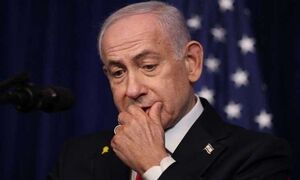
In a revealing report on Haaretz, journalist Barak Seri discusses Israel’s 12-day military engagement against Iran in June 2025. Initially perceived as a potential ‘absolute victory,’ Netanyahu faced significant disappointment post-conflict. Contrary to his expectations, this military operation did not translate into electoral gains, nor did it dismantle Iran’s nuclear and missile programs.
Seri highlights Netanyahu’s longstanding campaign against Iran’s nuclear ambitions, emphasizing a lack of strategic planning when power transitioned to Naftali Bennett in 2021. Bennett encountered a shocking reality: the Iranian files were nearly empty, devoid of any serious operational plans or preparations.
Bennett revealed at a conference in November 2021, “I was astonished by the gap between rhetoric and reality regarding Iran. There was a troubling distance between Netanyahu’s statements like ‘We will never allow Iran to become nuclear’ and the actual situation I inherited. Iran’s nuclear program was far more advanced, with its enrichment machinery more complex and extensive than ever. Our mistake post-2015 was that the signing of the agreement lulled us into complacency, leaving us blindsided.”Following this discovery, Bennett took immediate action, initiating Israel’s plans to counter Iran from scratch. He implemented extensive preliminary operations across all fronts. When Netanyahu returned to the Prime Minister’s office in early 2023, he continued these operational and intelligence efforts, ultimately leading to the military strike on June 13, 2025.
During this attack, Trump entered the fray by bombarding nuclear facilities in Fordow, Natanz, and Isfahan, later declaring, “We destroyed the nuclear facilities.” Netanyahu claimed, “We set back Iran’s nuclear program by over a decade.” However, Seri questions Netanyahu’s assertion, referencing new images from The New York Times that suggest significant repairs have been made to Iran’s nuclear facilities, indicating that Netanyahu’s ‘absolute victory’ was far from it.
Seri portrays Netanyahu as a skilled politician but points out his miscalculations regarding the political benefits of the war with Iran. Netanyahu believed that a victory would rally public support and bolster his Likud party’s presence in the Knesset. However, this did not materialize; the number of seats remained largely unchanged, and the political landscape stayed the same. Netanyahu’s disappointment over this political ineffectiveness may be his greatest frustration, especially with Iran’s nuclear and missile programs continuing unabated.In conclusion Seri discusses Netanyahu’s current priorities highlighting a behavioral contradiction. With all eyes on Iran and Washington and uncertainty surrounding a potential U.S. attack or a new agreement involving Iran’s nuclear and missile programs Netanyahu still opts to focus on Iran rather than Gaza which only adds to his headaches. He is now mired in the Gaza quagmire and in an attempt to escape resorts to his repetitive rhetoric against Iran.