
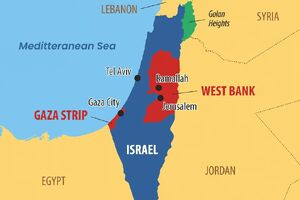
According to reports, the recent changes in the West Bank mark a pivotal moment in the political and legal landscape of this area since the Oslo Accords were signed. The decisions made by Israel, ranging from opening pathways for land acquisition for settlers to transferring urban authority in Hebron and officially initiating the registration and settlement of lands in areas known as ‘C’, are not merely administrative actions. They are new links in a long-standing process aimed at solidifying Israel’s practical sovereignty over the vast majority of the West Bank.
These changes occur at a time when, following the ‘Al-Aqsa Flood’ operation on October 7, 2023, and the extensive conflict in Gaza, global public attention has primarily focused on that narrow strip of land, with the West Bank receiving less media spotlight. This international attention vacuum has enabled Israel to advance structural steps that could have deeper and more lasting implications than short-term military developments.One of the most significant changes is the transfer of substantial civilian management powers in the West Bank from military structures to political bodies that support settlement expansion. Under an agreement reached in 2022, extensive responsibilities in urban planning, issuing permits, and overseeing construction have been shifted from the military’s civil administration to a political structure. Legally and administratively, this represents a step away from the status of ‘temporary occupation’ towards a form of permanent governance.
Since 1967, the West Bank has been under complete military rule. However, with the gradual transfer of powers to Israeli civilian entities, the line between military occupation and civil governance has blurred. This shift indicates a fundamental change in the nature of Israel’s presence in this land.The Israeli cabinet’s decision to formally initiate the registration and settlement of lands in area ‘C’ is a milestone in this trajectory, which had been stalled since 1967. It has now been announced that parts of this area will be registered as ‘Israeli property’ within a few years. The practical implication of this move is that lands for which Palestinian owners cannot provide up-to-date official documents may be registered as Israeli properties.
Area ‘C’ comprises about 60% of the West Bank’s territory, and according to the Oslo Accords, its status was supposed to be determined in final negotiations. Yet, after three decades, not only have final negotiations failed to yield results, but actions are now underway that could transform this temporary situation into a permanent reality.From an international law perspective, the West Bank is considered occupied territory, and the occupying power has no right to make fundamental changes to land ownership regimes. Nevertheless, Israel has, over the decades, declared large sections of area ‘C’ as state land or military zones, citing its own interpretation of Ottoman laws and British mandate regulations. The formal registration of land shifts this situation from mere practical control to legal stabilization, a move that would be exceedingly difficult to reverse.Simultaneously, restrictions on land sales to Israelis have been lifted. Laws that previously prohibited the sale of land to non-Arabs during Jordanian rule and kept owner information confidential have been discarded. As a result, access to the names and details of landowners has been facilitated, making direct purchases or intermediary transactions easier.
In a context where Palestinians face economic pressures, movement restrictions, and significant challenges in obtaining construction permits, the opening of the land market could lead to a gradual transfer of ownership. This transfer may occur not through outright confiscation but through legal and financial mechanisms that appear lawful yet effectively alter the demographic and ownership structure of the region.Hebron exemplifies these gradual changes. Since 1997, this city has been divided into two sections under a special protocol. Now, the transfer of urban authority in the area of the Ibrahimi Mosque to Israel’s civil administration effectively diminishes the role of the Palestinian municipality in parts of the city. An independent municipal body is also set to be established to manage the affairs of settlers, operating without reliance on Palestinian mechanisms for service delivery and planning.
Such a structure creates a dual system: a fully supported legal and administrative framework for settlers and a more limited framework for Palestinians. Past experiences have shown that restrictions on construction permits for Palestinians and the demolition of unauthorized homes, alongside the expansion of settlements, have led to gradual changes in the region’s human fabric.What is happening in Hebron could serve as a model for other areas, where urban control, public services, and spatial planning gradually shift away from Palestinian authorities. The Palestinian Authority, established under the Oslo Accords as a precursor to an independent state, is increasingly limited in its strategic functions as key powers over land and urban planning are transferred. In a scenario where control over land and resources remains with Israel, the concept of sovereignty effectively disappears.
In this framework, Palestinians may have separate administrative bodies and identity documents, yet they will lack real authority over the land. This situation redefines the role of the Authority as an entity responsible for services and population management without control over land, borders, or resources.Internationally, discussions continue about the establishment of a Palestinian state and the need to return to negotiations. Some countries recognized the state of Palestine last year, but these actions have not halted the evolving ground realities. The gap between diplomatic discourse and the emerging realities on the ground is deepening daily.
If area ‘C’, the geographical backbone of the West Bank, is officially solidified under Israeli ownership, the remaining territory for a future state will be confined to a series of disconnected areas. In such a situation, the prospect of forming a state with contiguous territorial integrity and real sovereignty will be increasingly undermined.The developments in the West Bank are not merely an internal issue; they also have regional implications. Many normalization plans between Israel and Arab countries are linked to progress in the path toward establishing a Palestinian state. If the consolidation of ownership and expansion of settlements continues, public pressure in regional countries will increase, and the political space for open cooperation will become more constrained. Ultimately, what is currently unfolding in the West Bank is more than a series of administrative decisions. This process could alter the equation of land and population in ways that make a return to the Oslo framework or the realization of an independent Palestinian state exceedingly difficult. If this path continues unabated, the West Bank will gradually transition from a disputed territory to a space with established Israeli sovereignty, complicating and escalating the Palestinian issue further.However the outcome of this process is not predetermined. Political developments in the region internal Palestinian cohesion and the level of diplomatic engagement from international actors could significantly influence the future. What is clear is the gradual change in the rules of the game; a legal and administrative transformation is quietly shaping a new reality on the ground.