
In January 2025, Iran experienced the most extensive wave of unrest in recent years, fueled by direct support from foreign entities. This turmoil stemmed from complex political and security issues both domestically and internationally. While some Iranian citizens protested against economic hardships, documents and statements from Western and Zionist officials revealed a deliberate exploitation of these tensions by foreign adversaries, particularly the Zionist regime.
The pivotal role of the United States and the Zionist regime in orchestrating violence and chaos has become increasingly evident. This was explicitly acknowledged by officials in Washington and Tel Aviv in recent days. The actions of the Zionist regime during this period align with its long-term objectives to undermine national sovereignty and stability in Iran.
One of the key strategies has been the transformation of peaceful protests into organized violence. This effort aims to shift the narrative of public dissent from peaceful demands to a scene of chaos and armed conflict, providing a pretext for broader crackdowns, escalating insecurity, and distorting Iran’s image internationally.Reports indicate that regions inhabited by ethnic minorities have witnessed the deadliest clashes. This pattern suggests a calculated provocation, exploiting ethnic fissures to heighten tensions and threaten national unity.
Moreover, the regime has been engaged in psychological warfare, amplifying violence through affiliated media networks to create an atmosphere of a ‘collapse crisis’ in Iran. The ultimate goal is to legitimize international interventions or impose further sanctions against the nation. The overt political support from Western figures, such as Donald Trump, for the protesters and threats of serious action fit within this framework.
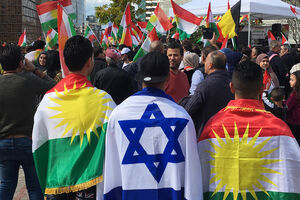
When analyzing the security dimensions of the recent unrest, especially in the western and northwestern areas of the country, the role of separatist Kurdish groups like Komala and PJAK, and their connections with foreign actors, emerges as a critical factor.There is substantial evidence that the Zionist regime has been systematically equipping, training, and directing these groups to escalate violence and instability within Iran, leveraging its base in the Kurdistan region of Iraq. This report delves into this connection and its implications for exacerbating internal crises.
Multiple reports indicate the presence of Mossad (Israel’s foreign intelligence agency) in various areas of the Kurdistan region. This presence allows for direct surveillance over Iran’s borders, establishing communication channels with opposition groups, and planning operations.
The regional strategy of the Zionists aims to establish a foothold along Iran’s western borders. A significant part of this pronounced presence in the Kurdistan region can be traced back to the Zionist project in Syria over the past year. One of the main initiatives undertaken by the Zionist regime to gain extensive access to eastern Syria and the Kurdistan region of Iraq has been the ‘David Corridor’ project, which Tel Aviv continues to pursue.In recent years, experts have scrutinized the Zionist regime’s plans for controlling the eastern borders of Syria, a scheme currently advancing through a joint effort involving the United States, the Zionist regime, Druze, and Kurds.
Through the ‘David Corridor,’ the Zionists seek to enhance their control over eastern Syrian borders, connecting occupied Palestine to areas under Kurdish control in northern Syria. In collaboration with Syrian Kurdish separatists, Tel Aviv intends to establish a vast area stretching from the occupied Golan Heights to the Euphrates River.
Among the objectives of this plan is to create a contiguous region between occupied Palestine and areas controlled by separatist Kurdish forces, thereby preventing Turkish and Iranian influence in Syria and positioning the Zionist regime as the dominant regional player.Success in establishing this corridor would yield significant strategic advantages for the Zionist regime. According to Zionist media and experts, if this axis is successfully formed, it could lead to a ‘new Syria’ and a transport corridor for arms from Israel to the Kurds in Iraq, and subsequently to the Kurds in Iran.
Over the past year, the Zionist regime has intensified its activities in Syria under the pretext of supporting the Druze in southern Syria, warning the al-Jolani regime that it would retaliate against Syrian terrorist groups attacking the Druze. Recently, officials from this regime have stated their intention to remain in southern Syria, having established several military bases within Syrian territory.
As time progresses, the failures of al-Jolani and leaders of the terrorist group Hay’at Tahrir al-Sham, along with the inability of the Erdogan regime to manage Syria and halt Zionist aggression, are becoming increasingly apparent. Should the inaction of the terrorists under Erdogan’s rule continue, further advances by the Zionist regime in Syria to finalize and stabilize the David Corridor project are to be expected.However the Islamic Republic of Iran is actively monitoring and assessing these developments. It remains vigilant against the Zionist efforts to alter the regional landscape and has warned regional leaders including officials in the Kurdistan region about the presence and establishment of elements linked to the Zionist regime in the area. Concurrently numerous measures have been taken.
In light of the recent terrorist activities linked to the Zionist regime within the country primarily associated with groups like Komala and PJAK Iran’s intelligence and military apparatus will not overlook these threats. They will intensify operational measures to neutralize the Zionist cells and their affiliates with greater force and effectiveness than before.