
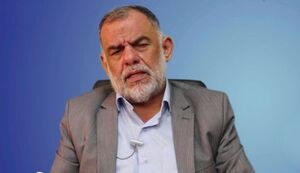
According to reports, Abbas Haji Najari noted in a recent article for the Young Newspaper that the failure of those who instigated the 12-day war has become increasingly apparent since the ceasefire announcement. As the likelihood of another military conflict diminishes, the dimensions of cognitive warfare waged by the enemies to undermine the will of the Iranian people have intensified.
In essence, the enemies of the Islamic system are targeting cognitive warfare and the clash of wills rather than engaging in direct military confrontation. The side that can dominate in this war of wills will ultimately determine the battlefield’s outcome.A recent example of this is Israeli Prime Minister Netanyahu’s claim during an interview with an Australian television network, where he stated that the overthrow of the Islamic Republic was not an objective of Israel in the 12-day war, but it could have been a possible outcome. He further asserted that any regime change in Iran depends on the Iranian people and that any revolution must originate from within Iran.
Comparing these statements to his previous positions reveals nothing but an admission of defeat for both him and former President Trump in their war against the Iranian populace. They had repeatedly emphasized their intent to overthrow the Islamic system and now, in a retreat that signifies their failure, they seem to pin their hopes on change from within Iran, utilizing cognitive warfare as their tool.Despite the human and financial toll inflicted upon the Iranian people during this conflict, the aftermath has actually strengthened national unity and cohesion, demonstrated the effectiveness of the armed forces, and showcased the defensive deterrent capabilities of the Islamic Republic. The regime has asserted its position globally as a power capable of repelling a unified front against the full military might of the U.S. and NATO, which, as Trump has admitted, was the instigator and orchestrator of the 12-day war. This power has compelled aggressors to request a ceasefire.In response to the ceasefire request, the U.S. has intensified economic sanctions and pressured European nations to implement snapback measures, aiming to avenge their failures in achieving their objectives during the 12-day war through economic warfare. Meanwhile, the nefarious Israeli regime, under U.S. guidance and support, is attempting to organize terrorist groups, particularly royalist factions, to create internal unrest and provoke social movements against the Islamic system.Amidst this backdrop, it is crucial for the armed forces to remain vigilant and prepared to respond powerfully to any potential aggression. According to commanders and officials, the country is currently in a much stronger military and intelligence position than at the onset of the 12-day war. Given the unstable condition of the Israeli regime and the decline of U.S. power and influence, Iran can also gain the upper hand in cognitive warfare and impose another defeat on its adversaries.The roadmap for confronting this arena has been outlined by the Supreme Leader of the Islamic Revolution in recent statements, especially during a meeting with students on the eve of November 4. Key points include:
1. Emphasizing the necessity of a historical perspective on the U.S. and recognizing that the essence of U.S. identity and its inherent contradictions with the Iranian nation are the main sources of hostility.
2. Acknowledging that the inherently arrogant nature of the U.S. accepts nothing less than Iran’s submission, a sentiment expressed by every U.S. president, though rarely articulated until the current president revealed the truth of U.S. intentions. A significant example of this is Trump’s recent admission that he ordered the Israeli regime to attack Iran and led the war.3. In response to Trump’s repeated claims regarding the destruction of Iran’s nuclear capabilities, the Supreme Leader succinctly stated, “Keep dreaming.”
4. Stressing that the response to the enemy’s proposal for surrender is to strengthen rather than engage in negotiations or trust the enemy.
5. Highlighting that beyond military advancements, many challenges can only be resolved by strengthening the country’s management and scientific capabilities. The government must act decisively in its respective areas.6. Based on these principles the Supreme Leader has articulated Iran’s three conditions for engaging with the U.S.: the complete cessation of U.S. support for the cursed Israeli regime the withdrawal of U.S. military bases from the region and non-interference in their affairs. Only under these circumstances will any requests for cooperation from the U.S. be considered not in the near future but at a later date.