
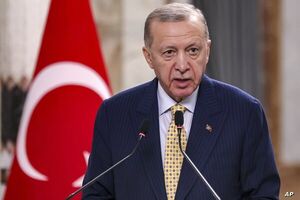
In a significant public address regarding the recent terrorist events in Iran on January 10, which were backed by the United States and Israel, Turkish President Recep Tayyip Erdogan stated that following the twelve-day conflict between Iran and Israel, Tehran faces a new challenge from its adversaries aimed at disrupting ‘peace and stability.’ He expressed confidence that ‘our Iranian brothers, with a wise and calculated policy, will overcome this challenging period and new test.’
Erdogan, who has voiced serious criticisms against the Israeli regime in recent years, explicitly sees Tel Aviv and Washington as active players behind the protests in Iran. This statement comes at a time when Erdogan has adopted competitive policies towards Iran in various regional contexts, yet today he condemns the U.S. and Israel while supporting Iran with such clarity.
Alongside Erdogan, even his supporting base has echoed the President’s stance on the recent developments in Iran, asserting that the protests in Iran are a process supported by the Israeli regime and the terrorist organization Mossad.Turkey has emphasized that if the United States decides to conduct military operations against Iran, American aircraft should not use Turkish airspace or the Incirlik base. Erdogan, in a phone call with Iranian counterpart Masoud Beizadian, stressed the importance of peace and stability in Iran, stating that Ankara is entirely opposed to foreign intervention in Iranian affairs.
The question arises as to why, despite years of competition between Erdogan’s government and Iran, particularly concerning Syria, which has been seen as a betrayal of Iran and the resistance axis, Turkish leaders stand so firmly alongside Iran against Israel and the U.S.?
Currently, there is growing concern in Ankara that if the Iranian government suffers any harm from the terrorist and aggressive actions of Israel and the U.S., Turkey will find itself next in line in this ‘colonial game.’ Among Erdogan’s worries is the potential for the recent protests and unrest in Iran to spill over into Turkey, especially given the country’s struggles with soaring inflation and high prices over the past five years. There is a fear that, similar to Iran, Turkey might witness economic protests quickly escalate into chaos and widespread terrorist activities, as seen with the protests in Iran being hijacked by agents and mercenaries of the Israeli regime.The proxy war between Ankara and Tel Aviv, ongoing in various regional hotspots, has turned Turkey into a primary target for the Israelis, particularly after the confrontation with Iran. Erdogan’s recent statements regarding Iran’s developments, along with the Turkish ruling body’s explicit support for Iran, while commendable, come too late to grasp the reality of regional confrontations. Erdogan’s government, through its grand gamble of betraying the resistance axis and the Palestinian cause while supporting terrorist groups to overthrow the legitimate Syrian government for the benefit of the Israeli regime, the U.S., and the West, should have realized that the venomous snake of Israeli expansionism would eventually strike back.Currently, the covert war between Tel Aviv and Ankara is intensifying. There are numerous reports from Turkey indicating plans to deploy radar systems in various regions of Syria, supposedly to assist the stationed Jawlani army. These radars previously existed but were destroyed in Israeli airstrikes following the downfall of the Assad government.
Over the past year, Syria, which Turkey has long sought to control, has become a battleground for the Israeli regime’s army. Erdogan’s forces have faced heavy assaults from the Israeli air force multiple times, effectively sidelining them from the Syrian scene. This situation has greatly angered Ankara, as it appears that all of Erdogan’s efforts to gain control of Syria after the fall of Bashar Assad have ultimately benefited Tel Aviv, marking yet another failure for Erdogan in the Syrian conflict.During the rise of ISIS and other terrorist groups, Erdogan attempted to support these factions to defeat Iran and the resistance axis while establishing his government in Syria, ultimately leading to his failure. After years of planning to reignite the Syrian conflict, just as the Assad government was about to fall due to a lack of military support, the Israeli regime seized the opportunity to occupy a significant portion of Syria, marking Turkey’s second defeat in the Syrian developments and forcing Erdogan to look toward Tehran for support.
Following Hakan Fidan’s recent visit to Iran and discussions about regional developments, some official sources suggest a possible visit by Erdogan to Iran. Western analysts believe Erdogan aims to persuade Iranian officials to renew relations in Syria, thereby encouraging Iran to join Turkey in strengthening the Jawlani regime against obstacles such as the Kurds, Druze, and Israeli aggressions.An informed source regarding Hakan Fidan’s recent visit to Iran and Erdogan’s potential trip stated that Turkey is preparing to attack the Kurds and disarm them, intending to form an anti-Israeli axis in response to the strengthening alliance between Israel and Greece against itself. This plan aims to prevent the Israeli regime’s aggressive actions in Syria.
According to this source, Ankara now sees the need for Iran’s presence to advance its plans against the Israeli regime and is attempting to entice Iranian officials to return to the Syrian scene with various proposals. So far, Tehran has not responded positively to Turkey’s requests for involvement in the Syrian developments and remains skeptical about the collaboration between the Turkish government and the Jawlani regime. Iran’s caution and skepticism stem from the historical rivalry and conflicting interests between the two countries. For a long time, Iran has viewed Turkey’s regional policies as destabilizing, and in the past, Ankara attempted to form a united Sunni front with Riyadh against Tehran. From the perspective of Iranian officials, Turkey aims to leverage Iran’s capabilities against Israel and the U.S. to expand its regional influence at Tehran’s expense.However this issue is not limited to Turkey; all regional countries are wary of the repercussions of new adventures by the U.S. and the Israeli regime. Following Tehran’s signal to Arab countries in the region about the serious and extensive consequences of any aggression against Iranian territory by Israel and the U.S. there has been a widespread wave of fear among regional countries particularly those along the Persian Gulf.
According to the website ‘New Arab’ Arab nations are deeply concerned about the direct and indirect uncontrollable effects of a U.S. and Israeli attack on Iran. These countries view military intervention by the U.S. and Israel in Iran as a ‘high-stakes gamble’ that could destabilize the entire region for years to come leading to irreparable consequences for them.
The reality is that Arab rulers and other regional nations must understand that they can no longer escape the repercussions of their indirect actions against Iran’s territorial integrity and national security interests even if done covertly. Allowing the continued presence of hostile Western countries and cooperating with the Israeli regime will incur heavy and unprecedented costs for them in the near future costs that will be unparalleled in the region’s history over the past few decades.