
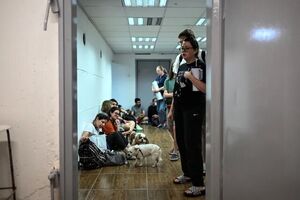
The world is watching as speculation mounts regarding the possibility of a large-scale military confrontation between Iran and the Israeli regime. Recently, the occupied territories have become a scene of chaos and pervasive fear. Tensions have reached a boiling point following recent threats from Tehran and Washington, with residents of the occupied Palestinian territories, haunted by memories of past missile attacks and the 12-day war in June 2025, bracing themselves for a potentially horrific scenario.
Widespread procurement of supplies, complete readiness of hospitals, and the fortification of shelters reflect the overwhelming fear of impending Iranian attacks on Israel. The recent Iranian threats of broader strikes in response to any aggression from Israel and the U.S. have only intensified this anxiety. Tehran insists that its deterrent capabilities have strengthened in recent years and warns that any conflict could escalate into a regional crisis. Israelis are acutely aware that in any future conflict, hospitals, power plants, settlements, and critical infrastructure would be prime targets.Recent surveys conducted in January 2026 by the Israel National Security Studies Institute (INSS) reveal that an overwhelming majority of settlers not only anticipate the likelihood of war but are deeply concerned about their security future. According to this survey, 62.5% of Israelis believe that conflict with Iran will resume in the coming months.
One of the most prominent indicators of readiness in the occupied territories is the heightened activity within the healthcare system. The memory of a direct Iranian missile strike on Soroka Hospital in Beersheba in June 2025, which injured over 80 Israelis and destroyed eight operating rooms and six research laboratories, remains fresh in the minds of Israelis. A recent report from the Israeli State Comptroller revealed that despite this heavy blow, the government has yet to implement effective measures to secure hospitals. The report indicates that 56% of hospital beds (approximately 10,500 beds) and 41% of surgical beds in the occupied territories remain completely vulnerable to missile attacks. In Meir Hospital in Kfar Saba, this figure rises to 86%.In recent days, as tensions have escalated, hospitals have taken independent action. Reports from February 22, 2026, indicate that Israeli hospitals have been placed on full alert (war status). Health funds have developed comprehensive plans to adapt medical services to emergency conditions. Under this plan, clinics lacking adequate shelters or proximity to protected areas will be closed, and patients will be redirected to safer centers. Telemedicine services will also reach maximum capacity to ensure care for vulnerable populations, such as the elderly and those with chronic illnesses. One of the main challenges is patients reliant on electrical equipment like ventilators. In this regard, personal generators capable of providing power for up to 72 hours have been supplied for approximately 2,400 complex respiratory patients in the Israeli regime.Rambam Hospital in Haifa, which has had an emergency underground hospital for years, has held internal meetings to distribute beds and activate support systems. Other hospitals have also reviewed their backup systems for electricity, water, and oxygen.
The atmosphere of fear has spilled into the streets and homes as well. Contrary to official recommendations for ‘preparedness’ and ‘no need for emergency purchases,’ settlers have surged into stores, stockpiling essentials, bottled water, dry and canned foods, batteries, emergency lights, and first aid kits. Colonel (Res.) Nir Newman, commander of the local emergency unit in Rishon Lezion, advised citizens in a television interview: ‘Ensure that all family members reach the safe room and properly secure the steel window. Have at least one six-pack of water, an emergency light and batteries, some dry or canned food, and most importantly, a first aid kit.’ Such statements have only heightened the fears among Israelis.However, these remarks come amidst admissions from Hebrew-speaking experts that Israel’s protective infrastructure faces serious challenges. According to official statistics, over 2.6 million Israeli citizens lack access to standard protective facilities, with only 38% of homes equipped with safe rooms. The remainder rely on aging public shelters, many of which are locked, abandoned, or repurposed.
On the military front, the Israeli army recently conducted a large-scale civil defense exercise simulating a scenario in which 2,000 Iranian missiles strike populated areas. This drill, executed by the rescue and relief brigade of the Home Front Command at the Zikim military base south of Tel Aviv, involved hundreds of soldiers and rescuers, simulating the collapse of buildings and extensive urban destruction following a hypothetical missile attack.Israeli media, always eager for attention, have not remained idle in this atmosphere. Headlines in newspapers and news websites are filled with alarming warnings and analyses regarding the imminent Iranian attack. Warnings from Israeli experts about the consequences of widespread Iranian assaults and widespread criticism of the unpreparedness of the home front to manage a crisis have all contributed to escalating concerns in the occupied territories.
Nehama Duek, an Israeli journalist, notes the visible fear and anxiety among settlers and residents of the occupied Palestinian territories regarding the prospect of renewed conflict with Iran. ‘Not a day goes by without someone asking me this troubling question: Will there be another war with Iran?’ The question is posed as if I were sitting in the political-security cabinet!Additionally, reports have emerged of the deployment of live air defense systems within residential neighborhoods for the first time since the 12-day war in June 2025. Military analysts warn that this move could turn settlements into prime targets for future attacks.
The current atmosphere in the occupied territories can be described as ‘organized fear.’ On one hand, military officials, experts, and political-security analysts repeatedly warn that war with Iran is inevitable and that in the next conflict, the regime will face extensive Iranian attacks. On the other hand, realities on the ground, such as a lack of shelters, unprepared healthcare infrastructure, and panic buying by settlers, have only heightened fears in the occupied Palestinian territories.The 12-day war and Iranian missile attacks demonstrated that the entire occupied territory has become a battlefield. Given Tehran’s recent emphatic warnings of a crushing response to any aggression and Israel’s structural inability to secure its civilians it can be said that the residents of the occupied Palestinian territories are experiencing their most terrifying days. The resilience that Israeli experts call ‘our most important weapon’ is currently at its most critical state and with the outbreak of another war it stands on the brink of collapse.