
25 February 2026 13:49
Report link
In a recent discussion Nasratollah Tajik emphasized the necessity of establishing a ‘way out’ for the opposing party in negotiations which he argues is essential for achieving a lasting agreement. He pointed out that the current state of Iran’s foreign policy is more challenging and complex than at any previous time during the Islamic Republic’s history. We find ourselves at a critical juncture in foreign policy that not only affects domestic affairs but could also have significant national security implications.
If this issue is resolved effectively it could accelerate the development and stabilization of Iran’s regional and international position. Conversely if it ends poorly it could exacerbate existing problems and lead to a loss of control over the situation. This stark dichotomy makes the roles of policymakers and diplomats exceedingly challenging.
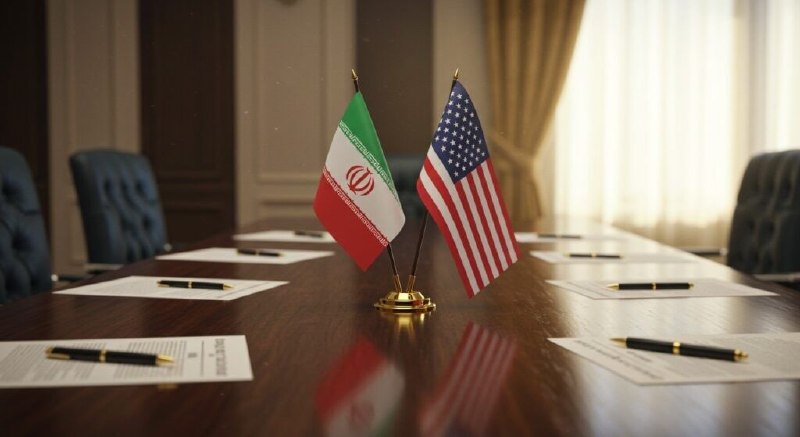
In any negotiation parties must not only acknowledge each other’s concerns but also communicate their true capabilities clearly to prevent any miscalculations. Given that any mistake or oversight could derail the negotiations and escalate into military conflict fostering a degree of mutual trust—at least to the extent that both sides are seeking understanding and resolution—is imperative. Both Iran and the United States are undoubtedly aware of the consequences of war; the central question remains how to achieve a balanced and acceptable solution.
Beyond the emergence of a new global order and shifting power dynamics the geopolitical significance of Iran and the government’s investments in military hardware to enhance deterrence against regional and international developments are crucial. The ultimate aim of Donald Trump is to maintain Israel’s dominance in the region maximize its security and promote the concept of a ‘Greater Israel.’ He seeks to damage Iran’s missile facilities either through negotiations or if necessary a limited immediate military strike.
However Trump is not inclined to engage in a broad war—either within Iran or in the waters of the Persian Gulf—due to internal political reasons the upcoming midterm elections and the potential costs to the United States. Consequently his preferred scenario involves a limited action to achieve his objectives. Thus his primary goal is to ensure maximum security and reinforce Israel’s superiority in the region primarily through negotiation. Yet given his personality traits and psychological profile his approach to negotiation lacks a diplomatic touch.
A fundamental principle of negotiation is that parties must create conditions that prevent either side from reaching an impasse or complete blockage. If the aim of negotiations is to corner the opposing party like a chess opponent in a ‘checkmate’ situation any agreement reached on paper will likely face serious doubts regarding its practical and sustainable implementation.
Negotiations characterized by ultimatums and deadlines can serve dual purposes: they can act as psychological warfare and manage the political and media landscape while also providing legitimacy for potential subsequent actions. By leveraging certain capacities one can play the role of a ‘delaying factor’ against any military action. A critical capacity in this context is a nuanced understanding of Trump’s political psychology; he is keen on portraying himself as a leader who ends wars and achieves notable successes. If this aspect is accurately incorporated into diplomatic calculations it may be possible to create conditions for a new negotiation framework that moves away from confrontation towards some form of agreement or at the very least delay or freeze escalating tensions.

You need to log in to perform this action.