
Politico reports that senior officials within the Trump administration privately argue that an Israeli attack would provoke a retaliatory response from Iran, potentially rallying American voter support for U.S. military involvement.
This political calculation suggests that if Iran were to attack first, a larger number of Americans might accept the idea of going to war with Iran. Recent polls indicate that while Americans, particularly Republicans, support regime change in Iran, they are reluctant to accept American casualties in pursuit of that goal. This implies that Trump’s team is weighing not only justifications like Iran’s nuclear program but also the political optics of how any military action is executed.
One insider noted, “There is a belief within and around the administration that if the Israelis act first and Iran retaliates against us, it would be politically advantageous and provide more justification for our involvement.” Both sources spoke on the condition of anonymity to discuss private conversations.As hopes for a diplomatic resolution to the deadlock with Iran fade, the pressing question remains: when and how will the U.S. strike?
Despite a preference for Israel to take the lead, the most likely scenario, according to these sources, may involve joint operations between the U.S. and Israel. In response to requests for comment, White House spokesperson Anna Kelly stated, “The media can speculate as much as they want about the President’s thoughts, but only President Trump knows what actions he may or may not take.” The Israeli embassy in Washington declined to comment.
Last week, Israeli Prime Minister Benjamin Netanyahu met with the Trump administration, urging them to take any necessary actions to stop Iran’s nuclear program, ballistic missile infrastructure, and support for regional proxy militias. Meanwhile, trusted negotiators for the President, Steve Witkoff and Jared Kushner, are set to travel to Geneva to seek an agreement with the Iranians.According to one informed source, this diplomatic effort is serious, but the prevailing sentiment among the President’s closest advisors is, “We are going to bomb them.”
However, the scope of any military action remains uncertain. This source mentioned two key considerations: the risk of depleting U.S. ammunition supplies—something the administration fears could embolden China to act against Taiwan—and the potential for American casualties in the event of a more aggressive option.
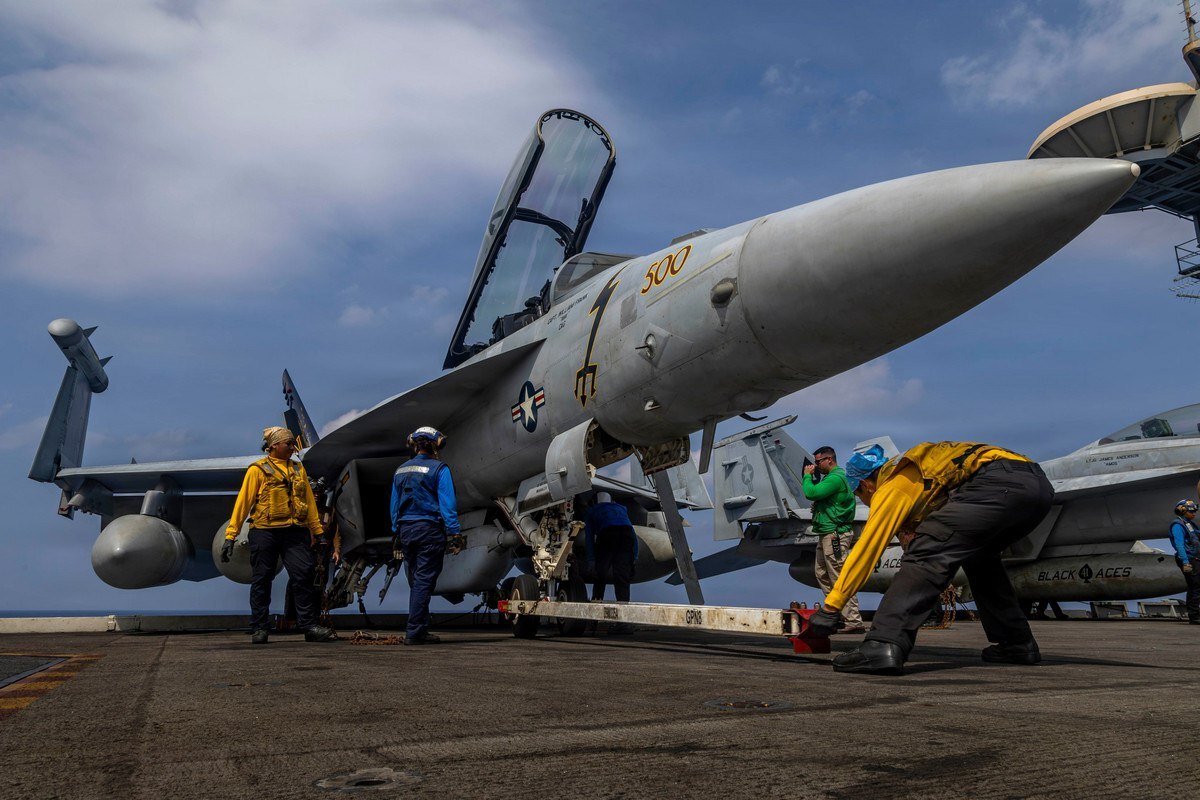
He stated, “If we discuss a regime change-scale attack, Iran is likely to retaliate with full force. We have significant equipment in the region, and each could be a potential target. They are not under Iron Dome protection, so the likelihood of American casualties is high. This carries substantial political risk.”Even during calmer periods, the U.S. maintains thousands of troops at bases across the Middle East. Currently, Trump has deployed two aircraft carrier strike groups along with dozens of fighter jets, reconnaissance planes, and aerial refueling assets aimed at Iran; this represents the largest concentration of American firepower in the region since the 2003 invasion of Iraq.
In recent weeks, Pentagon officials and Congressional lawmakers have warned that prolonged attacks on Iran could strain U.S. military resources. According to a senior U.S. intelligence official, the intelligence community is “concerned and monitoring” the possibility of asymmetric retaliatory actions by Iran against American facilities and personnel in the Middle East and Europe.Trump has multiple options for attacking Tehran. An informed U.S. official revealed that these options include an initial, limited strike that could serve as leverage to compel Tehran into a favorable agreement for the U.S. If no agreement is reached, Trump could later authorize a more extensive series of attacks.
These military options would almost certainly target Iran’s nuclear facilities—or what remains of them following U.S. strikes last June. Additionally, Iran’s ballistic missile infrastructure, which Israel considers a significant threat to its security, would certainly be targeted.
However, Iran’s government structure is designed so that other individuals can rise to higher positions if vacancies occur. Nevertheless, the U.S. could still target facilities and multiple layers of the regime.Such operations could span days or weeks, and their outcomes may be unpredictable, especially if the U.S. relies solely on air power. Last June, during the conflict between Israel and Iran, which the U.S. also joined, Netanyahu urged ordinary Iranians to seize the opportunity to overthrow their rulers.
Trump claimed that U.S. attacks last June had “destroyed” Iran’s nuclear program. However, in recent weeks, Trump has expressed uncertainty about whether Tehran has abandoned its pursuit of such a program.
Mike Rogers, Chairman of the House Armed Services Committee (Republican from Alabama), stated on Wednesday morning that he received a briefing from government officials regarding Iran’s efforts to resume its nuclear program. He noted that the evidence is clear and presents a compelling case that U.S. officials may need to intervene militarily.He remarked, “They are working to acquire that equipment.”
However, Rogers could not specify when this classified information might be more widely disseminated. Dan Bacon (Republican from Nebraska) indicated that he has been informed that lawmakers will soon receive further details regarding nuclear threats. Democrats on the committee stated that they have not been briefed and are unaware of when they will receive responses to their inquiries about Iran.
The Iranian government has consistently emphasized that it does not seek nuclear weapons, yet it asserts its right to maintain a peaceful nuclear program, including for scientific and medical purposes. The U.S. has long been skeptical of Iran’s promises, particularly regarding the level of uranium enrichment in the country.An Iranian government official did not immediately respond to a request for comment.