
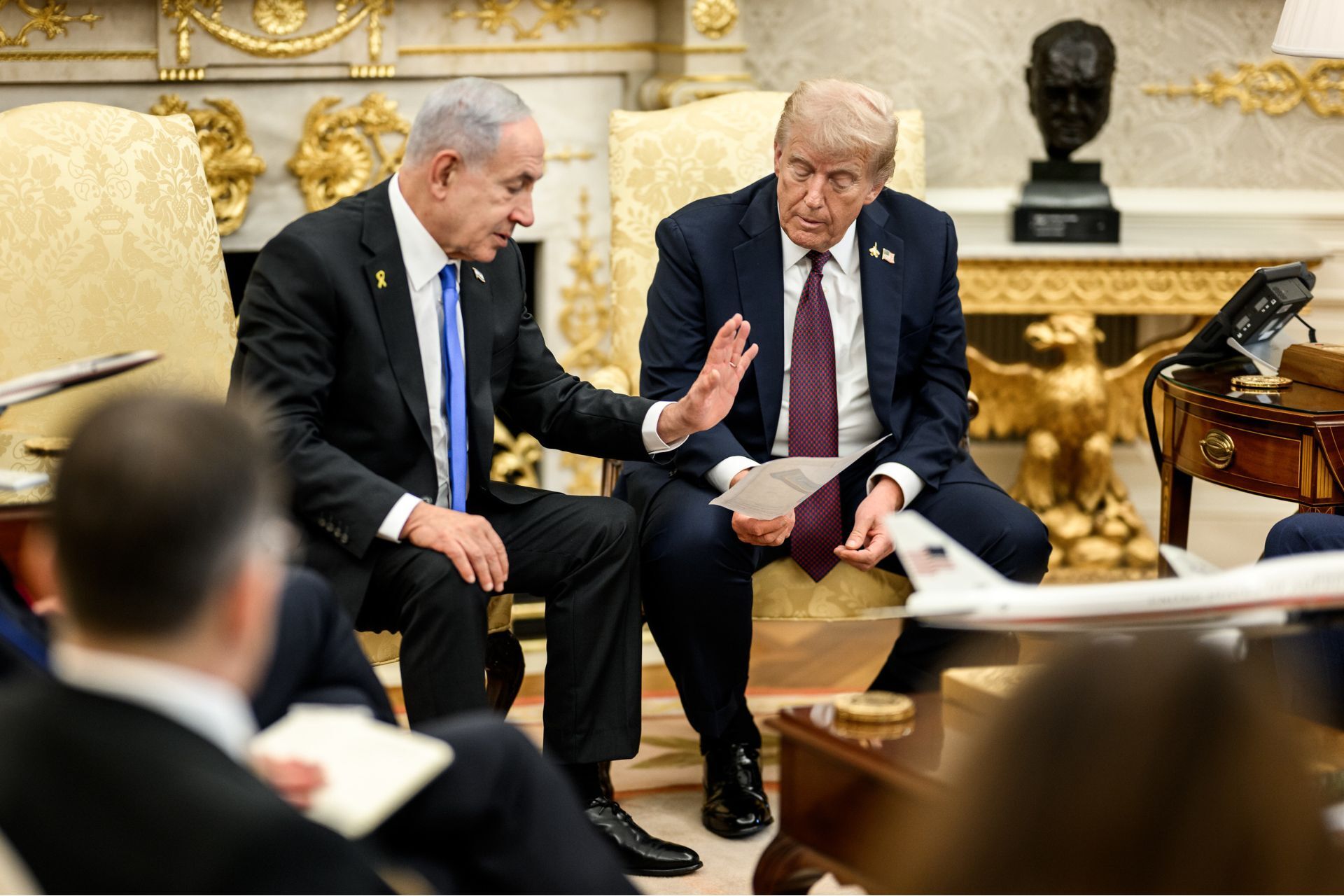
According to Al-Monitor, Israeli military leaders have expressed serious concerns to Netanyahu regarding his push for a U.S. military strike on Iran, even with potential Israeli involvement. They argue that this position not only increases the risk of attacks on Israel but also places the government in a precarious position of leading the United States into a futile conflict.
Many observers draw parallels between Netanyahu’s overt support for U.S. military action and the events leading up to the 2003 U.S.-led invasion of Iraq. In September 2002, Netanyahu, then out of power but a prominent security figure in Israel, traveled to Washington as a ‘worried citizen’ to persuade American lawmakers that an invasion of Iraq was essential for toppling Saddam Hussein. He argued that deposing Hussein would send a message to Tehran, ushering in a period of stability and peace in the region. This effort proved effective.
Congress authorized the invasion, which commenced in March 2003 and quickly toppled Hussein, but ultimately embroiled U.S. forces in a bloody conflict that led to long-term instability in Iraq. Instead of containing Iran, the Iraq War had the opposite effect, disrupting the long-standing deterrence between Iran and Iraq and allowing Tehran to expand its influence across the region through the consolidation of Iranian-aligned leaders and militias in Iraq, Syria, Lebanon, and Yemen.Israel’s attempt to lead the U.S. campaign against Saddam in Iraq reflects a fundamental principle that has underpinned Israel’s struggle against Iran and its nuclear ambitions for the past 30 years: any major effort to contain hostile regional forces must be led by the United States and its Western allies, not by Israel itself.
Currently, Trump has taken the initiative against Iran without consulting Congress. Unlike its long-standing policy, Israel is now insisting on playing a frontline role.
Military officials have warned Netanyahu to refrain from this approach for two reasons: the risk that an attack on Iran could escalate into a protracted, complex war with Iranian counterattacks targeting Israeli territory, and the potential for Israel to be accused of dragging the U.S. into an unnecessary conflict.
Despite these warnings, Netanyahu has chosen to ignore the advice and participate in any plans against the Tehran regime.
An anonymous senior Israeli security source told Al-Monitor regarding a potential U.S. strike: ‘This action will impact the entire region in a way not seen in the last 100 years.’To initiate an attack, Trump will select a plan proposed by the Pentagon. Israeli political sources indicate that Netanyahu’s cabinet hopes Trump will launch a coordinated campaign to overthrow the Islamic Republic.
Concerns about Trump’s approach have been heightened following his remarks on Thursday at the newly established ‘Board of Peace,’ which alarmed some senior Israeli diplomatic officials. One official, speaking anonymously, remarked, ‘The president did not mention ballistic missiles at all. This raises questions about whether he has decided to target only the nuclear project and is seeking a quick deal with Iran, or if this is merely a maneuver to gain leverage in negotiations.’
U.S. and Iranian representatives held the second round of talks in Geneva last Tuesday after the initial discussions in Oman on February 6. Both sides reported progress, yet significant gaps remain.
Israeli diplomatic officials are also speculating about Trump’s comments on Thursday that the world would know ‘what is happening’ within ’10 days.’ Is this a tactic to buy more time for negotiations, or a ruse akin to the one the White House employed last June to keep Iran in a false sense of security before Israel launched its own attack?Intelligence assessments indicate that Iran is undertaking a broad effort to rebuild and expand its ballistic missile arsenal. Another senior Israeli diplomatic official anonymously told Al-Monitor, ‘The Iranians have realized that their ballistic missiles are the only significant threat to Israel.’ He noted that prior to the Gaza War, which began with Hamas’s attack on southern Israel in October 2023, Israeli intelligence estimated that Iran aimed to acquire 10,000 heavy ballistic missiles capable of reaching Israel. He stated, ‘This number is by no means less serious than nuclear weapons.’
Israeli strikes on Iranian missile stockpiles and launchers, as well as production facilities, have inflicted damage, but the rebuilding of this arsenal is progressing much faster than initial estimates. According to Israeli media reports, Iran could possess around 5,000 missiles by the end of next year under the current trajectory. The senior diplomatic official remarked, ‘This situation will be intolerable.’
As Israel will be committed to any agreement Trump signs with Iran, if the U.S. negotiates a deal that delays Tehran’s nuclear program for an extended period without limiting its ballistic missile program, Israel will find itself in a national security bind.Amid ongoing speculation about a potential imminent attack and the continued bolstering of U.S. military presence in the region Israelis are living in a state of anxiety. For older Israelis this atmosphere is reminiscent of the months leading up to the 1967 war when the government was debating a preemptive strike against Egypt and Syria.
The tense wait ended when Prime Minister Levi Eshkol issued the order to attack. Now nearly 60 years later Netanyahu is waiting for Trump to issue the command and bring an end to the anxiety and speculation.
Netanyahu’s considerations are not solely from a national security perspective; personal concerns are also at play. His political future has been shaken following Hamas’s attack in 2023 and the public sentiment in Israel regarding his government’s responsibility for the political and military failures that enabled the attack. A U.S. strike on Iran could significantly enhance his political survival chances in the upcoming elections planned for later this year.
A poll published on Friday by the Maariv newspaper indicates that if elections were held today the Likud party would secure 26 Knesset seats compared to 25 seats in the January poll.
Netanyahu’s preferred strategy for gaining electoral and personal advantage includes a U.S. attack on Iran with Israeli participation; achieving a historic victory under his leadership that also allows him to capitalize on advancing elections from the scheduled October date to the end of June. Netanyahu has enjoyed a long streak of luck managing to remain in power despite the Hamas onslaught.