
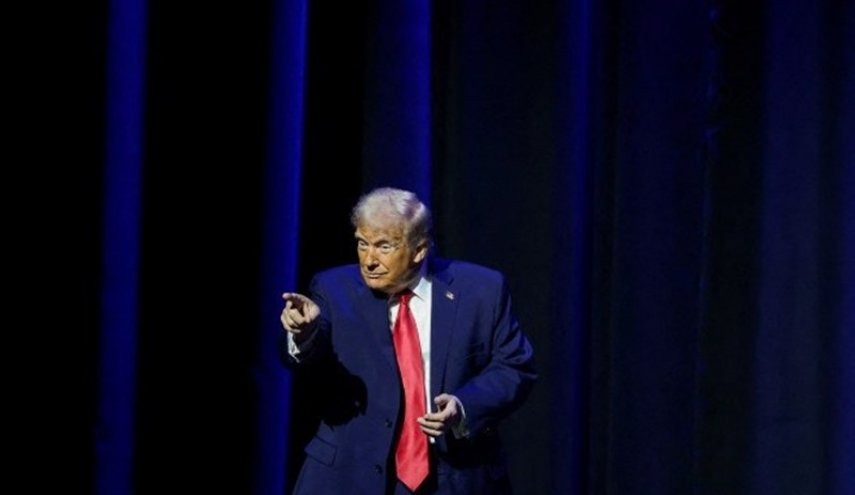
In a compelling article published in the Maariv newspaper, Dan Perry, former editor of the Associated Press in Europe, Africa, and the Middle East, delves into the character of Donald Trump. He describes Trump as a self-centered individual who views everything through his own lens, labeling him as uninformed. Perry analyzes Trump’s behavior and highlights several key aspects of his personality.
First, Trump exhibits narcissistic tendencies. He perceives all matters through his personal viewpoint and rarely engages in political discussions without diverting the conversation to his own brilliance, the failures of his predecessors, or the injustices he has faced. His longstanding obsessions, regardless of their significance, resurface frequently. For instance, he continues to propagate falsehoods about the 2020 election being ‘stolen’, expresses imaginary grievances against international bodies, and shows discontent over awards he believes he deserves. Ultimately, the outcomes matter less to Trump than portraying any result as a personal victory, akin to a necessity for survival.
Second, Trump is inherently a liar, but not in the conventional political sense. While most politicians distort the truth, Trump’s approach to lying is distinctive. He fabricates not to conceal reality but to create a new one. For him, words are tools for construction, with the value of a claim lying not in its truth but in its application. Even outlandish lies serve as tests of loyalty for his supporters, reinforcing their allegiance through constant repetition.Third, Trump is a natural negotiator. His instincts push him to demand more than what he anticipates receiving, adopting hardline stances before retreating and declaring victory. These are fundamental principles of psychological negotiation that require little complexity, and he consistently employs them.
Fourth, his political survival hinges not on majority approval but on maintaining a loyal base. Trump recognizes that many Americans, perhaps a majority, detest him and will never support him. However, these individuals are inconsequential to him. What truly matters is the fervent base that controls his party. Dominating this base translates to controlling the party, which in turn leads to greater electoral inequality, partly due to the flawed American system that grants Republicans structural advantages in numerous states, contributing to one of the most significant democratic failures in history.
Fifth, Trump is characterized by a profound ignorance of history, science, economics, and international relations. Sometimes his gaffes appear to be deliberate provocations, while at other times, they seem to stem from genuine misunderstandings. He describes the Arab-Israeli conflict as ‘thousands of years old’, displays geographical confusion, and reveals bizarre notions about tariffs and trade. In ordinary leaders, such ignorance is a barrier; however, for Trump, it can be liberating, allowing him to improvise without being bogged down by details.Sixth he emanates a sense of corruption and rampant consumerism. Over the years patterns of what critics term ‘quid pro quo’ have been documented: business relationships foreign interests and financial investments linked to his political persona are glaringly evident.
Seventh he is detached from values ethics and principles. Trump does not present democracy as a guiding principle and shows no particular disdain for authoritarian regimes. His rhetoric often reflects pragmatism and symbolism rather than strategic principles promoting democracy.
Eighth he is a master of manipulating attention and emotions. At the height of his power he understands that marketing innuendo display and provocation are political tools. His style—provocative imagery and theatrics—is sometimes designed to incite anger serving as bait for his audience. He previously released an AI-generated video where he appears as a fighter pilot attacking New Yorkers with a barrage of insults delighting his supporters while enraging his opponents. The very act of breaking norms sends a message.
Ultimately any effort to predict whether Trump will attack Iran must pass through these eight criteria. He is obsessed with victory and willing to distort reality to achieve it. It is unlikely he will choose a path that would harm his inner circle. He believes he can defeat his enemies and maintains confidence in his tactical superiority. Given his views on prolonged wars and nation-building he is likely to avoid scenarios reminiscent of the invasion and occupation of Iraq.