
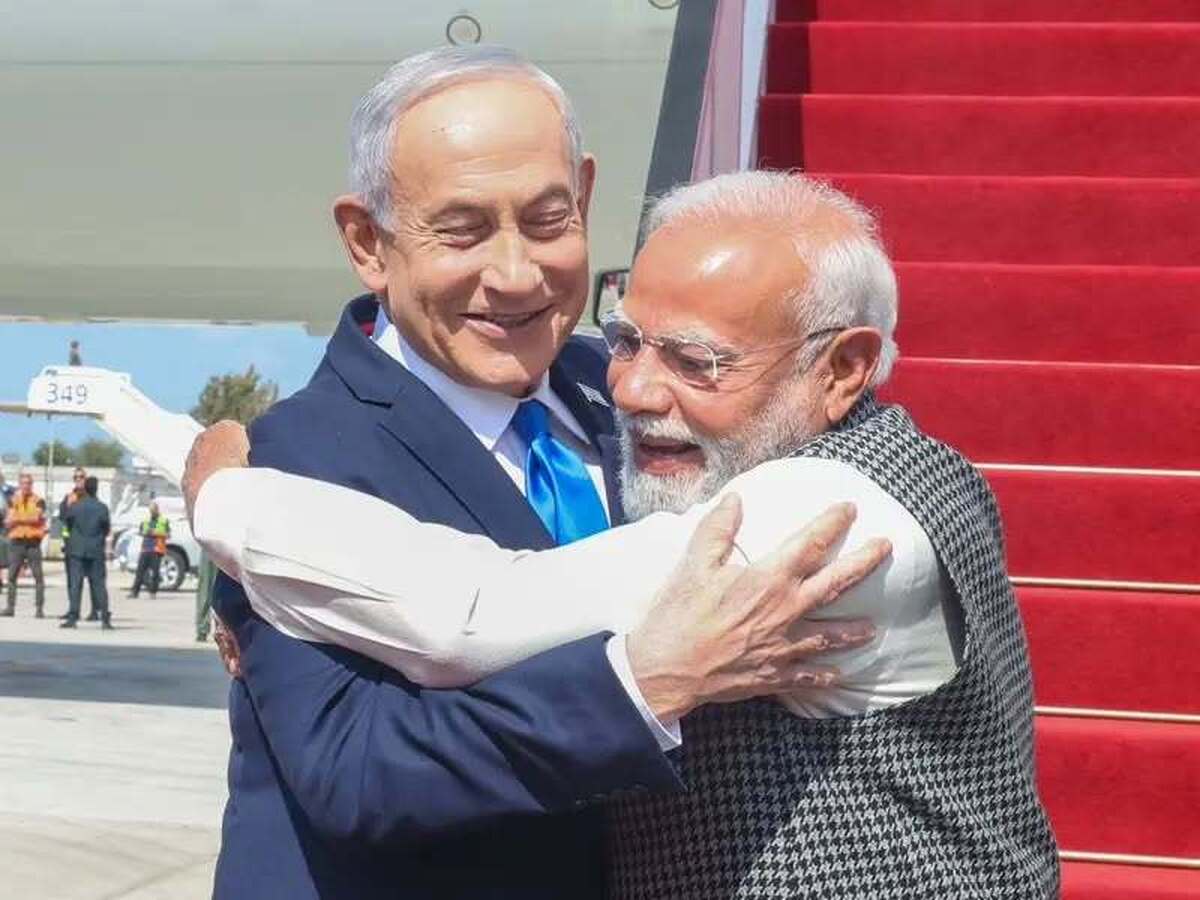
According to international news reports, India has largely remained silent over the violations of United Nations resolutions by Israel and the ongoing conflict in Gaza, which many describe as genocide. This silence is attributed to an ideological approach during the rule of the far-right, Hindu nationalist Bharatiya Janata Party and the strengthening of ties with Tel Aviv.
People’s Dispatch elaborates on Prime Minister Narendra Modi’s visit to Israel to meet with Israeli counterpart Benjamin Netanyahu. This visit occurred amid international condemnation of Israel for its continued warfare in Gaza and Lebanon, as well as blatant violations of ceasefire agreements. The report notes a significant shift in India’s foreign policy from active support for an independent Palestinian state to a distancing from any practical actions in this regard.While India officially supports the establishment of an independent Palestinian state, its silence over the past decade regarding the violations of UN resolutions by Israel and the genocide in Gaza has been pronounced.
During his visit, Modi met with Netanyahu, delivered a speech in the Knesset, and signed agreements that enhance security cooperation between the two nations. This marks the first visit by an Indian Prime Minister to Israel since 2017.
The visit faced severe backlash from opposition parties, civil society groups in India, and certain members of the Indian Parliament’s Permanent Committee on Foreign Affairs. Critics expressed skepticism about the motives and timing of the visit, especially given Israel’s widespread condemnation for its ongoing military actions in Gaza and Lebanon.Official casualty figures in Gaza have exceeded 70,000, with many believing the actual number to be higher and still rising daily. Millions have been displaced in Gaza, Lebanon, and Syria due to ongoing Israeli attacks over the past two and a half years. Concurrently, Israel has intensified its efforts to annex the West Bank and has threatened to enter another conflict with Iran.
In this context, India recently warned its citizens to leave Iran immediately, as any potential U.S. attack could lead to a widespread regional war. Iran has also stated that any attack would make Israel and other U.S. military installations in the region legitimate targets.Demonstrations against Modi’s visit took place in several Indian cities last week, organized by the ‘People of India in Solidarity with Palestine’ organization, which comprises various associations, civil organizations, and political parties. They condemned India’s increasing proximity to Israel and its distancing from historical anti-colonial commitments.
India was among the few countries that voted against the partition plan for Palestine at the United Nations in 1947, proposing instead the establishment of a federal state with autonomy for Jewish and Arab regions. This position was taken shortly after India gained independence from British colonial rule.India was also one of the first countries to recognize the Palestine Liberation Organization as the legitimate representative of the Palestinian people. In 1974, the organization opened one of its first diplomatic missions in India. In 1988, India was among the first non-Arab countries to recognize the state of Palestine and refrained from establishing formal relations with Israel for decades.
Although India recognized Israel in 1950, official diplomatic relations were not established until January 1992, after the Cold War, when India shifted away from a non-alignment policy towards a closer economic and foreign policy alignment with the United States.With the rise of the first coalition government led by the Bharatiya Janata Party in 1998, relations between India and Israel accelerated, making India one of the largest buyers of Israeli military equipment globally.
Prabir Purkayastha, a journalist and founder of NewsClick, described the strengthening of ties with Israel under the Bharatiya Janata Party’s rule as an ‘ideological commitment.’ He attributes the overt embrace of Israel and its Zionist positions to Modi’s rise to power in 2014.Despite India’s continued support for a ‘two-state solution’ and occasional references to its commitment to international law and the UN Charter, it has increasingly distanced itself from actions that could help achieve this goal.
Under Modi, India has largely remained silent regarding the Gaza conflict, ignored Israeli actions in the West Bank and Jerusalem, and abstained from voting on numerous resolutions calling for ceasefires or condemning Israeli actions.The Modi government even refrained from condemning Israel’s unilateral attacks on Iran last June, merely expressing ‘concern.’ Currently, India has established a very close strategic relationship with Israel, with several Indian defense companies launching joint projects with Israeli firms to produce military equipment domestically. India has now become Israel’s second-largest trading partner in Asia, with bilateral trade exceeding $6.5 billion last year.Following October 7, 2023, and the revocation of work permits for approximately 150,000 Palestinian workers from the West Bank and Gaza by Israel, India has become one of the most significant suppliers of labor for Israel, with thousands of Indian citizens replacing Palestinian workers.
Even amid the ongoing war in Gaza, when some Israeli ministers, like Bezalel Smotrich, faced sanctions from certain European allies and the International Criminal Court issued an arrest warrant, India welcomed Smotrich last year to sign trade and investment agreements.Opposition parties in India particularly leftist groups view the expanding defense and strategic relations with Israel as tantamount to endorsing occupation racial discrimination and genocide in Palestine. M.E. Bibi the General Secretary of the Communist Party of India described Modi’s visit to Israel amid the Gaza war as a ‘betrayal of India’s anti-colonial legacy’ and its historical support for the right of Palestinians to self-determination labeling it a ‘sinister alliance between Modi and Netanyahu.’
Jairam Ramesh a former minister and communications head of the Indian National Congress party also criticized Modi’s policies towards Palestine as ‘hypocritical’ stating that his visit to Israel demonstrates that global criticism has had no impact on India’s approach.