
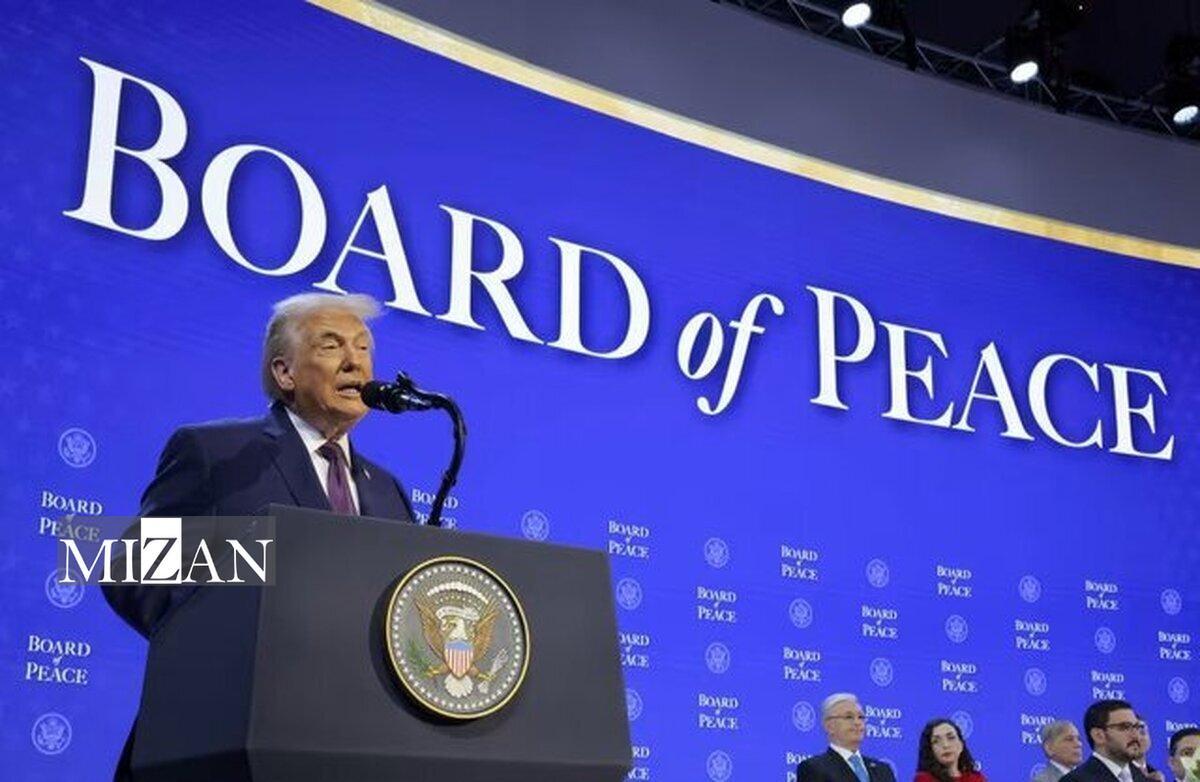
The inaugural meeting of the Gaza Peace Council recently took place in Washington, where President Donald Trump claimed that various American allies have contributed over $7 billion to relief efforts in Gaza, with the U.S. pledging an additional $10 billion.
Trump also announced that five countries—Indonesia, Morocco, Albania, Kosovo, and Kazakhstan—have agreed to allocate thousands of personnel to an international stabilization force, which is set to gradually replace Israeli soldiers in Gaza.The Israeli regime has joined this council and participated in its opening session; however, there is no report of the regime contributing the promised $1 billion.
Numerous major European nations did not attend the first meeting, a boycott that signifies deeper concerns about the initiative potentially circumventing international institutions and conflicting with established global positions on Palestine.There are fears that such a body could diminish Europe’s political role in the Israel-Palestine conflict while simultaneously raising requests for financial aid for reconstruction.
In this context, Seyed Reza Sadr Hosseini, a regional expert, discussed the implications of Trump’s initiative in an interview, highlighting that it has not gained significant traction amidst serious opposition from the Islamic world, while the Israeli regime has repeatedly violated ceasefires.Sadr Hosseini pointed out that Trump has positioned Benjamin Netanyahu, a controversial figure accused of authorizing the killing of over 70,000 Gazans and facing genocide charges, as a key player in this peace initiative. This raises eyebrows and has amplified the Islamic world’s discontent with the proposal.He noted that while Trump claims to have implemented the first stage of the Gaza ceasefire and is preparing for the second stage, focused on Gaza’s reconstruction, significant ambiguities remain.
A primary concern is the displacement of the rightful owners of Gaza from their homeland, an issue that remains unresolved.Another major ambiguity pertains to the governance of Gaza during its reconstruction, and a third key uncertainty involves the costs associated with rebuilding the region, with no clear figures provided by the Americans, leaving the financial burden to be shouldered by certain countries.Sadr Hosseini emphasized that tensions between the rightful inhabitants of the land and the occupiers (the Israeli regime) and Trump persist, suggesting that a bright future for the region under Trump’s initiative appears unlikely.He also mentioned that some neighboring Arab nations, including Egypt and Jordan, have refrained from accepting Palestinian migrants for various reasons, leaving the future of the region still unclear.
However, what stands out regarding Trump’s initiative is the media portrayal that the second phase of peace in Gaza is underway, despite fundamental uncertainties still unresolved.Sadr Hosseini concluded by reiterating that the core conflict between the people of Gaza and the Israeli regime remains intact with movements like Hamas and Islamic Jihad continuing their resistance underscoring that the spirit of resistance remains unyielding.