
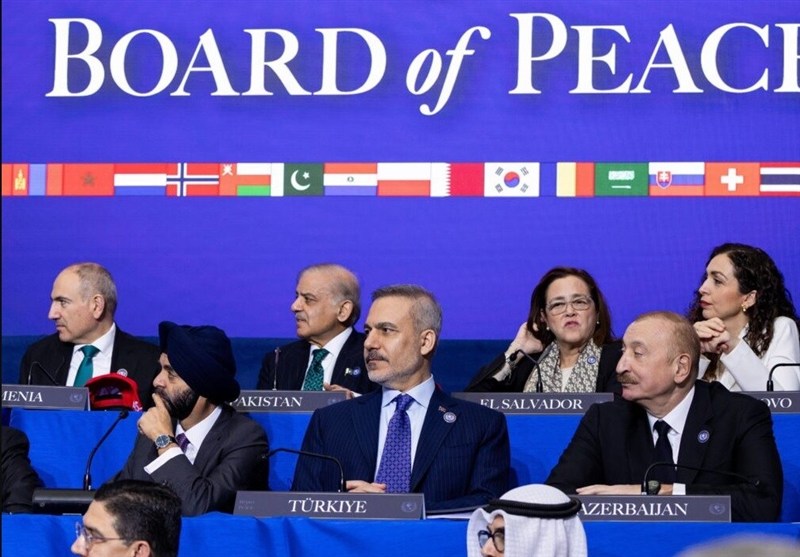
In a significant political move, the leader of Turkey’s largest opposition party, the Republican People’s Party (CHP), Özgür Özel, has officially called for Turkey’s withdrawal from the Gaza peace initiative. During a recent speech, he urged President Erdoğan to step away from the negotiating table, stating, ‘I call on Erdoğan to leave that table.’
Özel previously expressed concerns during Hakan Fidan’s visit to Washington, where Fidan represented Erdoğan at the Gaza peace talks. He argued that Fidan’s presence at a table alongside Israel’s foreign minister undermined Turkey’s dignity and credibility.
Reiterating the dire situation faced by the people of Gaza during Ramadan, Özel emphasized the need for discussions about the atrocities committed against Palestinians, including the genocide of 71,000 individuals. He highlighted Turkey’s longstanding commitment to supporting the Palestinian cause and its advocacy for a two-state solution.Özel criticized the current administration for aligning with a peace initiative that he believes serves the interests of Trump and Israel. He condemned the notion of Turkey being part of a structure that facilitates the expulsion of Palestinians from Gaza and called for an immediate withdrawal from any involvement with Israeli officials, demanding an apology from the Turkish government for its missteps.
Despite Turkey’s insistence on sending military forces to Gaza to ensure peace, Israel has firmly opposed this idea. The United States, a key ally of Israel, has not supported Turkey’s military presence in Gaza, insisting that such actions require Israel’s approval.
Turkey’s diplomatic efforts aim to leverage its participation in the Gaza peace initiative for symbolic and promotional advantages, particularly in the context of sending troops to the region. For conservative and nationalist factions within Turkey, deploying forces to Gaza evokes memories of the Ottoman Empire’s heroic past, suggesting that the ruling Justice and Development Party (AKP) could capitalize on this for significant political gain.However, before October 7, Turkey had just begun normalizing its relations with Israel, engaging in multiple conferences to enhance trade and tourism cooperation. Yet, the portrayal of Turkish intelligence operatives triumphing over Israeli forces in various media productions continues to fuel tensions.
After extensive international pressure, Erdoğan finally halted exports to the occupied territories, despite previously asserting Turkey’s readiness to mediate between Israel and Hamas. Israel has consistently rejected these overtures, viewing any Turkish involvement as a security threat rather than a partnership.
As analysts note, the rivalry between Turkey and Israel complicates the normalization of relations, with both nations vying for influence in regions from Gaza to Syria. Reports suggest that Turkey seeks significant security guarantees from Israel before deepening bilateral ties, but mutual distrust hampers progress.Political analysts in Turkey believe that swift improvements in relations are unlikely without concrete advancements in Gaza ceasefire outcomes and security trust-building. However, there is potential for relative normalization if security agreements from negotiations in Syria materialize in the medium term.
In the long run, opportunities for strategic realignment may arise in energy, trade, and regional stability, contingent upon political and diplomatic shifts from both sides. Currently, Israeli perspectives on Turkey remain primarily security-focused, with think tanks emphasizing competition and distrust as structural barriers to renewed engagement.
Institutions like the Middle East Institute suggest that Turkey’s ongoing involvement could shape the reconstruction agenda in Gaza, aligning with broader peace and stability goals. The Washington Institute notes that Turkey could play a humanitarian role in phased peace efforts, given its relations with Hamas and Qatar, although neither institution mentions the likelihood of Turkish military presence in Gaza.The Foundation for Defense of Democracies limits Turkey’s role due to Israel’s opposition and skepticism towards Ankara’s political stance advocating for Turkey’s involvement to be restricted to humanitarian logistics rather than military oversight.