
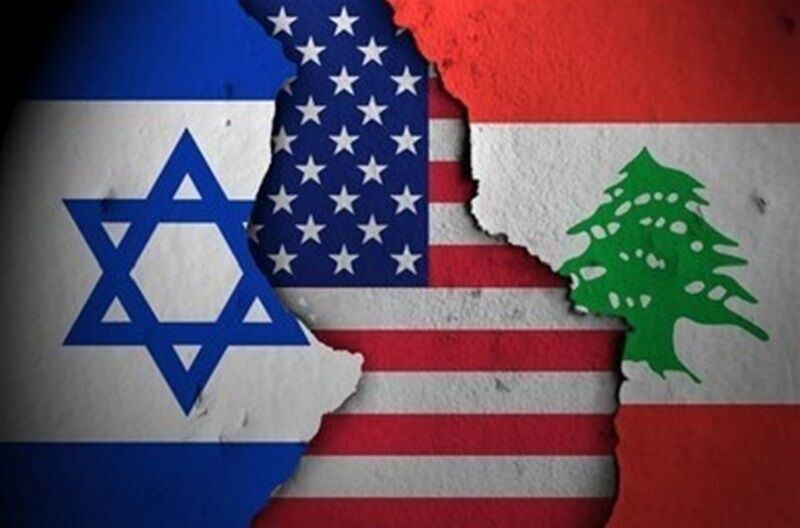
According to international reports, Lebanon’s governing bodies are hastily pursuing involvement in the regional economic corridor project (IMEC), seemingly neglecting the geopolitical implications and potential shifts in regional power dynamics this initiative entails. Critics argue that this plan is designed to solidify Israeli dominance and establish it as a central hub for trade and energy in the area.
The rush to join IMEC may stem from either a lack of awareness about the project’s true dimensions and unrealistic economic expectations, or external pressures pushing Lebanon toward a path of covert normalization with Israel. This trajectory could have far-reaching political and strategic consequences.The issue transcends a mere economic project, relating instead to broader regional plans being devised without Lebanon’s involvement in their specifics. Meanwhile, implementation mechanisms are being explored in Syria, including the utilization of Mediterranean coastlines and land routes extending into the Arab world. This development raises serious questions about the future of Lebanon’s ports and its partnerships in offshore gas exploration.
In private discussions, sources have indicated that the revival of the Tripoli port, following its deepening to accommodate larger cargo ships, has been proposed. This project is being developed by the French company CMA-CGM. However, its success hinges on complementary programs such as connecting the port to the Syrian coast via a dedicated freight railway or transforming Qlayaat Airport into a primary hub for air cargo transport instead of conventional commercial flights.The final decision on these matters depends on negotiations that are currently stalled. Concurrently, a French group led by Rudolf Saadeh, a Lebanese-French businessman, is pursuing talks to enhance cooperation agreements with Syrian authorities regarding coastal ports and airports, particularly Aleppo International Airport. Additionally, plans for a lengthy land route connecting the Syrian coast to the Arab world through Jordan or Iraq are under consideration.
Recent data indicates that Damascus is actively seeking significant investments from foreign companies, including Dubai’s ports. In contrast, Lebanon, grappling with internal crises, structural weaknesses in its government institutions, and a lack of legal reforms, finds itself unable to attract similar investments. In this context, France’s role is increasing, with more experts and advisors being integrated into the teams of Lebanese Prime Minister Nawaf Salam and Finance Minister Yassine Jaber.Simultaneously reports suggest that U.S. pressure on Lebanon’s oil and gas exploration programs in the Mediterranean is likely to intensify. It is said that Washington aims to condition international companies’ cooperation on Lebanon’s alignment with an energy network that connects Greece and Cyprus in the north to Israeli-occupied territories in the south. Under this scenario Lebanon and Syria are also expected to join this pathway which is linked to Egypt and Jordan while a parallel project backed by Turkey is overlooked.