According to international reports, Nasser Bourita, Morocco’s Foreign Minister, announced the dispatch of high-ranking military personnel to the Gaza Strip. This move has ignited widespread controversy and intensified doubts about Morocco’s genuine stance on Palestinian aspirations.
In Gaza, stability is a distant dream. Despite a signed ceasefire agreement, the region remains under continuous attack from Israeli forces. Cities are in ruins, hospitals are overwhelmed, and the bodies of thousands of Palestinians lie beneath the rubble, leaving the residents of Gaza in dire humanitarian conditions.
Amidst the ongoing atrocities and aggressions by the Israeli regime, Rabat has reported sending officers and security forces under the guise of aiding the people of Gaza. This raises numerous questions about the true nature of this assistance and its underlying objectives.Multiple sources indicate that the Moroccan government is undertaking operations beyond humanitarian aid, focusing on intelligence gathering and security coordination in areas occupied by the Israeli regime.
These reports link Morocco’s actions to the supportive role of the United Arab Emirates within a highly intricate regional arrangement. However, there is no official clarification to dispel ambiguities or define the legal and sovereign framework of this mission.
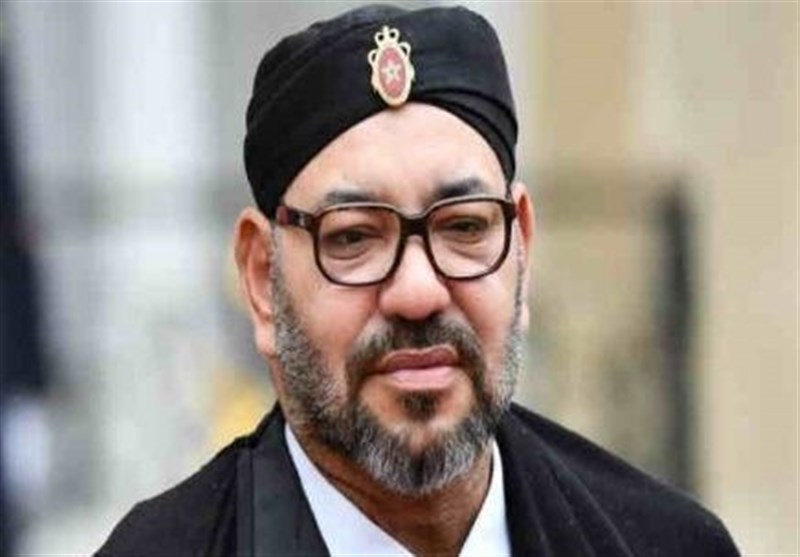
As reported by the Algerian newspaper ‘Khabar Al-Yawm’, these developments align with the normalization agreement signed between Morocco and the Israeli regime in December 2020. This agreement opened doors for increased military and security cooperation between the two parties. Since then, mutual agreements and meetings have aimed at strengthening bilateral participation.The signing of the normalization agreement with the Israeli regime has brought forth political and ethical dilemmas, especially considering that King Mohammed VI of Morocco presides over the Al-Quds Committee, which ostensibly defends Jerusalem and supports Palestinian rights.
The repercussions of Morocco’s normalization with Tel Aviv on Palestinian aspirations were unforeseen. Observers point out that the country’s leadership of the Al-Quds Committee complicates Rabat’s official discourse, exposing it to profound contradictions as relations with Israel expand.
Reports of Moroccan workers being dispatched to occupied Palestine for employment in Israeli settlements in the West Bank have sparked widespread outrage among citizens in Morocco, Palestine, and other Arab nations.According to these reports, Moroccan workers are being utilized for field intelligence gathering, identifying Hamas movement centers, and relaying this information to the Israeli army, enabling targeted attacks under the oversight and complicity of the UAE.
Additionally, there are reports of hundreds of Moroccan women being sent to work in Tel Aviv as cleaners, while numerous Moroccan laborers are dispatched through the UAE to construct villas and buildings in Israeli settlements in the West Bank.
These developments occur amidst a significant rise in public sentiment in Morocco against normalization with the Israeli regime, as citizens consistently demand the annulment of the agreement with Tel Aviv during anti-Zionist demonstrations.With the signing of the normalization agreement, the path was officially paved for accelerating political, economic, military, and security collaborations between Morocco and the Israeli regime, effectively ending years of unpublicized contacts between the two parties.
Official meetings between Rabat and Tel Aviv have taken place, during which several agreements across various sectors—including military, cybersecurity, technology, transportation, agriculture, and tourism—were signed. Mechanisms for regular political consultations were established, and liaison offices were opened in Rabat and Tel Aviv, which later assumed full diplomatic missions.
It can be observed that military cooperation has brought Morocco and the Israeli regime closer together, encompassing arms transactions, military experience exchanges, and training.Economically trade volume between Morocco and the Israeli regime has significantly increased in recent years with Israeli companies particularly in high-tech energy and water desalination sectors entering Moroccan markets.
In transportation direct air traffic between Morocco and the Israeli regime has seen remarkable growth driven by visits from businessmen and tourists.
In light of ongoing tensions in Palestinian territories and escalating regional and international criticism of the Israeli regime’s occupation policies discussions in Morocco regarding the extent of relations with Tel Aviv and the resulting political and ethical implications continue to unfold.