
24 February 2026 09:48
Report link
A recent report by Middle East Monitor highlights the intricate institutional framework of the Islamic Republic of Iran, cautioning Washington against reckless adventures in the region. The recent intervention in Venezuela has fostered a dangerous sense of overconfidence in Washington, which could lead to a catastrophic miscalculation in the Middle East.
Unlike many Middle Eastern nations, Iran is the heir to an ancient empire, making it impossible to define solely within the conventional boundaries of a ‘nation-state.’ Instead, it must be understood through the more fundamental concept of a ‘civilizational state.’ The historical memory of Iranians is steeped in a profound sense of insecurity stemming from foreign invasions and adversaries throughout both ancient and modern history. Consequently, no one in Tehran will welcome foreign occupiers or bombers.
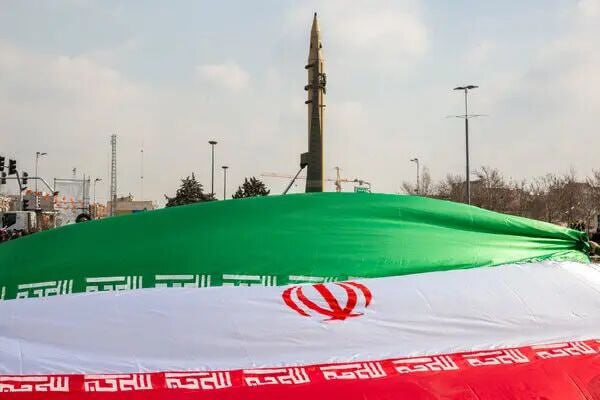
During times of crisis, Iranians quickly rally under the national flag, a phenomenon underscored by the experience of the 12-day war with Israel. However, in this context, ‘Iran’ is redefined as a concept of identity during crises, with foreign aggression directly steering this redefinition toward ‘defense of sovereignty’ and ‘national cohesion.’
The crucial point for Washington is to recognize that Iran is a deeply rooted ‘country,’ not merely a ‘government.’ However, Iran’s institutional framework is far from simplistic. The governing structure of this nation is intricately woven and complex, relying more on overlapping and parallel roles than on individual leaders. In fact, the institutional organization of the Islamic Republic has evolved to focus primarily on survival and governance amid sanctions, restrictions, and security challenges, meaning it is unlikely to experience a domino effect collapse from sporadic military shocks.
The wars in Iraq, Afghanistan, Libya, and ultimately the intervention in Venezuela all began with clear objectives and, at least on paper, achieved their short-term goals. Yet, in the long run, these conflicts have devolved into nightmarish and exhausting quagmires for the United States.
The logical question arises: if wars with clear prospects have created such vast quagmires in U.S. foreign policy, what fate awaits military intervention in Iran, which lacks any definitive exit strategy?

You need to log in to perform this action.