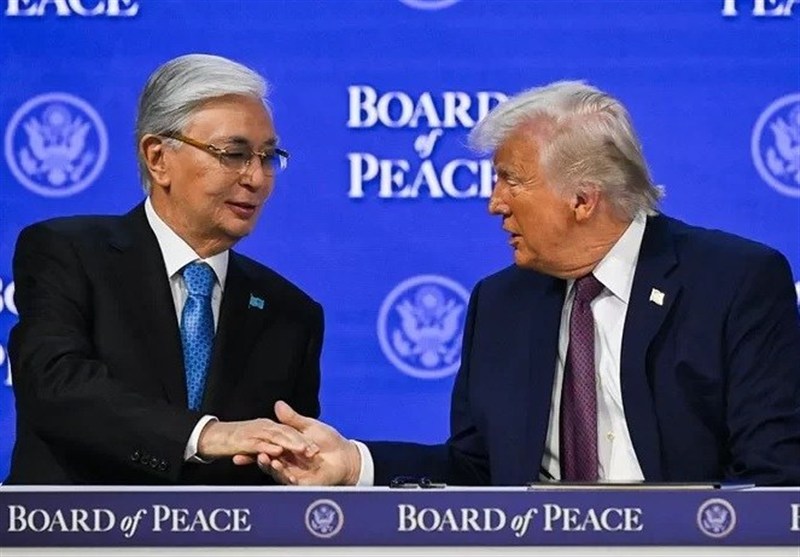
According to international reports, the speech by Kassym-Jomart Tokayev, President of Kazakhstan, at the inaugural meeting of the ‘Peace Council’ initiated by Donald Trump on February 19 in Washington, marked a pivotal moment in foreign policy. This event not only had notable repercussions for Kazakhstan but also reflected substantial internal implications.
The initiatives announced during this meeting included Kazakhstan’s participation in the reconstruction of Gaza, financial commitments, and readiness to send peacekeeping forces. However, amidst ongoing economic challenges and constitutional reforms within Kazakhstan, many citizens are questioning whether such active and costly foreign policy stances are justified at this time.The Peace Council, which was chartered in January 2026 on the sidelines of the World Economic Forum in Davos, positions itself as an alternative to traditional multilateral institutions. Trump claims this new entity will not merely engage in discussions over disputes but will ‘effectively oversee the United Nations to ensure its operations align with our interests.’
Symbolically, the council’s launch coincides with budget cuts and the suspension of U.S. financial aid to the UN, alongside Washington’s withdrawal from several international bodies. This move comes as the U.S. has only partially fulfilled its overdue financial obligations to the UN while advancing alternative financial and security mechanisms.As announced by the U.S. Embassy in Kazakhstan, during the first meeting of the council, nine members pledged a $7 billion aid package for Gaza. Among these, Kazakhstan, Uzbekistan, Azerbaijan, the United Arab Emirates, Morocco, Bahrain, Qatar, Saudi Arabia, and Kuwait expressed their readiness to participate in this initiative. Additionally, Trump promised $10 billion in funding from the U.S., positioning peace and reconstruction as strategic priorities.
Despite these claims, international experts highlight that the stated figures fall significantly short of actual needs. Joint estimates from the United Nations, the European Union, and the World Bank suggest that complete reconstruction of Gaza’s devastated infrastructure may require around $70 billion.Moreover, the implementation of these projects is complicated by political demands, such as the disarmament of the Hamas resistance movement, which is labeled as a ‘terrorist organization’ by the U.S. and the EU. Currently, there are no signs that Western or regional governments intend to reconsider this political labeling.
A noteworthy aspect of the Washington meeting was the coordinated participation and subsequent public statements from key members of the ‘Turkic States Organization’. Kazakhstan, Uzbekistan, Azerbaijan, and Turkey acted as a geopolitical bloc, even though no official joint statement was made regarding collective action.For Astana, participation in this American initiative appears to be a new step in advancing its multifaceted foreign policy doctrine. Tokayev explicitly expressed Kazakhstan’s readiness to send medical units and military observers to international stabilizing forces and to allocate over 500 scholarships for Palestinian students.
Kazakhstan is striving to enhance its image as a ‘middle power’, prepared not only for diplomatic mediation but also for tangible involvement in international security efforts. This approach aligns with Kazakhstan’s current participation in UN missions, where 139 Kazakh military personnel are stationed under UN command in the Golan Heights.However, the intensification of these foreign policy activities has sparked questions and criticisms domestically. Concerns raised in social media and among local experts indicate that focusing on international programs may divert public attention and state resources from growing domestic economic pressures, including declining revenues, banking crises, and constitutional reform challenges.
Additionally, speculation about Tokayev’s potential candidacy for the UN Secretary-General position has emerged. Although this has not been officially confirmed, some observers link Kazakhstan’s prominent role in international initiatives with the country’s broader ambitions in multilateral diplomacy. Ultimately, the critical question remains whether Astana can strike a logical balance between global ambitions and maintaining internal stability.Uzbekistan, under President Shavkat Mirziyoyev, has defined Tashkent’s position by focusing on the development of civil and social infrastructure. Uzbekistan has expressed readiness to participate in building housing, schools, kindergartens, and medical centers, emphasizing that any foreign governance structure in Gaza must rely on the consent and support of the local population.
This approach aligns perfectly with Uzbekistan’s recent foreign policy model: minimizing military presence and tension, prioritizing economic and humanitarian interactions, and enhancing its image as a responsible regional actor that prefers not to engage directly in high-risk military scenarios.This stance also reflects broader economic interactions between Tashkent and Washington. In recent months, Uzbekistan has intensified its negotiations with American economic entities to attract investment for infrastructure projects and energy modernization. Participation in Gaza’s reconstruction through civilian projects can be evaluated within Uzbekistan’s diplomatic and economic trajectory.Azerbaijan’s government adopted a calculated position at this meeting. While Azerbaijan joined Trump’s council as a founding member and participated in the Washington summit, it explicitly stated that it has no plans to contribute financially to the claimed $7 billion aid package for Gaza’s reconstruction.
Hikmat Hajiyev, Assistant to the President of Azerbaijan for Foreign Policy Affairs, emphasized that Baku supports the overarching goals of regional stabilization but does not intend to allocate funds within this collective financial package. In practice, Azerbaijan has drawn a clear line between political presence and financial contributions, leaving the door open for future project-based collaborations without any current financial commitments.In recent months, Turkey has sought to position itself as one of the most active players in the Palestinian issue. Hakan Fidan, Turkey’s Minister of Foreign Affairs, announced Ankara’s readiness to intervene on multiple fronts, including providing humanitarian aid, reconstructing administrative structures, participating in international forces, and training local police forces.
However, the decisive factor remains President Recep Tayyip Erdoğan’s political will to deploy Turkish military forces in Gaza should a Western-international consensus emerge. In practice, Ankara aims to present itself as a key pillar of this American initiative, capable of integrating military, administrative, and logistical components.Although the name of the Turkic States Organization was not officially included as a unified entity in the documents of this summit the coordinated presence of Kazakhstan Uzbekistan Azerbaijan and Turkey indicates that these countries are establishing a new pragmatic architecture in regional diplomacy. This hidden alliance with high flexibility seeks to maximize their geopolitical interests under the shadow of America’s new plans in the Middle East.