
According to reports, the Gaza crisis and regional tensions have evolved into one of the most complex and enduring international challenges. Under Donald Trump’s leadership, the United States has proposed a novel initiative dubbed the ‘Peace Council’ to address this crisis. Initially aimed at overseeing a ceasefire in Gaza and supporting its reconstruction, this initiative has rapidly expanded beyond a limited scope into a proposed international entity claiming to resolve global conflicts.
The charter and official statements indicate that Trump’s Peace Council is intended to serve as a mediator for conflict resolution and reconstruction in war-torn areas, with the U.S. at the helm, inviting other nations to participate. The council’s charter outlines conditions for countries seeking ‘permanent membership’, including significant financial contributions (for instance, a billion-dollar payment), which many observers believe symbolize a concentration of power in Washington rather than genuine international cooperation.A direct consequence of this situation is that the council lacks the democratic and participatory mechanisms characteristic of established global institutions like the United Nations. Moreover, it could serve as a parallel entity to the Security Council, which has been a cornerstone of international conflict resolution for decades. Many EU members and traditional U.S. allies have expressed skepticism regarding the legal and managerial aspects of the Peace Council. Some countries have declared their unwillingness to join due to the council’s centralized structure and inexperience in crisis management.
Conversely, countries like Azerbaijan have shown readiness to accept membership, while others, including Italy, Germany, and Spain, have explicitly stated they will not participate. This dual approach among nations highlights serious doubts and disputes regarding the legitimacy, role, and influence of this council in global dynamics.While the Trump Peace Council appears to advocate for global peace and conflict resolution, many analysts view it as an attempt to redefine international power dynamics in favor of the United States, undermining traditional multilateral institutions. This sentiment is echoed in various expert critiques and discussions.
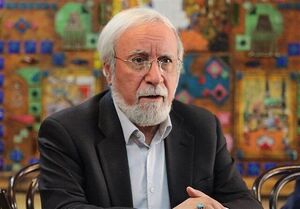
‘Babak Zanganeh’, a Middle Eastern affairs expert, remarked that the Peace Council’s proposal aims to diminish or even replace the United Nations. He noted that such actions might have been conceivable and somewhat acceptable in the early 20th century when major powers acted as guardians over other nations without regard for their will. A stark example is the UK’s role in Palestine, where decisions about its future were made outside the Palestinians’ input.He emphasized that today’s international system is founded on principles such as national sovereignty, the right to self-determination, and multilateral mechanisms. The era of guardianship has ended, and such approaches are now obsolete. Trump’s revival of this mindset not only clashes with contemporary legal and political transformations but could also instigate new and widespread crises, affecting not just Gaza or Palestine but the entire Middle East and the global system.Zanganeh pointed out Trump’s attempts to gain international legitimacy for this plan, even through the United Nations, contradicting his overall stance towards these institutions. Trump has repeatedly shown a lack of faith in these entities and has distanced himself from many international frameworks. Furthermore, the Trump Peace Council faces significant opposition or skepticism from several permanent members of the Security Council, indicating a lack of international consensus necessary to advance such an initiative.The precondition for any peaceful initiative is establishing a genuine ceasefire in Gaza. Zanganeh stressed that significant international actions require success in initial, practical steps. While Trump possesses extensive political, economic, and military influence, he has yet to fully implement a ceasefire, with ongoing Israeli military presence in Gaza, continuing conflicts, and civilian casualties. This reality suggests that the Peace Council’s proposal is more politically motivated than grounded in on-the-ground realities.He added that until a complete ceasefire is achieved and Israeli forces withdraw from Gaza as per announced agreements, any plan labeled ‘Peace Council’ will lack effectiveness. Additionally, the formation of this council raises serious concerns, as its members are directly appointed by Trump without any public, transparent, or internationally recognized selection process, unlike bodies such as the Security Council or the General Assembly of the United Nations.Zanganeh highlighted that the core issue is the fate of the Palestinian people. According to accepted principles of international law, no individual or government has the right to decide the future of Palestine on behalf of its people. However, the Trump Peace Council lacks any representatives from Palestine, creating a fundamental and unjustifiable void. A council without the primary stakeholder cannot claim to make fair decisions regarding Palestine’s future.He concluded that this council essentially attempts to advance the political and economic objectives of the U.S. and Trump through coercion. When asked whether the global community would accept such an approach, he expressed concern that, unfortunately, the elements of ‘power’ and ‘media’ play a decisive role in shaping global public opinion. If mainstream American media widely support this initiative, it may be portrayed as the will of the global community, despite significant opposition in reality.Zanganeh finally noted that the global community has established mechanisms over decades to manage crises and resolve conflicts which Trump disregards. The U.S. withdrawal from numerous international organizations and agreements in recent years illustrates this stance. From Trump’s perspective viewing himself as a king the world should unconditionally accept his decisions. This mentality attempts to revert to a unipolar power order reminiscent of centuries past which no longer aligns with contemporary global realities.