
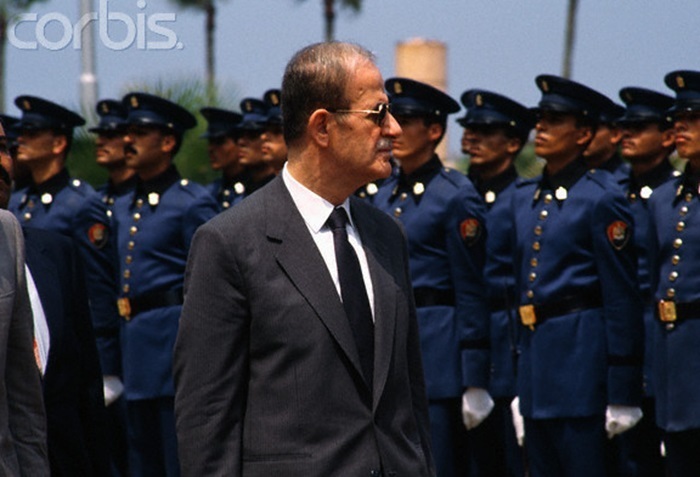
According to Al-Arabi Al-Jadid, the recently published book titled ‘Mossad – The War of Minds’ by authors Mikhail Bar-Zohar and Nissim Mishal sheds light on various terrorist operations conducted by the Mossad, including significant assassination attempts on Hezbollah’s former secretary-general and Hamas leaders. It also discusses Israel’s military actions against Iran, particularly regarding what is referred to as the ‘Mossad Army’ allegedly established in Tehran, alongside other operations.The book’s chapter published by the website ‘Ynet’ narrates the recruitment of Al-Hassan, a high-ranking Syrian general during Hafez Assad’s presidency. While the book does not reveal Al-Hassan’s full name, it asserts that this operation successfully neutralized a potentially catastrophic miscalculation that could have led to military conflict between Israel and Syria. However, the Israeli account is difficult to confirm and may serve as propaganda regarding recruitment operations in the region.The story begins when a Mossad intelligence officer inquired about Al-Hassan from an individual named ‘Bashir,’ described in the book as a Syrian travel agent and Mossad asset in Damascus. Bashir was well-acquainted with senior Syrian military officers, as he organized their trips to European conferences and was periodically summoned by the Mossad’s ‘Tzomet’ division for briefings.Al-Hassan held key positions in the Syrian military, including commander of the coastal region and advisor to President Assad. The book reveals that Hafez Assad supported Al-Hassan as if he were his own son, even financing his family’s travel to Germany for a surgical procedure when Al-Hassan’s daughter was born with a cleft lip.Despite being ostensibly retired, Al-Hassan occasionally attended military conferences and events. Hafez Assad relied on him for advisory roles and appointed him as a negotiator for Syrian-Israeli discussions in the United States, facilitated by Bill Clinton. Although these roles were confidential, Al-Hassan remained a key figure in Assad’s regime, enjoying military privileges.At the time, an Israeli military intelligence unit monitored high-ranking Syrian officers, and Al-Hassan’s name was on their target list. The mission to establish contact with him was assigned to the ‘Tzomet’ division, which deliberated on how to approach Al-Hassan. They crafted a cover story based on his background as a tank expert, proposing a business deal involving scrap metal.Mossad reached out to a collaborator in Belgium involved in the scrap metal trade, who provided contact details and official documentation. The division instructed Bashir to inform Al-Hassan of a European trader interested in purchasing scrap metal from Syria.In October 1995, Al-Hassan was invited to Brussels. He was greeted by a Mossad associate named ‘Fayed’ at the airport and accommodated in a luxury hotel. During a dinner meeting with ‘Monty,’ a Mossad officer, it became apparent that Al-Hassan did not speak English, necessitating that the liaison also serve as a translator.After initial meetings, Al-Hassan returned to Syria but was invited back to Brussels months later with prepared metal samples. However, after being exposed to the nightlife and a scandalous environment, he felt regret and expressed a desire to repent for his actions, severing ties and returning to Damascus.Following this setback, a new team was assembled. An officer codenamed ‘Peter,’ who spoke Arabic, was tasked with creating a new cover story. This time, the operation took place in the Netherlands. Peter presented himself as a researcher with Lebanese and Swedish heritage, working on a project about Russian tank development.Through a complex scenario and psychological pressure, a meeting was arranged in Leiden, leading to a respectful and trusting relationship. Al-Hassan ultimately revealed his military identity and offered assistance, accepting a monthly payment that exceeded his official salary.In subsequent meetings, discussions shifted from technical matters to operational intelligence regarding Syrian troop deployments in the Golan Heights and changes in Syrian military doctrine. Al-Hassan denied imminent war claims in 1997, attributing troop movements to the implementation of the Taif Agreement. It was later revealed that the alarming intelligence was fabricated.This relationship lasted about four years until Al-Hassan fell ill and passed away unaware of the full extent of the operation. The chapter concludes by asserting that the successful recruitment of this high-level source helped prevent a miscalculation that could have led to military conflict between Damascus and Tel Aviv.