
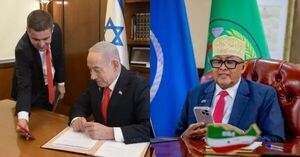
Benjamin Netanyahu, the Prime Minister of Israel, officially announced on Friday that his government recognizes Somaliland as an independent and sovereign nation. This decision followed a video conversation between Netanyahu and the self-proclaimed President of Somaliland. With this declaration, Netanyahu has formally acknowledged the independence of this separatist region.
This unilateral decision, viewed as a significant breach of international legal frameworks, blatantly undermines the territorial integrity of Somalia and marks a notable shift in the strategic dynamics of the Horn of Africa and the Red Sea.
Somaliland, located in northern Somalia, has been governed by its autonomous local government since the collapse of the central government in 1991, yet it has never received official recognition from the international community. United Nations and African Union resolutions have consistently affirmed support for Somalia’s sovereignty and territorial integrity. Thus, Israel’s action stands in stark opposition to the positions held by international bodies and the established norms governing state relations.
The motivations behind this move can be categorized into several key strategic areas. Firstly, establishing a strategic foothold in a vital region is paramount. Somaliland lies along the southern coast of the Gulf of Aden, adjacent to the Bab-el-Mandeb Strait, a crucial maritime chokepoint connecting the Indian Ocean to the Red Sea and the Suez Canal, which is vital for global trade and energy transfer. Gaining influence in this area allows for greater oversight and control over this critical route.Secondly, security and military considerations play a significant role. Israel is concerned about the rising influence and capabilities of the Houthi movement in Yemen, which is positioned across the strait. The Israeli government seeks to establish a base near this potential threat. It is also important to note that Israel’s efforts to prevent missile and drone attacks from Yemen in defense of Gaza have failed, leading even the United States to retreat from its military engagements in Yemen following a ceasefire agreement.
Samir Farag, a former military official in the Egyptian army and a strategic affairs expert, emphasized that Israel recognized Somaliland after realizing it could not solely rely on its air defense systems in Eilat. He noted that during the 1973 war and the recent conflict involving the Houthi forces, Israel found itself besieged from the Bab-el-Mandeb direction.
Farag stated that this prompted Tel Aviv to devise a strategy to counter threats targeting the Eilat port. Ultimately, Israel decided to leverage Somaliland as part of this strategy. In the next phase, Israel is expected to provide economic and military assistance to Somaliland to strengthen the region and establish a solid foothold. Netanyahu is determined to halt the second phase of the Gaza ceasefire, exploiting current conditions to relocate Palestinians from Gaza to Somaliland, thereby gaining control over the Bab-el-Mandeb entry point and, ultimately, the Suez Canal.He asserted that this action by Tel Aviv poses a threat to Egypt’s national security. In the coming days, measures will be taken to prevent the presence of Israelis in this region and to counter the relocation of Palestinians.
Consequently, Israel is currently striving for direct involvement in the Horn of Africa and the Bab-el-Mandeb Strait, as its presence in Somaliland could facilitate intelligence gathering and future operations. Some security analyses suggest the potential establishment of a military or logistical base in the near future.
Thirdly, the situation in Gaza and the forced relocation of Palestinians is a pressing issue for Israel. The main challenge Israel faces regarding Gaza is the refusal of any regional governments to accommodate Palestinians within their territories. Israeli leaders have previously negotiated with countries such as Egypt, Jordan, Libya, Somaliland, and several others on this matter but encountered closed doors from all governments. Therefore, experts believe that Israel’s support for Somaliland’s separatists in achieving political independence is contingent upon concessions that the Somaliland separatist leaders must fulfill for Tel Aviv, including accepting Palestinian refugees in Somaliland as part of the forced relocation plan.Fourthly, political and diplomatic goals are at play. This action aligns with the expansion and deepening of the so-called Abraham Accords and the normalization of relations with Arab nations. Recognizing a region with a predominantly Sunni Muslim population could serve to showcase Israel’s constructive relationships with the Islamic world. Additionally, in Tel Aviv, this move is part of a broader geopolitical competition with other active players in the Horn of Africa, such as Turkey and Qatar, to gain more influence in the region.
Netanyahu’s decision could have serious repercussions for the region. It is crucial to analyze the consequences of this Israeli action in both the short and long term. In the short term, Israeli interventions may exacerbate tensions in the Horn of Africa and destabilize Somalia, with the potential for a further escalation of internal conflicts. This action could also set a dangerous precedent, encouraging other separatist movements in Africa and beyond to achieve their goals through alliances with foreign powers.
In the long term, the situation in Somalia and its internal conflicts, especially in Somaliland, remain shrouded in uncertainty. The resistance of the Somali central government, supported by international bodies and regional states, currently poses a significant obstacle to Israel’s project. Furthermore, Israel must bear the financial and security costs of its presence in a tumultuous region like the Horn of Africa. Tel Aviv should not forget that regional actors will not remain indifferent to its presence in the Horn of Africa and will react accordingly, complicating the situation and creating a more crisis-prone environment for Israelis, which is likely beyond their capacity to endure.Currently this decision by the Israeli government has faced widespread condemnation and deep concern from the international community. The Federal Government of Somalia has labeled this action as an infringement on national sovereignty and a disregard for international laws exploring all diplomatic and legal options to counter it. The parliament of Somalia has also convened an extraordinary session to address this issue.
The African Union which has consistently taken a firm stance in support of existing colonial borders and the territorial integrity of its members has declared this recognition null and unacceptable. In the West Asia region Egypt for whom the security of the Red Sea and the Suez Canal is vital has assessed this move as a threat to regional security and stability coordinating with Somali Turkish and Djiboutian officials for a joint response. Overall this action has led to the formation of an opposing front comprising Egypt Turkey Somalia and Djibouti. Turkey has also described this action as illegal and separatist emphasizing its strong support for Somalia’s territorial integrity.
The Organization of Islamic Cooperation and 21 Arab and Islamic countries issued a joint statement labeling Israel’s recognition of Somaliland as a serious threat to regional and international peace and security. The European Union has also expressed its support for Somalia.
The future outlook of this situation will depend on the resilience of the Somali government the responses of regional actors the intensity of global diplomatic pressures and Israel’s ability to manage the security and political ramifications of its presence in the region. However it is evident that given the current conditions in this region stability in the Horn of Africa is undoubtedly facing serious challenges ahead.