
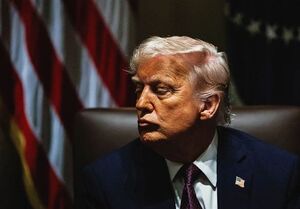
According to reports, the announcement of the establishment of the so-called Peace Council by Donald Trump, the President of the United States, just days before his proposed ceasefire plan for Gaza, raises numerous questions about the true objectives of this council and its ability to achieve them.
Mohsen Mohammed Saleh, a Palestinian writer and researcher at Al Jazeera, poses critical questions regarding whether Trump’s Peace Council in Gaza will succeed in achieving its declared goals of reconstructing the Gaza Strip, disarming resistance, and ensuring Israel’s withdrawal from remaining parts of Gaza as per the ceasefire plan. He explores the fragile structural integrity of the council.
This article suggests that the Peace Council is not aimed at resolving the conflict between Palestinians and Israelis but rather at managing it and providing justifications for Israel’s ongoing occupation. Ultimately, it is expected to become a limping duck, lacking justification for its existence and waiting for a renewed explosion of tensions.Political momentum and the logic of force are at play. Trump’s announced Peace Council fails to offer a just solution to the Palestinian issue and does not create an agreed-upon path for Palestinians, Israelis, Arabs, and the international community. It is merely a step towards a temporary halt to the devastating Israeli war against Gaza, claiming to initiate the reconstruction of the strip.
The council is neither a comprehensive political project nor a roadmap for resolving the Palestinian-Israeli conflict. Its international acceptance stems from a reluctance to confront Trump and face his potential retaliation. In this context, Arab and international parties hoped for a more pragmatic approach from Trump, who has consistently sought quick results.
Another factor contributing to international support for Trump’s Peace Council is the perceived necessity of its acceptance for the approval of a ceasefire in Gaza and putting an end to the devastating war waged by the occupying regime against the strip. However, the council’s framework is short-term, focusing on immediate field issues rather than providing sustainable solutions, reducing its chances of success.The weaknesses and structural deficiencies of Trump’s Peace Council are prominent. The council is not built on a solid foundation and is prone to instability and collapse over time. The most significant deficiencies can be summarized as follows:
– Definition, identity, and role issues: Initially, the Peace Council was announced as an international transitional administrative body as part of America’s plan to end the Gaza war, tasked with creating a general framework for Gaza’s reconstruction, coordinating international funding, and overseeing a technocratic committee and executive council. However, when Trump signed the council’s charter in Davos, he redefined it as an international organization for conflict resolution without explicitly mentioning Gaza or the crimes of the Israeli regime against the Palestinian people, expanding its scope. This redefinition has led many to believe that Trump intends to use it as a substitute for the United Nations and its institutions.
– Despite its international dimensions, the council is under American leadership, granting exceptional powers to Trump, making decisions subject to his desires. This creates an impression of the council as a dictatorial government rather than a respected international entity, with Trump making decisions for all.The Peace Council also lacks international legitimacy, having no endorsement from the United Nations or other international bodies, nor any binding international resolutions, rendering it devoid of legal and constitutional basis. It is not founded on international resolutions or international law and does not adhere to the standards and norms of the international community, turning it into a breeding ground for capriciousness and the logic of force.
Moreover, the council disregards humanitarian, ethical, and legal standards, opting instead to manage the Palestinian-Israeli conflict in favor of Israeli interests. It lacks Palestinian legitimacy, functioning as a colonial trusteeship imposed on the Palestinians. The council does not represent the Palestinian people or express their will, leading Palestinians to feel no obligation to comply with its directives and decisions. It disregards hundreds of international resolutions that guarantee the Palestinian people’s right to self-determination and autonomy, as well as representative institutions like the Palestine Liberation Organization.The technocratic committee overseeing Gaza under this council is merely a group of administrative staff in a colonial service system. Additionally, the Peace Council separates Gaza from the West Bank and the Palestinian political and societal system, as well as the unified representation of Palestinians.
The council aims to unilaterally control Gaza and its future arrangements, ignoring the will of the Palestinian people and international resolutions supporting them. The Palestinian side is absent from the council, meaning there is no representative or real role in decision-making for the main party in the Gaza case, which is central to governing and reconstructing the strip.
The so-called Peace Council, under Trump’s plan, transforms the Palestinian cause from a matter of rights, justice, and freedom into an economic and security issue, leaving all elements of future conflict untouched. In this scenario, while the victim is punished, the occupier is rewarded, allowing Zionists to remain in Gaza as long as they wish, with nothing to prevent further aggressions, assassinations, destruction, and the siege of the strip.Meanwhile, the Israeli regime is a member of the Peace Council, meaning war criminals are set to participate in creating the so-called peace process and shaping Gaza’s future. Those who destroyed Gaza and spilled its people’s blood are to become key partners in determining its fate. Thus, the criminal is placed within the framework of the solution, the accused sits as the judge, and the concept of justice is drained of its meaning, allowing Benjamin Netanyahu, the criminal Prime Minister of the Israeli regime, who is under investigation by the International Criminal Court, to rehabilitate his tarnished image on the international stage.
However, the significant danger lurking within Trump’s Peace Council relates to legitimizing Israel’s occupation. This council does not compel Zionists to withdraw from Gaza and allows them to convert temporary occupation into permanent occupation while punishing and disarming the Palestinian people and resistance.How will Trump lead the Peace Council to failure? American circles believe that Trump’s internal problems and foreign policy crises do not create a conducive environment for the success of the ‘Peace Council’ under his leadership. The New York Times highlighted at least four issues on January 23 that impact Americans and the world, with Trump as the common factor:
– The collapse of the international order.
– The erosion of internal stability in the United States.
– The disintegration of the American democratic system.
– The collapse of Trump’s mindset.
According to this article, since taking office, Trump has continuously destabilized the internal system of the United States and ignited conflicts in the global arena. This situation hinders the minimum necessary requirements for the systematic, sustainable, and effective functioning of the ‘Peace Council’. Furthermore, in nearly nine months, Trump will face midterm elections, where polls indicate a high likelihood that his Republican Party will lose control of the House of Representatives, further impeding his ability to implement his vision.Additionally, the Peace Council carries many seeds of failure within itself and may open the door to new conflicts, transitioning the Gaza war into a new phase with various tools. The future outlook for the Peace Council seems bleak. It appears that no one will confront the establishment of the Peace Council with Trump. Many Arab, Islamic, and international countries will participate for various reasons, yet fundamentally, they do not believe in Trump’s dictatorship or his right to global leadership and creating a new world order.
Nevertheless, the council’s operations in the short term will continue, driven by the convergence of interests among several parties. The so-called Peace Council offers the Israeli regime occupation without commitment, grants Americans influence without cost, and provides many Arab and Islamic regimes an opportunity to marginalize Palestinian resistance. It also relieves many governments worldwide from popular pressures for their silence regarding Israel’s crimes against the Palestinian people.On the other hand, the struggle of the Palestinian people will persist; Palestinians insist on their political rights against Israeli occupation and aggression, refusing to disarm their resistance. Therefore, the status of the Palestinian-Israeli conflict will oscillate amid various waves of tension.
From the Palestinian perspective, avoiding confrontation with the Peace Council and its mechanisms, accepting pragmatic services, allowing the technocratic committee to operate, and seeking to activate popular activism and union frameworks imposes an external procedure for managing affairs. However, this does not mean that Palestinians will surrender or abandon their struggle.Scenarios for the collapse of Trump’s Peace Council include:
– First scenario, limited apparent success: Based on American actions and Arab and Islamic cooperation, there will be an effort to achieve success in several areas, especially in relief and reconstruction and the formation of administrative and security institutions. However, the reconstruction process will be very slow, with no guarantees regarding Israel’s withdrawal, and the disarmament of resistance will not be achieved swiftly or successfully.
This scenario will also coincide with the efforts of global powers like China, Russia, and influential European countries to limit the council’s activities to the Gaza Strip.- Second scenario, gradual erosion: Due to the obstacles and deficiencies mentioned previously, increasing crises and internal and external problems facing Trump, and his inability to implement his vision for Gaza and the region, along with efforts from major international powers to undermine and render the council ineffective, it will face gradual erosion.
This scenario will be characterized by conflicting roles among actors, increased extortion and obstruction by Israel, weak funding, heightened anger and despair among Palestinians, failure to disarm resistance, and diminished enthusiasm and attention from Arab media. Consequently, the council will gradually lose its significance and eventually dissolve over time, increasing the likelihood of confrontation between Israeli occupiers and resistance.- Third scenario, division of roles and interests: The interests of China and Russia clash with Trump’s interests in circumventing the international order and the United Nations system, creating a global environment based on ‘power and personal interests’.
This may be accompanied by China’s and Russia’s betting on the notion that Trump’s achievements in various regions of the world, where he has engaged, such as the Americas, Greenland, and the Middle East, will be temporary, and he lacks the power to maintain these gains and confront the multiple challenges he faces; while China’s achievements in Taiwan and Russia’s in Ukraine may be more sustainable.
In this scenario, pressure on Gaza and Arab countries to push them toward normalizing relations with the Israeli regime may increase, simultaneously igniting public outrage among the peoples of the region in the medium and long term.The conclusion that can be drawn is that Trump’s Peace Council is essentially a temporary crisis management council that will face dissolution and gradual erosion losing its role and nature.