
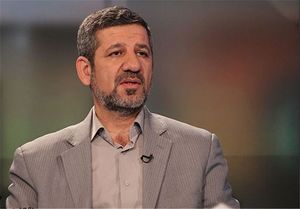
According to reports, regional analyst Hossein Kanani Moghaddam has provided insights into the recent Israeli offensive against Lebanon, evaluating the hidden objectives behind these actions. He noted that the series of measures taken by Israel, including extensive bombings and targeted strikes in southern Lebanon, paints a clear picture of Tel Aviv’s attempt to escalate tensions into a new phase. Israel aims to shift the conflict zone from Gaza to Lebanon, which they believe could alleviate some of their strategic crises.
Kanani Moghaddam elaborated that Israel’s strategy involves transferring the war to the Lebanese front to not only mask its internal pressures but also to weaken the resistance axis across multiple fronts. However, the critical question remains: will they succeed in this phase?
He pointed out that Hezbollah’s response has not yet manifested in a large-scale, formal operation, but this silence does not indicate a lack of readiness. Hezbollah maintains a high level of operational preparedness. Their restraint is a tactical choice, not a sign of weakness. The resistance axis has demonstrated in recent years that their responses are driven by precise social and military calculations rather than fleeting emotions.The regional expert emphasized the role of other members of the resistance axis, reminding that the Yemenis have also shown their involvement by launching missiles at targets linked to the Israelis, indicating that this conflict is not a single-front war. Today, the resistance stretches from Sana’a to southern Lebanon and from Gaza to Iraq, forming a coordinated network that is not easily contained.
It appears that Israel’s main plan to shift the war has failed. They believed Lebanon, due to its internal issues, would be a suitable point to pressure Hezbollah; however, the opposite has occurred. Hezbollah has not only refused to retreat but has also heightened its state of readiness, with various factions of the resistance entering the fray.
Kanani Moghaddam remarked that Lebanon’s society has become politically polarized. The Lebanese government does not fully support Hezbollah, and this political rift is one of the factors Israel is banking on. For years, Lebanon has faced political, economic, and social challenges, leading some factions to adopt a critical stance towards Hezbollah’s activities.He added that the Lebanese Army’s role in this context is limited. The army merely issues statements and expresses concerns, actions that largely echo American and French positions. This army lacks the operational capability to confront Israeli incursions and the political will to alter the equation.
This regional analyst stressed that Israel miscalculated by assuming that the weakness of Lebanon’s central government and internal disputes would create an opportunity to exert pressure on Hezbollah. Hezbollah derives its legitimacy not from the government but from the people, the history of resistance, and its defensive track record against Israel.
Kanani Moghaddam stated that if Hezbollah decides to respond decisively, at minimum, its reaction will involve missile operations and extensive strikes deep into vital areas of Israel. This is not only predictable but also has precedent in past conflicts, such as the 33-day war, which demonstrated Hezbollah’s capabilities far exceed initial enemy analyses.He continued by noting that Israel currently finds itself in its most vulnerable security and social state. The regime is embroiled in continuous political crises and elections while facing widespread internal criticism for its failures in the Gaza conflict. Israeli society is deeply divided, and the Prime Minister is under intense domestic and external pressures.
In such a scenario, opening a new front against Lebanon is less a sign of strength and more an indication of panic and disarray within Israeli decision-making. Tel Aviv seeks to divert attention from its failures in Gaza by creating a new crisis.
However, Israel is acutely aware that initiating a large-scale war with Lebanon could incur unpredictable costs. Hezbollah’s missile and drone capabilities, along with its ability to target Israel’s vital centers and its experience from previous wars, indicate that this regime is vulnerable to a full-scale war on its northern front.Kanani Moghaddam concluded by stating that while the Lebanese government lacks effective deterrence Hezbollah does possess it. The limited Israeli incursions we are witnessing today are a result of Tel Aviv’s understanding that entering a larger conflict with the resistance axis could engulf the entire region. Thus Israel is more focused on display than on actual victory but this display will inevitably face a response from Hezbollah.