
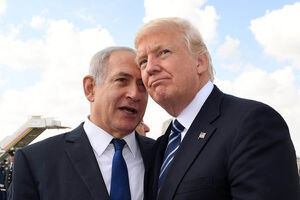
In the upcoming days, Israeli Prime Minister Benjamin Netanyahu will travel to the United States, where he will meet with President Donald Trump. This meeting occurs during a particularly sensitive period of heightened tensions in the region, transforming it into a focal point for political discussions among regional countries, especially concerning the occupied territories.
Currently, Western Asia is witnessing a significant wave of political developments, where any actions by regional or global players could substantially influence the unfolding events. From the situation in Gaza to the renewed conflicts in Yemen and the ongoing issues in Syria, along with the potential for renewed tensions between Iran and Israel, the stakes are high.
Experts believe that the upcoming meeting will cover various topics, some of which pose challenges while others present opportunities. Key issues for discussion will include ceasefire agreements in Gaza and Syria, the developments in Yemen, and foremost, the situation regarding Iran, which remains the most critical topic on the agenda.One of the primary focuses of this meeting will be the pursuit of a ceasefire plan in Gaza. Although the initial phase of this plan includes immediate ceasefire, prisoner release, and the withdrawal of Israeli forces from certain positions in Gaza, its full implementation faces serious obstacles.
Currently, Israeli leaders are undermining the ceasefire by repeatedly violating its terms and imposing extensive restrictions on the people of Gaza, hindering their access to basic needs. Meanwhile, Palestinian resistance forces have stated that no progress can be made on the ceasefire agreement until the occupying forces adhere to its terms. President Trump has called for the swift implementation of the second phase of the ceasefire, leading to disagreements between Tel Aviv and Washington.
While Israel insists on the complete disarmament of Palestinian resistance and the removal of Hamas from power in Gaza to enter the second phase of the ceasefire, the U.S. maintains that disarming Hamas and establishing a governance structure in Gaza should be a gradual process over a long-term period. In contrast, Israeli officials demand that this occur within a much shorter timeframe, warning that failure to do so will prolong the blockade on Gaza.Another significant topic of discussion will be the situation in Syria, which has been a point of contention between the two leaders. Recently, Netanyahu stated in a video after visiting wounded Israeli soldiers from clashes in the Beit Jinn area of Syria that the Israeli army seeks to establish a ‘demilitarized zone from Damascus to the UN buffer zone’ encompassing Mount Hermon. He remarked that reaching an agreement with Syria is possible, but they will adhere to their principles regardless.
This strategy has faced considerable opposition from the international community, including Washington, which has supported the actions of the Golan Heights for consolidating control over Syria. Israeli military operations in southern Syria and attacks on positions held by the Golan Heights have even drawn rare public criticism from Trump, who emphasized the importance of Israel maintaining serious dialogue with Syria to avoid disrupting the stabilization of the country.The situation in Yemen has also garnered significant global attention over the past two and a half years. From missile and drone attacks against Israel in support of Gaza to direct confrontations with the U.S., culminating in the surprising withdrawal of American forces and a ceasefire agreement with Yemen’s Ansar Allah, the dynamics have shifted dramatically. Despite Trump’s assertions of a deal with Ansar Allah to end the war, the reality is that the U.S. has been compelled to accept an end to hostilities due to severe losses in confrontations with Ansar Allah, retreating its naval presence in the region without curtailing attacks on Israeli territory.
This situation has led to strategic deadlock for Tel Aviv against Ansar Allah, as the last hope for halting missile and drone attacks from Yemen relied on U.S. military intervention, which has now ceased. Therefore, Yemen’s situation, especially with recent developments managed by the UAE, Saudi Arabia, and supported by Israel, will be a critical discussion point between Netanyahu and Trump as both parties strive to curb Ansar Allah’s power.Lebanon has also emerged as a pressing regional issue. Repeated Israeli incursions and violations of ceasefire agreements aimed at pressuring Lebanese resistance have heightened sensitivities around the possibility of a large-scale Israeli attack. The inability of the American-Saudi-led government in Lebanon to disarm resistance factions to protect Israeli interests has prompted Netanyahu’s cabinet to consider renewed military action against Lebanon.
Consequently, discussions regarding Lebanon’s developments and potential military incursions are expected to feature prominently in conversations between the Israeli Prime Minister and the U.S. President.Undoubtedly the issue of Iran will be the most significant and overarching topic of this meeting. Contrary to media portrayals the policies of both parties regarding Iran exhibit unprecedented coordination. Reports indicate that Netanyahu’s cabinet is meticulously monitoring Iranian matters.
The severe defeat of Israel and the U.S. during the 12-day conflict against Iran and the failure of the Israeli-American plan to topple the regime have pushed Tel Aviv and Washington to seek renewed tensions with Iran. Hebrew media sources indicate that in the months following the conflict there has been a concerted effort to instigate widespread Iranophobia to create a new pretext for attacking Iran focusing on three main areas: nuclear missile and conventional military capabilities as well as resistance movements.
Israeli leaders assert that not only has Iran’s missile power a serious threat to their regime not diminished but its missile activities have accelerated significantly post-conflict with production rates doubling. Regarding nuclear issues they claim that evidence suggests Iran’s nuclear activities have not ceased and that the nation is currently rebuilding after the attacks.
Israeli analysts emphasize that Netanyahu’s primary agenda during this meeting will be to seek a green light for renewed aggression against Iran and to secure full military cooperation from the U.S. for any future incursions. It remains to be seen whether he will succeed in this endeavor.